You brought an idol photo to Gangnam. Here is what a surgeon can do with it
Written by KCODI medical interpreter team · English deskUpdated · 8 min read

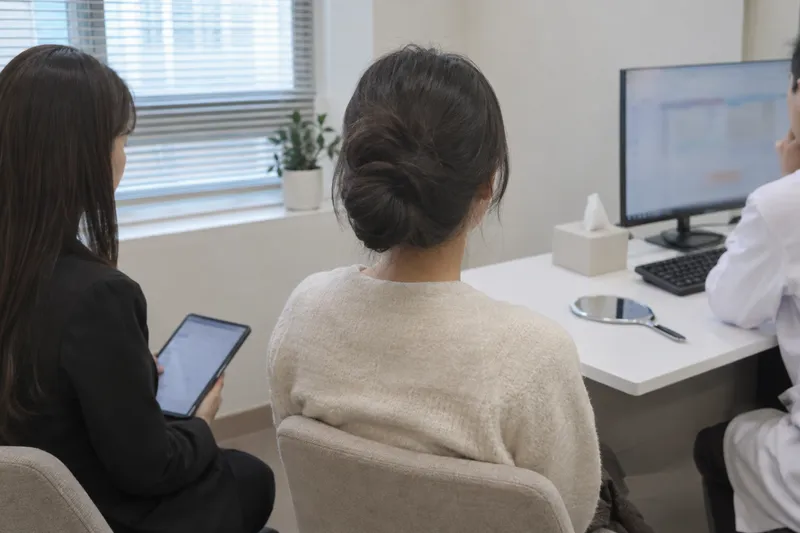
Kpop and Korean plastic surgery are joined together in search results so tightly that the industry is now the main reason people outside Korea think about Seoul clinics at all. Interpreters see the result of that every week: a phone slid across the desk with a photograph on it, and a hopeful question.
Bringing the photo is right. It communicates taste far better than adjectives translated twice, and every surgeon here expects it. What comes next is where expectations and reality separate, and it is worth knowing before you are sitting in the chair.
Two things are true at once. A Seoul surgeon can use that photo well. And almost nothing in it can be bought as a package.
Why no clinic will tell you what a named person had done
Ask directly and you will get a polite non-answer, in every clinic, every time. There are three reasons and none of them is evasiveness.
- Patient information is confidential here as everywhere, and that does not stop being true because someone is famous.
- Korean medical advertising rules are strict and enforced, which constrains how clinics may talk about results and testimonials at all.
- In most cases the clinic simply does not know. A surgeon looking at a public figure is guessing from photographs like everyone else.
Any clinic that does claim a named celebrity as a patient is telling you something about how it handles confidentiality, and it is not a reassuring something. How to choose a plastic surgery clinic in Korea goes through the checks that matter more than a wall of photographs.
What is in the photo that is not surgery
| Element | What it does to the face | Surgical? |
|---|---|---|
| Lighting and lens | Flattens pores, narrows the nose, lifts the jawline | No |
| Makeup | Builds the crease, the inner corner, the lip line, the nose shadow | No |
| Body weight and body fat | Changes cheeks, jaw and under-chin more than most operations | No |
| Dentistry | Changes the smile line and the lower face | Dental, not plastic surgery |
| Hair and styling | Reframes the forehead, temples and jaw outline | No |
| Retouching | Whatever is left | No |
| Bone and cartilage structure | The proportions underneath all of the above | Sometimes |
Read that list in order and the point lands. By the time you reach the row an operation could address, most of the visible difference has already been accounted for. That is the single most useful thing an interpreter can say before the surgeon comes in, because it changes the conversation from copying a face to changing a proportion.
The same logic is why before and after photos have to be read carefully. Distance, lighting, gaze and chin position change a result more than people believe.
What a surgeon actually uses the photo for
A good consultation treats the reference as taste, not as a template. The surgeon is looking for what you like: a straighter bridge or a softer one, a higher crease or a lower one, a jaw that tapers or one that squares.
- Bring two or three photos, not one, and ideally of different people. The shared element between them is the thing you actually want.
- Bring a photo of yourself in the same lighting and angle. It is the only honest comparison in the room.
- Expect the surgeon to say which part is achievable on your bone and skin, and which part belongs to the rest of that person's face.
- Be suspicious of agreement. A surgeon who says yes to everything in five minutes is selling, not planning.
The look you are chasing has already moved
The aesthetic that travels abroad tends to be several years behind the one in Seoul. The very high nose bridges and sharply narrowed jaws that dominate international searches have softened considerably here, and surgeons now spend a lot of consultation time talking patients down from photographs that are out of date.
That matters practically. Ask for a look that is on its way out and you are buying something that will read as dated, and that is expensive to undo. Revision work is a real specialty in Seoul precisely because of this cycle, and it is covered on the revision surgery in Korea page.
Bringing a recent reference helps. So does asking the surgeon what they are seeing patients request this year, which is a question they generally enjoy answering.
There is a quieter reason the trend moves, and interpreters hear it in the room. Korean patients increasingly arrive asking to look like a slightly better version of themselves rather than like anyone else, and surgeons have adjusted their house style accordingly. The result is softer, less obviously operated, and considerably harder to photograph, which is exactly why it travels slowly.
Surgery in Korea is ordinary, and that cuts both ways
Cosmetic surgery carries less stigma here than in most countries and the volume is genuinely high, which is the real reason to travel: surgeons who do your specific operation constantly. The context behind that is in is plastic surgery common in Korea.
The flip side is that a high-volume market is also a heavily marketed one. Being ordinary does not make an operation small, and a busy clinic is not automatically a careful one. The checks are the same as they would be anywhere: who operates, how often, what happens if it needs revising, and who answers you after you fly home.
Browse every operation on the Korean plastic surgery page, let clinic matching shortlist surgeons in two minutes, or meet the interpreters. If something goes wrong while you are in Korea, the Medical Korea Support Center answers on +82-1577-7129 and K-MEDI handles medical dispute mediation.