Korean Skin Care Near Me: Is That Pin a Clinic or a Facial Shop?
Written by KCODI medical interpreter team · English deskUpdated · 7 min read

Edited by KCODI medical interpreter team
In shortA Korean skin care near me search mixes facial shops (cleansing, masks, massage) with dermatology clinics, where doctors do lasers and injections. In Seoul the signs read pibu gwallisil and pibugwa. Pick by what you want done.
If you type "Korean skin care near me" in Vancouver, Edmonton or Montreal, most results are Korean-style facial spas and stores selling K-beauty products. Type it from a Seoul hotel room and the map fills with pins that look alike but are licensed for different work. Some are esthetic shops that do facials and massage. Some are dermatology clinics where a doctor runs lasers and injections. A few are cosmetics stores that only sell products.
Choose the place by what you want done to your skin. A cleansing, hydrating facial belongs to a skin care shop, at home or in Seoul. Anything with a needle, a laser or a prescription belongs to a dermatology clinic. On a short trip, that one choice decides how many hours of your schedule the visit takes.
This guide covers what a local Korean-style spa can give you, what each Seoul pin is, what a first clinic visit looks like from the reception desk onward, and which questions are worth asking before anyone touches your face.
Is a Korean-style spa near home enough, or is a Seoul trip worth planning?
For the routine side of Korean skin care, a local spa is often enough: double cleansing, layered hydration, sheet masks and massage. Lasers and injected skin boosters are clinic treatments wherever you are, and at home they follow your own country's rules and need a local doctor or licensed clinic.
Locally, the same question from the Seoul section below applies: ask who performs anything beyond a facial, and whether the place is a medical clinic or a beauty business. The exact rules differ by province, state and country, so a spa menu that lists injections deserves a closer look. Much of the "glass skin" look people chase comes from hydration and steady sun protection, which a home routine can cover.
A Seoul trip makes sense when the goal is a clinic treatment you want to combine with travel, and you can fit any downtime into the days you're there. Arrive with a clear goal and your current routine written down, including any prescription creams. A list of the products you use lets the doctor see what your skin has been dealing with. Follow-up after you fly home happens with your own doctor, which is why the written note in the checklist further down matters.
What does "Korean skin care near me" pull up in Seoul?
Three kinds of places, and the Korean word on the sign tells them apart. Look for pibugwa (dermatology clinic, often written with uiwon), pibu gwallisil or esthetic (skin care shop), and brand or drugstore names for product-only stores.
| Map pin type | What it can do | Who works on you |
|---|---|---|
| Dermatology clinic (pibugwa) | Lasers, skin boosters, injections, prescriptions | A licensed doctor, with nurses |
| Skin care shop (pibu gwallisil) | Cleansing, extraction, masks, massage, hydration facials | An esthetician, no medical exam |
| Cosmetics or drug store | Sells products only | Sales staff |
Menu wording blurs the line further. A shop may say "glass skin care" and a clinic may say "glass skin program", and the two can mean different treatments. A clinic version often includes a laser or an injected booster. A shop version is usually a facial. If you want the shop-style experience explained step by step, the Korean facial treatment page covers it.
The line between a skin care shop and a dermatology clinic
In Korea, needles, medical lasers and other procedures that can harm the body are reserved for medical professionals at a licensed clinic. A skin care shop runs under a beauty business license and should not offer them.
Korean courts set that line decades ago. A 1974 Supreme Court ruling treated activities that create a risk of infection or harm to the body as medical practice, even when they have nothing to do with curing disease, as Korea Biomedical Review explains.
If a shop offers you an injected booster, a "needle facial" or a laser in a back room, walk away. That treatment belongs in a clinic, where a doctor can see your skin first and deal with a reaction if one happens.
What happens at a first visit to a Seoul dermatology clinic?
Most first visits follow the same order: reception and paperwork, a skin check, a short talk with the doctor, then a decision about treatment. The whole thing can take under an hour or most of an afternoon, depending on whether treatment happens the same day.
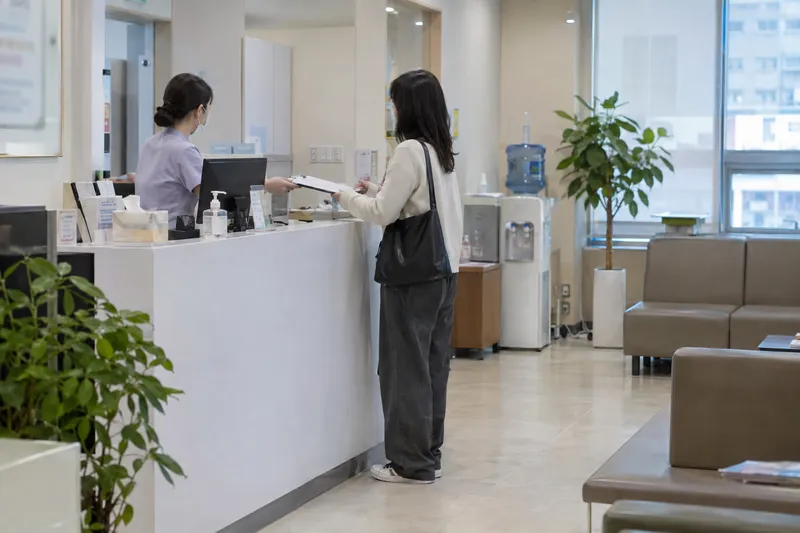
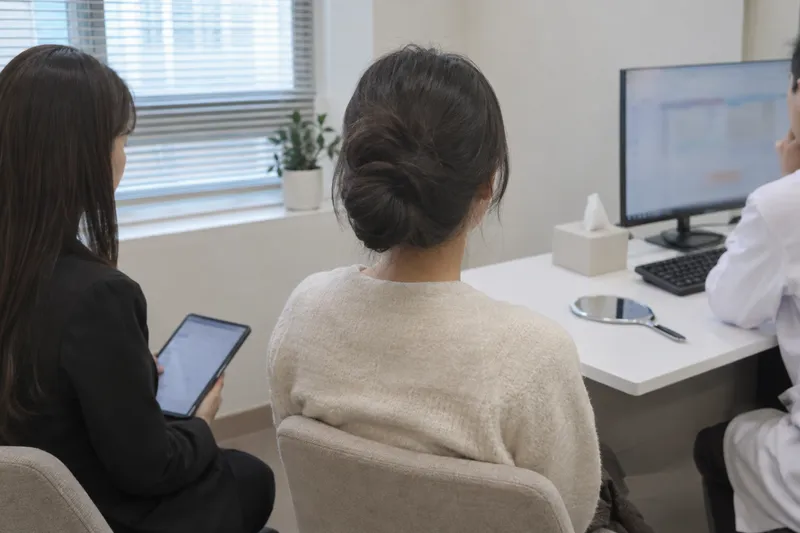
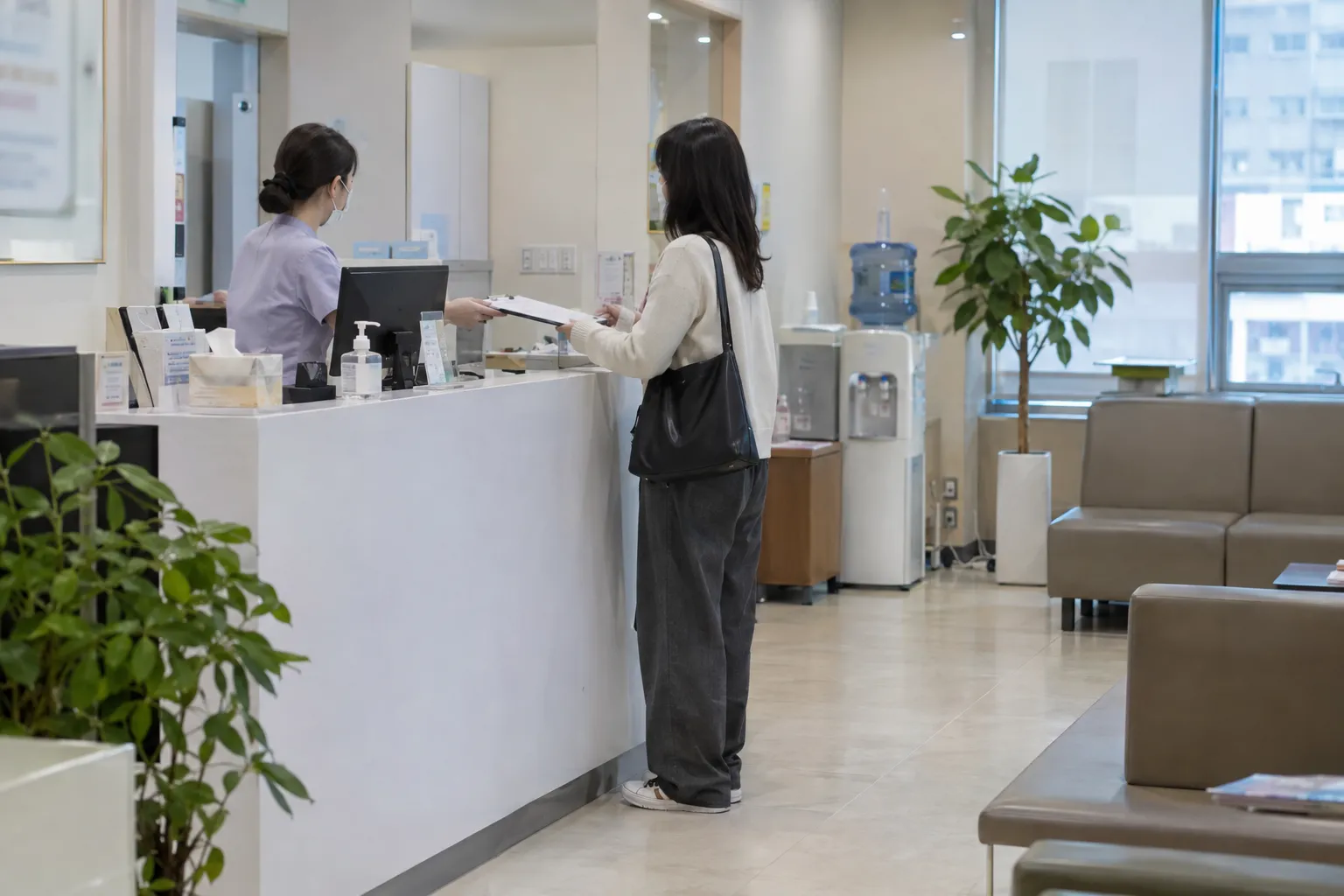
At reception you'll usually show your passport and fill in a form about allergies, medicines, recent procedures and pregnancy. Some clinics photograph your skin or use a scanning device; others rely on the doctor's direct look under a lamp. Then the doctor asks what bothers you: texture, redness, pores, dryness, spots.
This is where vague goals cause trouble. "Korean glass skin" can mean hydration, even tone or smaller pores, and each points to a different treatment. "Textured skin" is similar: rough patches, enlarged pores and shallow acne scars all get that label, and the doctor's look at your skin decides which one you have.
If treatment is the same day, numbing cream often goes on first and sits for a while. Afterward you get aftercare rules, sometimes with a prescription you fill at a pharmacy (yakguk) nearby.
Our interpreters often see visitors mention their flight only at the end of a consultation, after the plan is already set. Say it first, because it can change what the doctor suggests.
How many days of a short trip does a skin treatment take?
The type of treatment sets the downtime. The clinic's doctor decides which type fits your skin, and the treating doctor will tell you the expected downtime for your plan.
A hydrating facial at a shop needs no recovery time. Lasers and injected skin boosters vary by device, product and skin. Polynucleotide boosters (Rejuran is one name on Korean menus) are injected at many points across the face; a systematic review of polynucleotides describes them as generally well tolerated, with reactions mostly at the injection site, but individual skin varies.
Our comparison of Korean skin treatments lays out downtime and repeat visits side by side, and how to read a skin booster menu explains the product names you'll see.
On a long weekend, book the clinic visit early in the trip, not the evening before your flight. That leaves room for a second look if something feels off.
Risks, and who should wait before booking
Most reactions are minor, such as redness, swelling, bruising and tenderness at injection points. Rarer problems include infection, pigment changes and, with fillers, blocked blood vessels. Some people should postpone treatment until a doctor has looked at them.
The U.S. Food and Drug Administration lists bruising, redness, swelling and pain as common filler side effects, and warns of rare but serious problems, including unintended injection into a blood vessel. That is one more reason injectables belong in a licensed clinic, not a shop.
Tell the doctor if any of these apply to you: pregnancy or breastfeeding, a recent peel or strong exfoliating routine, oral acne medication, active cold sores or infection on the face, a history of keloid scars, or a recent sunburn. The American Academy of Dermatology notes that over-exfoliating can leave skin red and irritated, and many travelers arrive with skin already stressed by new products bought on day one. Whether any of this rules you out is the treating doctor's call after seeing your skin.
Questions our interpreters hear at the reception desk
Visitors tend to ask about the result and forget to ask about the process. These questions are worth asking anywhere, in a clinic or a shop, at home or in Seoul:
- Who performs the treatment: the doctor, a nurse, or an esthetician?
- What is the product or device called, and can I see the box or the device label?
- How many sessions does this usually need, and can one session on a trip do anything useful?
- What should I avoid afterward: sun, makeup, sauna, alcohol, exercise?
- Is it safe to fly the next day after this treatment?
- What should I do if I get a reaction after I'm home, and can I get a written note of what was done for my own doctor?
A product name and treatment date in writing make a follow-up visit at home much easier.
KCODI is a medical interpretation and booking desk, not a clinic. Our interpreters can join you in the consultation room and on treatment day, and the desk coordinates your visit with a partner clinic. The KCODI site is published in English, Japanese, Traditional Chinese, Thai, Indonesian and Russian.
Our dermatology section gathers the treatment types, and the interpreter desk page explains how interpretation works at partner clinics. If you'd like help finding a partner clinic for your goal, the clinic match form is the other route, and the KCODI English home page lists every treatment category.
If you're already in Seoul or have dates booked, send us your travel dates, the neighborhood you're staying in and one line about what you want for your skin on WhatsApp. That's enough for the desk to start matching you with a partner dermatology clinic; what to do on your skin is decided by the clinic's doctor in person.