ATOP plastic surgery: how to verify a Korean surgeon before you sit down
Written by KCODI medical interpreter team · English deskUpdated · 8 min read

Searching atop plastic surgery usually means the consultation is close and you want reassurance. The most useful reassurance in Korea is not a review. It is knowing which specialty the doctor in front of you actually holds.
Here is what the clinic publishes about itself, how the Korean specialist system works, and the checks that apply at every Seoul clinic. Then a second written quote for the same operation, so your number has a comparison.
KCODI is a booking and medical-interpretation service. We are not affiliated with this clinic and we are not recommending or warning against it.
What A-Top states on its own site
The clinic's English site gives its name as A-Top Plastic Surgery Clinic and its location as Gangnam-daero 4 and 5-gil, Gangnam-gu, Seoul. Listed areas include eye surgery and ptosis correction, rhinoplasty, facial liposuction, face lifting, breast procedures, lip surgery, male cosmetic surgery and skin treatments.
The site runs separate language versions in Japanese, English, Chinese, Thai, Indonesian and Arabic, and lists messenger contact through WhatsApp, LINE, WeChat and KakaoTalk. It states that all of its medical staff are plastic surgeons. We did not find an explicit statement about foreign-patient registration on the pages we checked, which is a question worth asking directly rather than assuming either way.
If eyes are what brought you here, what the different operations do is set out on our double eyelid surgery page.
Specialist, doctor, and why the difference matters in Korea
In Korea, any licensed physician may legally perform cosmetic procedures. A plastic surgery specialist has completed residency training and specialty certification on top of the medical licence. Both are legal. They are not the same training.
- Korean clinic signage distinguishes 성형외과 (plastic surgery, the specialty) from 성형외과 진료 or similar phrasing meaning cosmetic treatment is offered. The difference is easy to miss in translation.
- A specialist certificate is normally displayed in the consultation room. Asking to see it is ordinary, not rude.
- The Korean Society of Plastic and Reconstructive Surgeons and the Korean Association of Plastic Surgeons maintain member information; a clinic that lists membership can confirm it in writing.
- Ask which doctor performs your operation. Some clinics rotate cases between doctors, which is not hidden but is rarely volunteered.
The rest of the pre-booking checklist
| Check | What a good answer sounds like |
|---|---|
| Itemised quote | Separate lines for surgery, anesthesia, materials, stay and each follow-up visit |
| Anesthesia | A specialist anesthesiologist present throughout, named on the record |
| Revision | A written window in months, with the part you pay for stated |
| Foreign-patient registration | A registration the clinic will show you and you can verify |
| Surgery-day support | A named person who is with you in the morning, not only at consultation |
| Aftercare abroad | A contact route and a language for the weeks after you fly home |
If any of those answers arrive as "don't worry", that is your answer. Our guide on checking a clinic licence in Korea shows how to verify the registration part yourself.
Reading reviews without being misled by them
The reviews you will find for any Gangnam clinic are written within days of the procedure, when swelling is still doing most of the work. Eye surgery in particular looks different at one week, one month and six months, and almost nobody goes back to update a post.
- Check the date of the procedure, not the date of the post.
- Look for a follow-up: a second post months later is worth ten first-week posts.
- Discount any review that names a price. Prices move and quoted numbers are rarely the total.
- Ignore star ratings on aggregator sites entirely. Placement there is usually commercial.
Get the same plan priced twice
Send us the procedure name and anything you have already been quoted. We ask partner clinics for the identical item list in Korean, and you compare like for like rather than package against package.
Still deciding between operations? Try clinic matching, or read about monolid and double eyelid anatomy before your consultation.
The gap between consultation and surgery
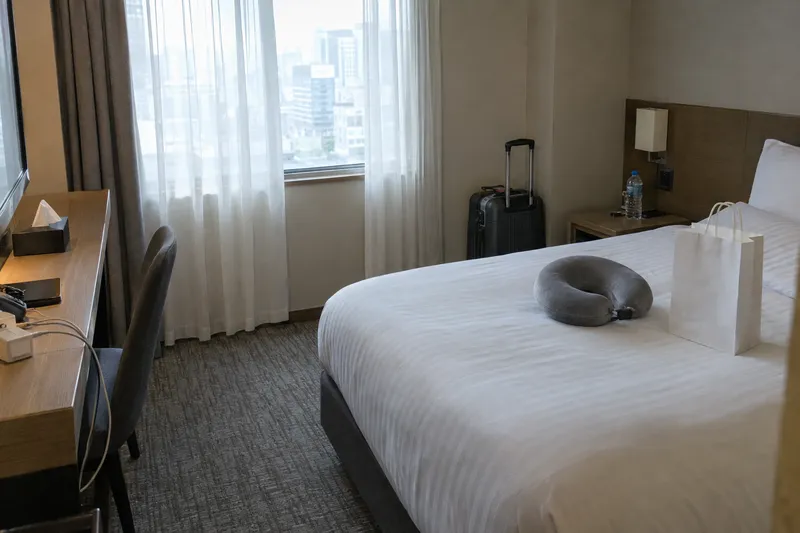
In Seoul that gap is often one night, and clinics are set up to make it easy to say yes. Use it properly and it is the most valuable day of the trip.
- Read the quote again somewhere that is not the clinic. Prices presented on a screen while a coordinator waits are hard to think about.
- Write down what you were told the operation would change, in one sentence. If you cannot, you did not understand it, and that is a reason to go back rather than a reason to proceed.
- Check the surgeon's name on the quote against the name you were given verbally, and against the name on the consent form the next morning.
- Ask what happens if you decide against it overnight, and what part of any deposit returns.
- Sleep. Jet lag and a long consultation day make people agree to things.
Nothing in that list is confrontational, and none of it offends a clinic that is comfortable with what it quoted. The clinics that react badly to an overnight pause are telling you something you would otherwise have to learn later.
One more thing to settle before the morning: fasting. General anesthesia and sedation both require an empty stomach, usually from midnight, and the instruction is often given in Korean at the end of a long day. Confirm the exact time you must stop eating and drinking, and whether your usual morning medication is included.