Canthoplasty recovery time is measured in months at the corners, not days
Written by KCODI medical interpreter team · English deskUpdated · 8 min read

In shortCanthoplasty recovery time runs in three stages: stitches out around day five to seven, visible pinkness for three to six weeks, and corner scars settling over six months or longer. The corner heals slower than the eyelid crease.

Someone told you the corners of your eyes can be opened, and you liked the before-and-afters. Then you looked up canthoplasty recovery time and got answers ranging from one week to one year, which is not a helpful spread when you are booking flights.
Our interpreters sit in these consultations and then take the same patients to their suture removal. The wide range exists because three different operations share the name, and because the visible healing at a corner is genuinely slower than at a crease.
Here is what each corner procedure is, what the three healing stages actually look like, and the questions that matter more than the technique name.
What is the difference between lateral, medial and lower canthoplasty?
They open three different corners, and they are not variations of one operation. 「Lateral canthoplasty (뒷트임, lateral canthoplasty)」 extends the outer corner. 「Epicanthoplasty (앞트임, medial epicanthoplasty)」 opens the inner corner by releasing the epicanthal fold. 「Lower canthoplasty (밑트임, lower canthoplasty)」 lowers the outer part of the lower lid margin to show more of the eye.
| Procedure | Which corner | Typical aim | Visible healing |
|---|---|---|---|
| Medial epicanthoplasty | Inner corner | Reduce the fold covering the inner eye, reduce the gap between the eyes | Pinkness 3–6 weeks, scar settles over months |
| Lateral canthoplasty | Outer corner | Lengthen the eye outward | Pinkness 3–6 weeks, higher risk of a visible line |
| Lower canthoplasty | Outer lower lid | Show more eye below, soften an upward slant | Slower; watering and lid position take longest |
| Double eyelid surgery | The crease, not a corner | Create or reshape the fold | Swelling 2–4 weeks, natural at 2–3 months |
| Combination (crease plus one or two corners) | Both | Overall eye shape | Take the longest of the individual timelines |
The one that surgeons discuss most cautiously is the inner corner, because the scar sits on thin skin where everybody can see it. A published review of techniques for minimising scarring in epicanthoplasty exists precisely because this is the known trade-off.
What does canthoplasty recovery look like week by week?
Three stages: stitches, pinkness, scar maturation. Most people are socially presentable at three to four weeks with makeup, and honest about the corner still looking slightly different at three months.
- Day 0–2. Swelling and tightness. Cold packs. Corners look raw. Sleep on your back, head raised.
- Day 3–7. Swelling drops. Stitches usually come out around day five to seven — this is a clinic visit you must be in Korea for.
- Week 2–4. The shape starts to look like the plan. Corners still pink. Concealer works from about week two on most people.
- Month 2–3. Pinkness fading. The scar may be slightly raised or lighter than surrounding skin, which is normal at this stage.
- Month 6–12. Scar maturation. This is when a surgeon judges the final result, and when any revision conversation happens.
Sun matters more than people expect. Fresh corner scars darken with sun exposure, and Seoul in summer is bright. Sunglasses and the sunscreen the clinic gives you are not optional extras during the first months.
How many days do I need in Korea for corner surgery?
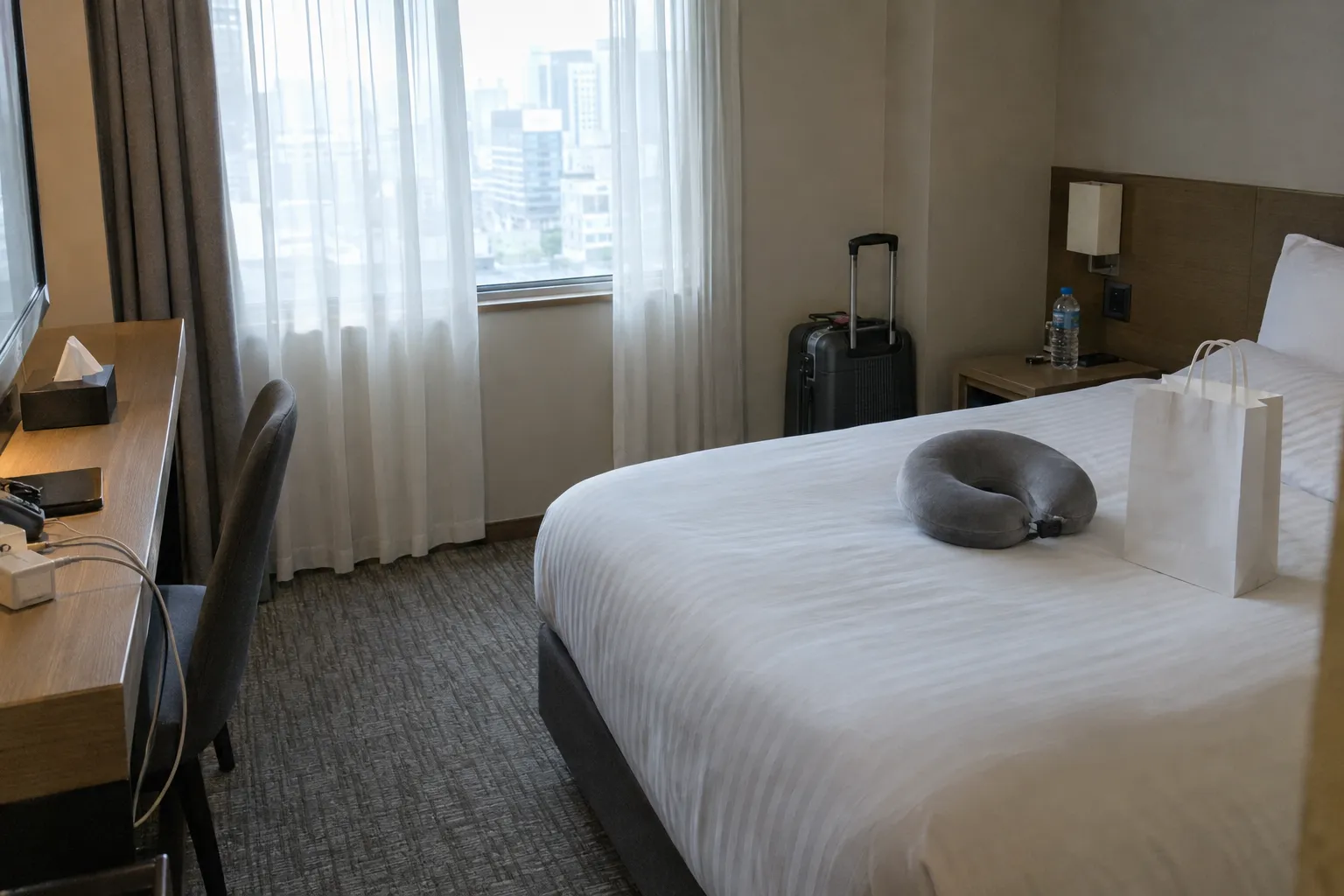
Plan seven to ten days. The number is set by suture removal, not by how you feel. Leaving before the stitches come out means finding a doctor at home willing to remove another surgeon's sutures, and many would rather not.
A workable shape for the stay: consultation and surgery in the first two days, a quiet stay nearby, a dressing check mid-week, suture removal around day six, and one buffer day before the flight. Price ranges and typical stay lengths are on the double eyelid surgery page.
What do people regret about canthoplasty, and what does Reddit get right?
The recurring regret is over-opening, not the scar. An inner corner released too far makes the eyes look closer together and the expression harder; an outer corner extended too far can look pulled. Those are shape complaints, and they are the reason conservative surgeons argue for doing less.
What the threads about canthoplasty in Korea get right: the scar is real, healing is slower than for the crease alone, and revision is a bigger project than the first operation. What they get wrong: treating one person's timeline as the rule. Eyelid skin thickness varies enormously, and so does how long pinkness lasts.
If your real goal is a bigger-looking eye rather than a longer one, read which Korean eye surgery does what first — for many people the answer is the crease, or ptosis correction, not a corner. Fox eye canthoplasty covers the tilted-corner version specifically.
What should be written on the quote before I pay a deposit?
Five lines. Our interpreters ask for them in Korean and get them on paper, because a verbal plan and a written plan are different things when you are consenting to a permanent change.
- Exactly which corners: inner, outer, lower, or a combination — and how many millimetres, if the surgeon works that way.
- Which surgeon operates, by name, and whether that is the doctor in front of you.
- Anaesthesia: sedation or local, and who monitors you.
- The date of suture removal and every review visit while you are in Korea.
- What happens if the shape is not what was agreed: the revision policy, in writing, with who pays.
KCODI books at the local partner rate Korean patients use, with a medical interpreter in the consultation and on surgery day at no cost, and the itemised quote in writing before any deposit. Meet the interpreters who cover eye surgery, or answer four questions in clinic matching.