What double jaw surgery costs in Korea, line by line
Written by KCODI medical interpreter team · English deskUpdated · 9 min read

Asking how much does double jaw surgery cost in Korea gets you a headline figure that is real but incomplete. Orthognathic surgery is a hospital operation under general anaesthesia with a planning phase, an orthodontic phase and a recovery phase, and different clinics draw the line around the quote in different places.
That is why two quotes for the same operation can look far apart and end up close, or look close and end up far apart. The difference is what each one includes.
Here is what sits inside a Korean quote, what is normally billed separately, and what the calendar looks like for someone who does not live here.
What the quote contains
Double jaw surgery repositions the upper and lower jaws together. A three-piece plan adds segmentation of the upper jaw, and many plans add a chin procedure at the same time. Each of those is a separate line, which is the first reason quotes diverge.
| Line | Why it varies | What to ask |
|---|---|---|
| Surgical plan | Two jaws, three-piece, or two jaws plus chin | Exactly which osteotomies are planned? |
| 3D CT and simulation | Planning imaging is sometimes separate | Is the CT and the surgical simulation in the quote? |
| Anaesthesia | Priced by time, and by whether a board-certified anaesthesiologist is present | Who administers anaesthesia, and is it quoted by the hour? |
| Hospital stay | Usually a few nights, billed by night | How many nights are included? |
| Plates and screws | Fixation materials, and whether removal later is included | Are the plates included, and is removal a separate operation? |
| Orthodontics | Pre-surgical and post-surgical braces are often a separate contract | Is any orthodontic treatment inside this number? |
The range partner clinics work in for facial contouring and jaw surgery is on the procedure page. Treat any figure quoted before a CT as an opening number, because the plan is built from the scan.
The orthodontic phase that changes everything
Most orthognathic plans need braces before surgery to line the teeth up for the new jaw positions, and more braces afterwards to settle the bite. That phase is measured in months and sometimes more than a year.
Some Korean hospitals offer surgery-first protocols that shorten or reorder this, and they suit particular cases rather than all of them. Ask which approach your case needs and why, because it changes the total time, the total cost and the number of flights.
- Consultation and 3D CT. The plan is built from the scan and your bite, not from photographs.
- Orthodontic preparation, at home or in Korea. Agree who does it and how the two clinics will communicate.
- Surgery and a hospital stay of several nights, with swelling peaking in the first days.
- The first weeks on soft or liquid food, with a chin strap or elastics as the surgeon directs.
- Post-surgical orthodontics to finish the bite, then a possible second short operation to remove plates.
The stay, and what visitors underestimate
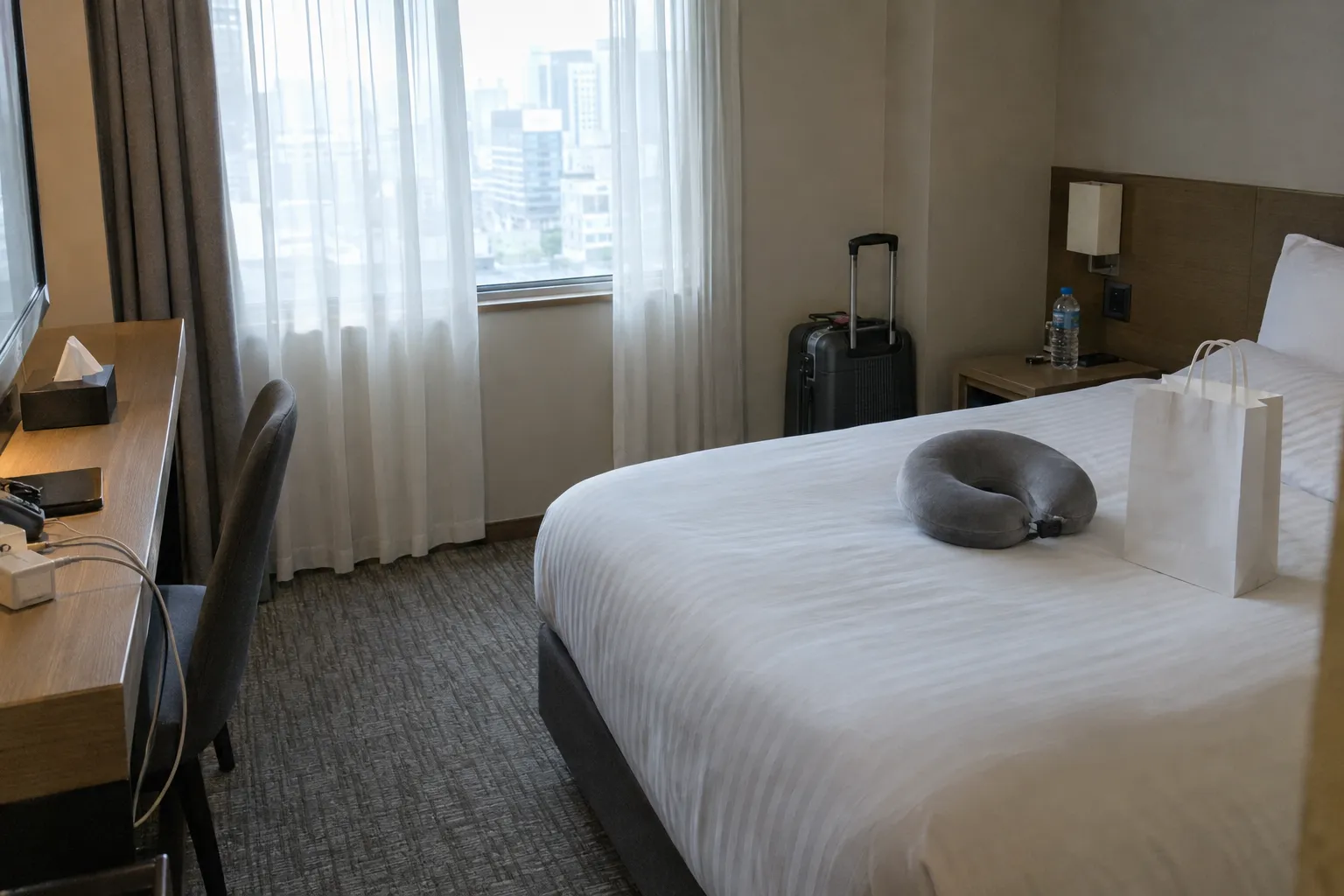
The hospital nights are the easy part to plan. What catches visitors is the two to three weeks afterwards when speech is difficult, eating is slow and swelling is at its most demoralising, and when the surgeon wants to see you regularly.
Flying too early is the most common mistake. Cabin pressure, luggage and a long transit on day five is a bad combination after facial osteotomies. Recommended stay ranges are on the plastic surgery pages, and the day-by-day version is in double jaw surgery recovery.
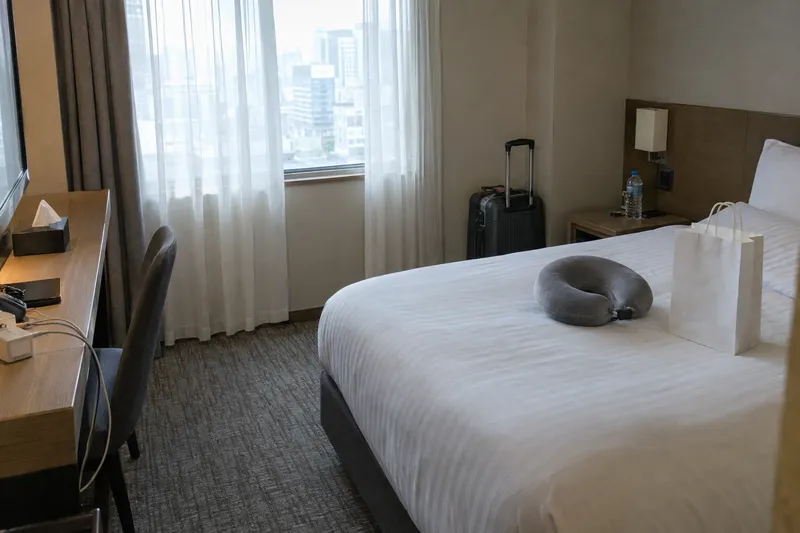
- Budget for a longer stay than the hospital nights suggest, and for a hotel near the clinic rather than a nice one far away.
- Plan food that does not need chewing. This is a logistical problem in a foreign country, not a minor one.
- Expect numbness of the lower lip and chin for weeks or months. Ask what is expected in your case.
- Ask what would count as an emergency after you fly home, and which local hospital to attend.
- Keep the surgical report and imaging. Your dentist at home will want them.
When the answer is a smaller operation
Not every face that looks long or asymmetric needs both jaws moved. Some cases are treated by orthodontics alone, some by a chin procedure, some by reducing the cheekbones and jaw angle rather than repositioning the jaws.
A surgeon who reaches for the largest operation at the first consultation deserves a second opinion, and getting two written plans in one week in Seoul is straightforward. The narrower contouring routes are covered in zygoma reduction and genioplasty, and the functional side is in corrective jaw surgery in Korea.
If the concern is a soft or wide lower face rather than the bite, the non-surgical comparison is in Korean jawline: botox versus surgery, which is a very different budget and a very different week.