What an English speaking clinic in Seoul actually gives you
Written by KCODI medical interpreter team · English deskUpdated · 8 min read

Searching for an english speaking clinic in Seoul returns a wall of clinics with a small flag icon on the homepage. Almost all of them mean it. Almost none of them mean the same thing by it.
In practice the phrase covers four very different situations, and the difference only shows up when something goes wrong: when the doctor changes the plan mid-consultation, when the consent form lists a complication you have never heard of, or when you call on day three because one side is swelling more than the other.
This is what the badge covers, what it does not, and the questions that tell you which kind of clinic you are booking before you pay anything.
The four things 'English speaking' can mean
Korean clinics are not being dishonest when they advertise English. They are describing the front desk, because that is where foreign patients first appear. The consultation room is a separate question and nobody thinks to ask it.
| What the site says | Usually means | Where it breaks |
|---|---|---|
| English available | Reception staff can handle booking, directions and payment | The consultation itself, once the doctor starts explaining method |
| English consultation | A coordinator translates in the room, often from a sales team | Risks and alternatives, which are the parts a seller has no reason to dwell on |
| English speaking doctor | The doctor studied or trained abroad and speaks directly to you | Rare, usually booked out, and often a longer wait for a slot |
| Interpreter service | A third person whose only job is the language | Nothing, if the interpreter is independent of the clinic's sales targets |
The third row is what people imagine they are getting. The second row is what they usually get. That gap is the entire reason foreign patients leave a consultation unsure what was agreed.
Why a coordinator is not the same as a medical translator
A clinic coordinator is a good, useful person. Their job description, though, includes converting a consultation into a booking. When a surgeon lists three options and their trade-offs, a coordinator summarising in English will compress. What survives compression is the recommendation. What disappears is the alternative you might have preferred.
A korean medical translator working for you has the opposite instruction: say everything, including the sentence that loses the clinic a sale. That is not a moral difference. It is a difference in who is paying whom.
The korean medical terms worth recognising yourself
You do not need korean medical terminology. You need about eight words, because these are the ones that get smoothed over in translation and they are the ones that change what happens to your body.
- 수면마취 (sumyeon machwi) — sedation, not general anaesthesia. Often translated simply as 'sleep', which sounds gentler than it is.
- 전신마취 (jeonsin machwi) — general anaesthesia. Ask whether an anaesthesiologist, not the surgeon, is monitoring you.
- 재수술 (jaesusul) — revision surgery. Ask what the clinic's written policy is before, not after.
- 부작용 (bujagyong) — side effect or complication. This word appears on every consent form.
- 상담 (sangdam) — consultation. A 상담실장 is a counsellor, not a doctor.
- 견적서 (gyeonjeokseo) — itemised quote. Ask for it in writing, itemised, before any deposit.
- 추가 (chuga) — additional, as in an item added to your plan after you agreed to it.
- 회복 (hoebok) — recovery. Ask how many days until you can fly, not until you 'look fine'.
Recognising 추가 on a receipt is worth more than a semester of Korean. It is the word that appears beside the line item nobody mentioned while you were lying down.
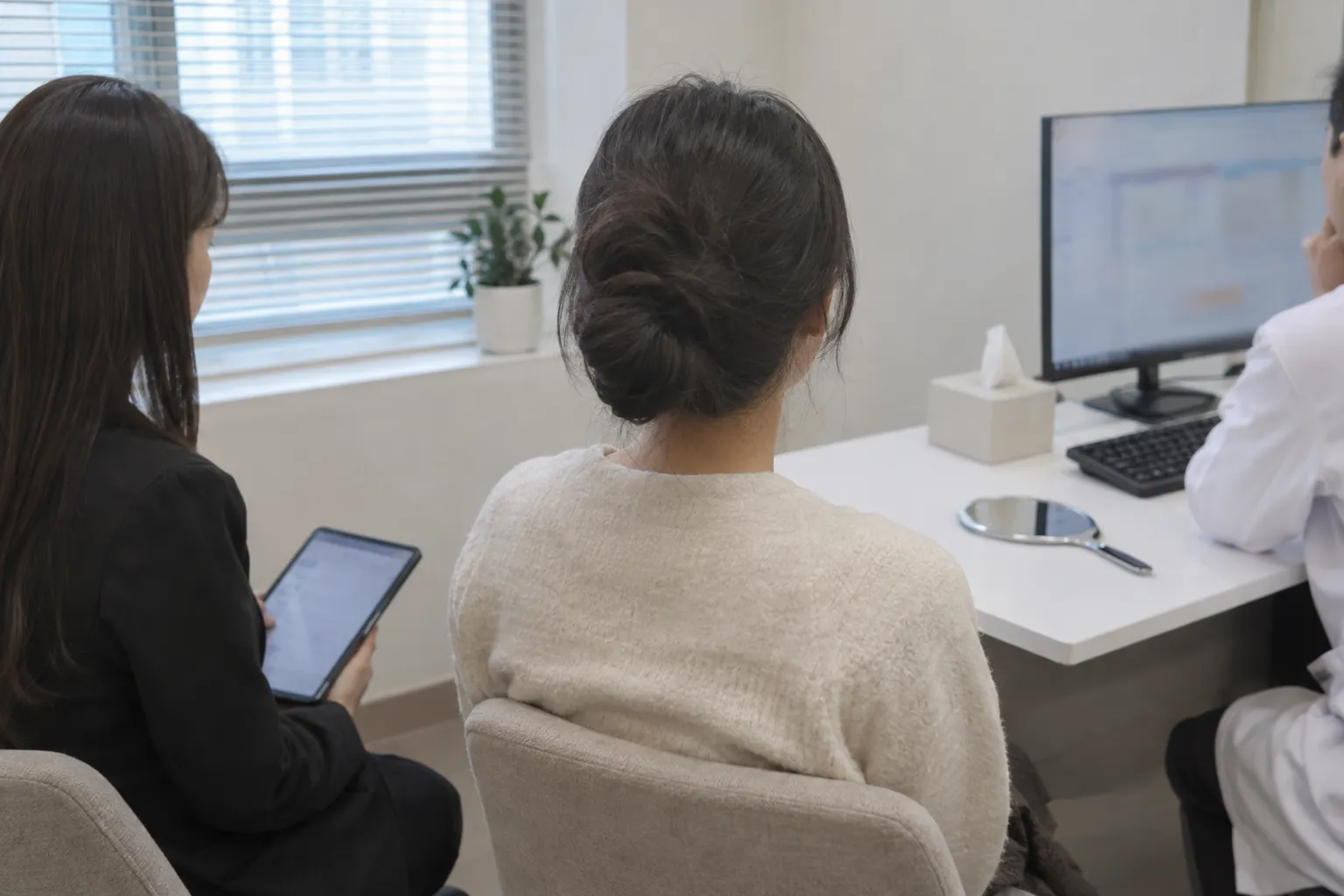
How to check a clinic before you fly
- Send a specific question by message, not a generic enquiry. 'Does the surgeon perform the consultation, or a counsellor?' A clinic with real English capacity answers it in one reply.
- Ask for the consent form in advance. Any clinic can send a sample. Reading it at home, slowly, is worth more than hearing it read aloud on the day.
- Ask whether the clinic is registered to treat foreign patients. Registration is a legal status in Korea and it is checkable, not a marketing claim.
- Ask what happens on the phone at 11pm on day three. If the answer involves waiting for office hours and a translation app, plan for that.
- Ask whether the quote is itemised and fixed, and whether anything is priced per unit or per session rather than per treatment.
For the registration check itself, how to check a clinic's licence for medical tourism in Korea walks through the official lookup. If you are comparing clinic types rather than languages, Korean hospital versus clinic explains why the words mean different things here.
English speaking dermatology and skin clinics are a separate problem
An english speaking dermatology clinic seoul search usually ends at a large chain in Gangnam or Myeongdong with foreign-patient signage. Those clinics are genuinely used to visitors. The risk there is not safety, it is the menu.
Skin treatment is sold in sessions, shots, areas and courses. Every one of those units can be bundled, split or added to while you are lying down with your eyes covered. An english speaking skin clinic seoul appointment without someone independent in the room is where a simple laser becomes a package.
Decide before you lie down what you will and will not add, and have it on the quote. If you want the treatment menu explained first, Korean skin treatments compared sorts them by downtime, and the best skin clinic in Seoul for foreigners covers how these clinics are actually structured.
What an interpreter changes that a bilingual doctor does not
Even in the rare consultation where the surgeon speaks fluent English, one thing is missing: a person whose only task is you. The surgeon is thinking about the operation. The coordinator is thinking about the schedule. Neither of them is tracking whether you understood the sentence about the revision policy.
Interpreters notice the pauses. A patient who says 'yes, yes' three times in a row has usually stopped following. That is the moment to stop and go back, and it is invisible to everyone else in the room.
To see who would be with you, meet the interpreters. To be matched to clinics for your treatment in about two minutes, use clinic matching.