In Korea, hospital and clinic are legal categories, not a size you can guess
Written by KCODI medical interpreter team · English deskUpdated · 9 min read

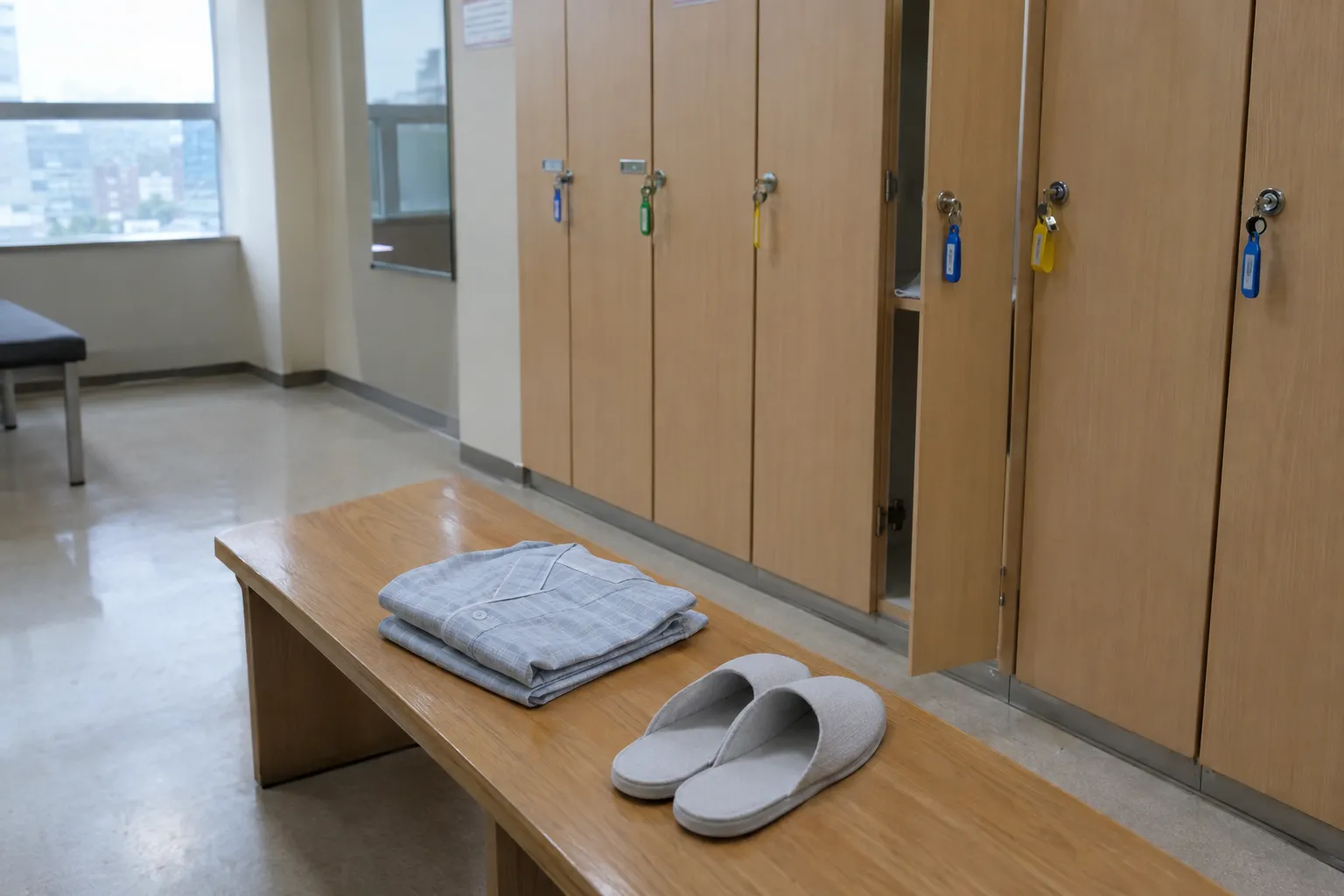
Search for a Korean hospital from abroad and the results mix together a single-doctor skin clinic on the second floor of a Gangnam building, a 1,000-bed university centre with its own subway exit, and a dental practice that calls itself a hospital in English because the word sounds more serious.
In Korean those are separate legal categories with separate rules, and the difference decides your waiting time, whether you need a referral, and in some cases whether you can be seen at all without one. The English translation on the door is decorative.
None of this is difficult once someone shows you the ladder. This is the version interpreters give patients on the phone before their first appointment.
The ladder, from smallest to largest
The Medical Service Act sorts institutions by scale, and the Korean name on the sign tells you which rung you are standing on. Roughly, from the bottom up:
| Korean name | Usually translated as | What it is | What you go there for |
|---|---|---|---|
| 의원 (uiwon) | Clinic | Outpatient practice, often one or a few doctors, no or few beds | Skin, eyes, dental, most cosmetic work, everyday illness |
| 병원 (byeongwon) | Hospital | Inpatient beds, a handful of departments | Surgery with an overnight stay, orthopaedics, some specialties |
| 종합병원 (jonghap byeongwon) | General hospital | Many departments under one roof, full imaging and labs | Complex problems, full health checkups, most cancer work |
| 상급종합병원 | Tertiary or advanced general hospital | Designated large teaching centres | Serious and rare disease, usually with a referral |
Almost all cosmetic, dermatology, dental and eye work that brings people to Seoul happens on the bottom rung, in a 의원. That is normal and says nothing about the surgeon's training. What matters is whether the doctor is a board-certified specialist, which is a separate question from the size of the building and is worked through in how to check a clinic's licence.
Where a foreign patient actually goes
- Cosmetic surgery, skin treatment, dental, hair, laser eye correction: a specialist clinic. You book directly, usually within days, and you pay out of pocket.
- A full body screening: a general hospital's checkup centre or a dedicated screening centre. Booked weeks ahead, fasting required, results in a report. The cancer screening in Korea page covers what is inside those packages.
- An illness that started on the trip: a neighbourhood clinic first. They are everywhere, they are quick, and they refer upward if needed.
- A genuine emergency: the nearest emergency room, or 119. Korea's emergency number and what to say has the script.
Large hospitals run international healthcare centres with coordinators and interpreters, which is the right door for complex or serious care. They are not the right door for a filler appointment, and trying to use them that way wastes a week.
How you pay, and what insurance does
Korea runs a national health insurance system. Foreign residents are generally required to join once they have been here long enough to qualify, and the National Health Insurance Service is the place to confirm your own situation rather than a forum post.
- Short-term visitors are not covered. You pay the full price at the counter, usually by card, before you leave.
- Cosmetic and elective aesthetic work is not covered for anyone, resident or not. That is why a clinic quote is simply a price list.
- Travel insurance sometimes reimburses illness and injury afterwards. Ask the clinic for an itemised receipt and a diagnosis in English before you leave the counter, because getting it later from abroad is painful.
- The tax refund foreign patients could once claim on cosmetic procedures ended at the close of 2025. Any clinic still promising one is working from an old brochure.
Costs at a private clinic are set by the clinic, not by a schedule, which is exactly why a written itemised quote before the deposit matters more here than the headline number. How much plastic surgery costs in Korea breaks down what moves those numbers.
What a visit actually looks like
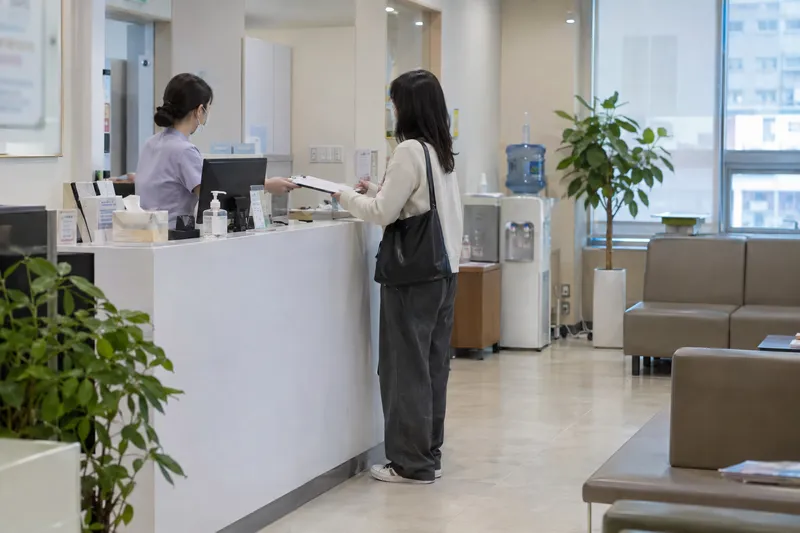
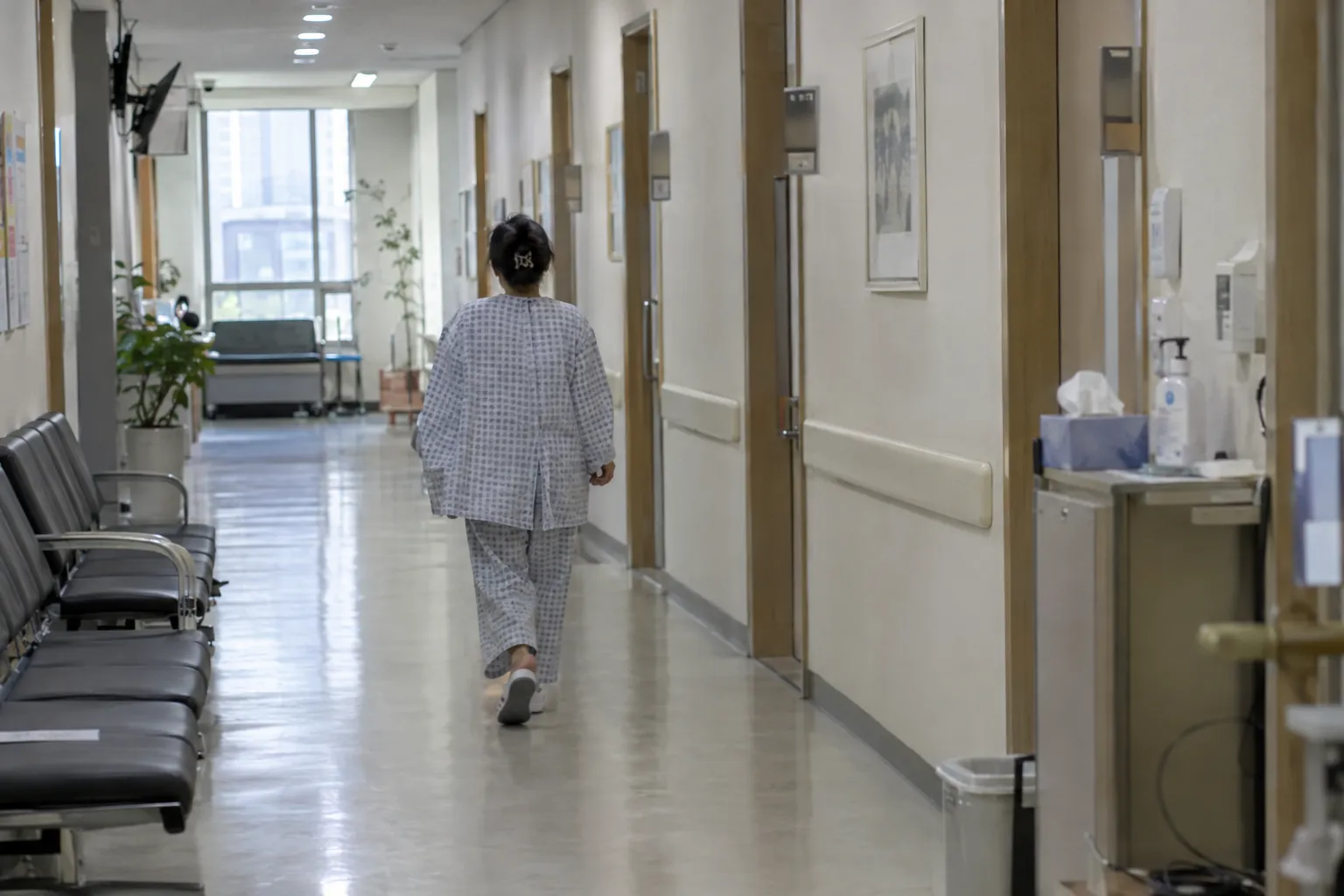
Korean outpatient care is fast in a way that surprises people used to long appointments. You register at a desk, wait for your number, see the doctor for a short and focused consultation, then pay on the way out. Prescriptions are filled at a pharmacy nearby rather than in the building.
- Bring your passport. Registration needs it, and the name on the record must match it for any paperwork you want afterwards.
- Expect the consultation to be brief. It is efficient rather than dismissive, and questions asked directly get answered.
- Expect tests to happen the same day rather than at a second appointment. This is one of the genuine advantages here.
- Ask for your results and any report before you leave the building, in English if the institution can provide it.
- Keep every receipt. If you claim on travel insurance later, the itemised one is the document that matters.
The pace is why an interpreter changes the outcome more here than in a slower system. A ten-minute consultation leaves no room to work out a word, and the questions you did not manage to ask do not get a second slot.

Reading the sign before you walk in
Four checks take about a minute each and they tell you more than any ranking list.
- Look at the Korean name on the building, not the English one. 의원, 병원 or 종합병원 tells you the class.
- Look for the specialty written out. A board-certified specialist practice states the specialty in its name; a general practice legally cannot.
- If you are travelling specifically for treatment, check the clinic against the government's register of institutions allowed to treat foreign patients.
- Ask who performs the procedure. In Korea, as anywhere, the consultation and the operation are not always the same person, and you are allowed to ask.
The ranking question people actually type, best hospital in Korea, has no useful answer, because the large teaching hospitals are strong in different things and none of them does your cosmetic procedure. The honest version of the question is which institution does your specific problem often, and how to choose a clinic in Korea sets out the checks.
If something goes wrong while you are in Korea, the Medical Korea Support Center answers on +82-1577-7129 and K-MEDI handles medical dispute mediation. Browse what a Korean screening actually includes on the medical check-up page, let clinic matching shortlist the right kind of institution, or meet the interpreters.