Plastic surgery in Korea: how much you pay, and what moves the number
Written by KCODI medical interpreter team · English deskUpdated · 8 min read

You typed plastic surgery in Korea how much into Google and got forum posts from 2019, a clinic ad, and a price list with no explanation. One person paid half what another paid for what sounds like the same nose.
Both can be true. In the consultation room, our interpreters see the same clinic quote two patients very differently on the same afternoon, for reasons that make sense once you see the paper. The price of surgery in Korea is not a secret. It is a sum, and each line in it can be asked about.
This guide shows what is inside that sum, what moves it, and how to make sure the number you agree to is the number you pay.
Why nobody can give you one number online
A Korean surgeon prices the operation after seeing your face, your scan and your history. A first-time nose with a small hump is a different job from a third revision with scar tissue. The name of the procedure is the same. The hours, the materials and the risk are not.
What we can show honestly is a range. Every procedure page on this site carries an estimated Seoul range, for example rhinoplasty, and the full list sits on the Korean plastic surgery page. Your own figure comes after a consultation, in writing.
Is it lower than at home? For many visitors from the US, the UK and Australia, the surgeon's fee in Seoul is lower than what they were quoted locally, largely because Korean surgeons do these operations in very high volume. Add flights, a hotel and a week off work before you compare. And never choose a surgeon on price alone.
What is inside a Korean surgery quote
A one-line quote is not a quote. This is what a complete one lists. If a line is missing, it is either included or waiting for you at the cashier's desk. Ask which.
| Line | What it covers | What to ask |
|---|---|---|
| Surgeon's fee | The operation itself, by method | Which method exactly, and who operates? |
| Anesthesia | Sedation or general, and the anesthesiologist | Is the anesthesiologist's fee inside this number? |
| Pre-op tests | Blood tests, ECG, chest X-ray, CT or 3D scan | Included, or paid separately on the day? |
| Materials | Implants, donor cartilage, fixation plates | Which brand and type? What if the surgeon changes the plan during surgery? |
| Overnight stay | A night at the clinic after long operations | How many nights, and what does an extra one cost? |
| Aftercare | Dressing changes, stitch removal, deswelling care | How many visits are included? |
| Medication and garments | Antibiotics, painkillers, compression wear | Included, or bought at the pharmacy downstairs? |
| VAT | Ten percent on cosmetic procedures | Is this number with VAT or before VAT? |
| Revision policy | What the clinic does if a correction is needed | In writing: who pays for what, and within how long? |
Seven things that move the price
- First time or revision. Revision work takes longer, often needs rib or donor cartilage, and carries more risk. It is priced well above a first operation. See revision surgery in Korea.
- Method. A non-incisional eyelid and a full incision with ptosis correction share a name and little else. The method is the biggest mover inside any one procedure.
- Materials. Silicone, your own cartilage, donor cartilage, implant brand and size.
- Combined procedures. Doing two operations in one session usually costs less than doing them apart, because anesthesia and facility time are shared. It also means a longer operation. Your surgeon decides what is safe to combine.
- Who operates. A head surgeon with a long waiting list charges more than a junior colleague in the same building. Make sure the name is on the quote and on the consent form.
- Anesthesia. General anesthesia with a full-time anesthesiologist costs more than sedation. For long operations it is not the place to save.
- Season and timing. Korean school holidays and year-end are busy. Quieter months sometimes bring event prices. Read what the event price excludes.
The foreigner markup: how it happens and how to avoid it
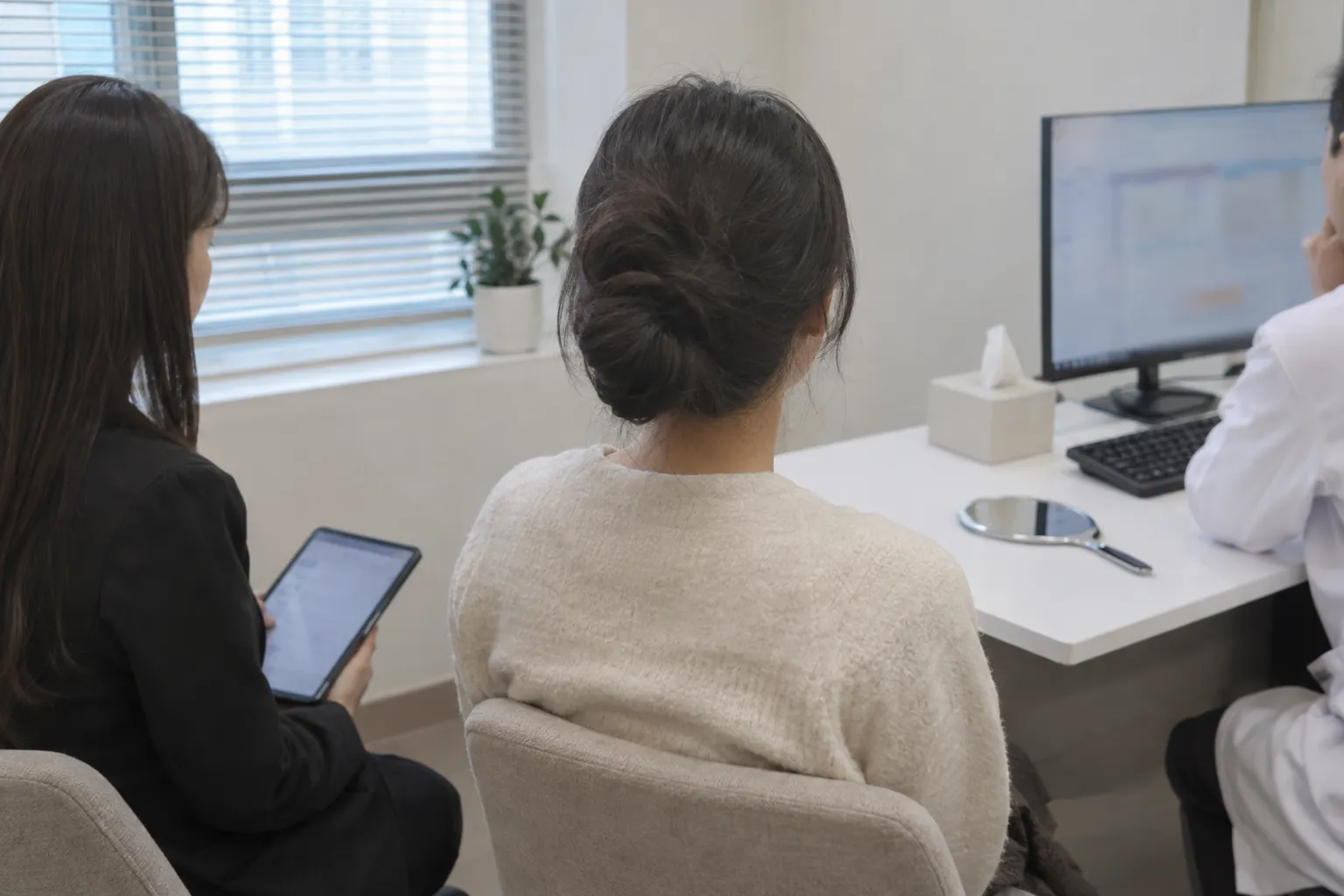
Many clinics keep two menus. One is what Korean patients are quoted when they call. The other is for overseas patients, and it is higher. Part of the gap is real cost: interpreters, longer consultations, airport pickups. Part of it is an agent's commission added on top. Part is simply what the consultant thinks you will accept.
You cannot see this from abroad, because you only ever see one menu. A Korean caller hears the other. That is how KCODI books: in Korean, the way local patients do, at a partner rate agreed with the clinic in advance. There is no foreigner markup, and you see an itemised written quote before any deposit. The clinic pays our coordination fee. You pay the clinic directly.
How to compare two quotes fairly
With plastic surgery in Korea, how much is only half the question. The other half is what the number covers. The lower number is not always the lower price. Before you compare totals, check that both quotes answer the same questions.
- Same method and same materials, named on both?
- Same surgeon level, named on both?
- Anesthesiologist included on both?
- VAT included on both?
- Same number of aftercare visits?
- Tests, medication and garments included on both?
- A written revision policy on both?
- Is the clinic registered to treat overseas patients? Here is how to check a clinic's license in Korea.
When two quotes still differ after that, the difference is usually the surgeon. That is a fair thing to pay for, and a fair thing to ask about. Your interpreter asks how many of this exact operation the surgeon does in a typical month, and asks to see cases that started out like you.
Costs outside the clinic, and how you pay
Surgery is one part of the trip. Flights, a hotel within ten minutes of the clinic, soft food for the first days, and often a companion's ticket. Build in one or two spare nights. Swelling does not read your itinerary, and changing a flight costs more than an extra hotel night. Check your travel insurance too: most policies exclude complications of elective surgery.
Payment follows a pattern. After you accept a written quote, the clinic asks for a deposit to hold the surgery slot. The balance is paid at the clinic on the day, before you change into a gown. Most clinics take international cards. Some offer a lower figure for cash. If you take it, get a receipt with the clinic's legal name on it.
To see how this plays out for one operation, read our breakdown of the cost of rhinoplasty in South Korea. When you are ready for real numbers, answer four questions in clinic matching, or meet the interpreters who will sit beside you.