Gynecomastia surgery in Korea: what it removes and what it costs you in days
Written by KCODI medical interpreter team · English deskUpdated · 8 min read

Gynecomastia surgery is one of the quieter reasons men fly to Seoul. Nobody posts about it, so there is far less information than for a nose or a jaw, and what exists is mostly clinic advertising.
Our interpreters sit in these consultations, and the same confusion comes up every time: the patient has been told by one clinic that liposuction alone will fix it and by another that the gland has to come out. Both were describing different chests, and both may be right.
This guide covers what the operation actually does, what moves the cost in a Korean quote, and how many days you need to plan for.
Gland or fat: the question the consultation exists to answer
Two different things create a male chest that looks fuller than you want, and they need different surgery.
| Glandular tissue | Fat | |
|---|---|---|
| Feel | A firm disc under the nipple, sometimes tender | Soft and diffuse |
| Changes with weight loss | No | Yes |
| What removes it | Excision through a small incision at the areola edge | Liposuction |
| Typical scar | A thin line along the lower areola border | Small ports, usually hidden |
| If treated with the wrong method | Liposuction alone leaves the firm disc behind | Excision alone leaves the soft bulk |
Most Korean surgeons do both in one operation: liposuction to reduce the volume and contour the edges, plus excision of the gland through a short incision. Ask the surgeon to tell you which components they are planning, and why.
What moves a gynecomastia surgery cost in Korea
Korean clinics quote in won and itemise, once you ask. We do not print amounts in prose; the ranges for the liposuction component are rendered on the liposuction page, and the clinic gives you a written figure before any deposit.
- Whether excision is included or it is liposuction only. This is the single biggest driver.
- Grade and volume. A larger chest takes longer and may need skin tightening.
- Anaesthesia: sedation or general, and whether an anaesthesiologist is present.
- Whether skin excess needs treating, which changes the scar plan entirely.
- The compression garment, dressings and the number of follow-up visits.
- Whether nipple or areola correction is being done at the same time.
Areola and nipple correction is a separate item. Reducing a stretched areola, or correcting an inverted nipple, is often requested alongside and is priced on its own. Say it at the consultation rather than on the day.
How many days in Korea
This is where planning goes wrong. The operation is short; the aftercare is not.
- Day 0: consultation and tests, usually the same day or the day before surgery.
- Day 1: surgery. Sedation or general anaesthesia, typically one to two hours, and you go home the same day at most clinics.
- Day 2–3: first dressing check. Drains, if used, usually come out in this window.
- Day 5–7: stitch removal and a review. This is the visit people forget to plan for.
- Compression garment worn continuously for several weeks, including on the flight home.
- Heavy lifting and gym work paused for several weeks, on the surgeon's schedule.
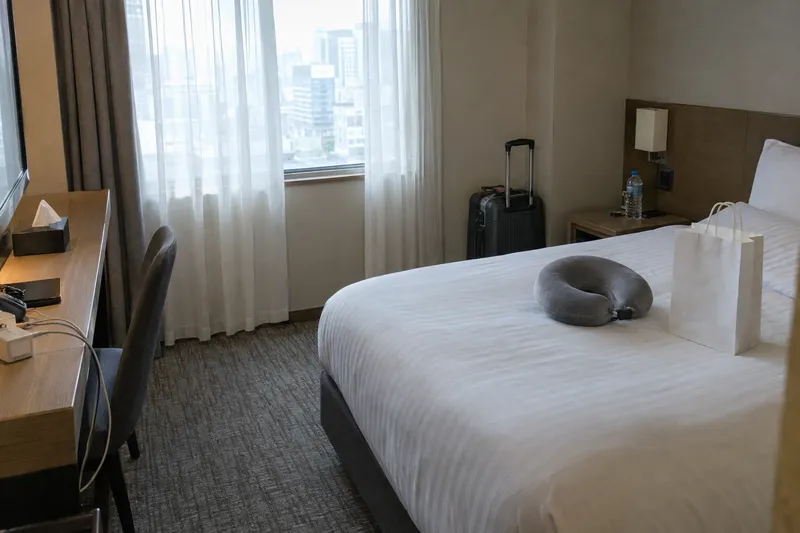
So a realistic stay is around a week, and the last two days should be quiet. Our recovery time and stay guide covers where to stay near the clinic districts, and how many days to visit for treatment has the wider planning.
Results, scars and the things worth asking
The chest looks swollen and slightly odd for weeks. Contour settles over months, not days, and judging the result at two weeks is a reliable way to be unnecessarily unhappy.
- Ask where the incision will sit and how long the scar will be. Ask to see it drawn on you.
- Ask what happens if a firm area remains. Small residual gland is the most common reason for revision.
- Ask about contour irregularity after liposuction and how the clinic handles it.
- Ask about nipple sensation, which can change temporarily and occasionally longer.
- Ask for the revision policy in writing before any deposit, as in how to choose a clinic.
- If you have a keloid history, say so. See keloid scar treatment in Korea.
Men having other work on the same trip should read Korean plastic surgery for men, which covers how visits are sequenced. If you would rather describe the problem and let us shortlist surgeons, clinic matching takes about two minutes, or meet the interpreters.