Korean BBL: what Seoul surgeons actually do, and the questions that keep it safe
Written by KCODI medical interpreter team · English deskUpdated · 8 min read

You have seen Korean BBL results online: a smooth waist, fuller hips, nothing that announces itself. You have also read the headlines about BBL deaths. Both are true, and they are connected. How much fat goes in, and where the surgeon puts it, decides how safe the operation is.
Our interpreters sit in body-contouring consultations in Seoul most weeks. The first thing overseas patients notice is that Korean surgeons talk about smaller volumes than American clinics do. The second is how much of the conversation is about liposuction, not the buttocks.
This guide explains the Korean approach, the safety rules to confirm in the room, and the part nobody plans for: sitting on a plane for twelve hours afterwards.
What a BBL is, in Korea and elsewhere
A Brazilian butt lift is not a lift. It is a fat transfer. The surgeon removes fat by liposuction, usually from the waist, back and abdomen, purifies it, and injects it into the buttocks and hips. The shape change comes as much from the slimmer waist as from the added volume.
In Korea the same operation is often described as hip fat grafting or hip-up surgery, and the usual goal is different. Patients ask to fill hip dips, round a flat buttock and balance the thigh line. Dramatic projection is rare. If you want a very large change, Seoul is probably not where surgeons do the most of those. If you want a result that looks like you were built that way, the Korean approach fits.
The safety rule that matters most
The BBL earned its reputation because of one complication: fat entering the large veins deep in the buttock muscle and travelling to the lungs. Surgical societies studied the deaths and reached a clear conclusion. Fat should be placed only in the layer under the skin, above the muscle, never into or below it.
- Where the fat goes. Ask the surgeon to say it plainly: above the muscle only.
- How they know. Some surgeons use ultrasound during injection to see the cannula. Ask whether they do.
- How much. A safe session has a volume limit. Ask what theirs is, and be wary of anyone who promises more than others.
- Who gives the anesthesia. A full-time anesthesiologist who stays in the room for the whole operation.
- How many operations that day. Tired surgeons and rushed lists were a pattern in the clinics with the worst records abroad.
Fat transfer, implants or filler: a plain comparison
| Fat transfer (BBL) | Buttock implants | Injectable filler | |
|---|---|---|---|
| What it is | Your own fat, moved by liposuction and injection | A solid silicone implant placed through a cut between the buttocks | Large volumes of gel injected for shape |
| Suits | People with spare fat at the waist or thighs | Slim people with little fat to move | Marketed to everyone. Surgeons advise against it |
| Result | Natural feel. Part of the fat is absorbed in the first months | Predictable volume. Can be felt, and can shift | Temporary at best |
| Main risks | Fat embolism if placed deep, uneven absorption, liposuction risks | Infection, wound problems, implant movement | Lumps, migration, infection. The US FDA warns against it |
| Sitting afterwards | Restricted for about two weeks or more | Restricted while the wound heals | No restriction, which is part of the sales pitch |
The filler column deserves a second look. It is the same story as breast filler: large gel volumes behave badly over time. We wrote about that in why surgeons refuse Korean boob filler. For the liposuction half of a BBL, the liposuction page shows how areas are counted and priced.
The flight home is part of the operation
After fat transfer to the buttocks, surgeons ask you not to sit directly on the area for around two weeks, sometimes longer, because pressure kills the new fat cells before they take. You sleep on your front or side. You sit on a special pillow that loads the thighs. Now picture a long-haul economy seat.
There is also the clot risk. Liposuction plus a long flight raises the chance of a deep vein thrombosis. Surgeons manage this with timing, compression garments, walking and sometimes medication. It is the reason fat grafting in Korea needs a longer stay than the operation itself suggests.
- Plan around two weeks in Seoul unless your surgeon says otherwise. Do not book the return flight until the surgeon has seen your plan.
- Ask the surgeon about the flight length specifically. Six hours to Singapore and fourteen hours to New York are different conversations.
- Book an aisle seat, stand and walk every hour, drink water, wear the garment.
- Bring the BBL pillow in your carry-on. Your interpreter can tell you where to buy one in Seoul.
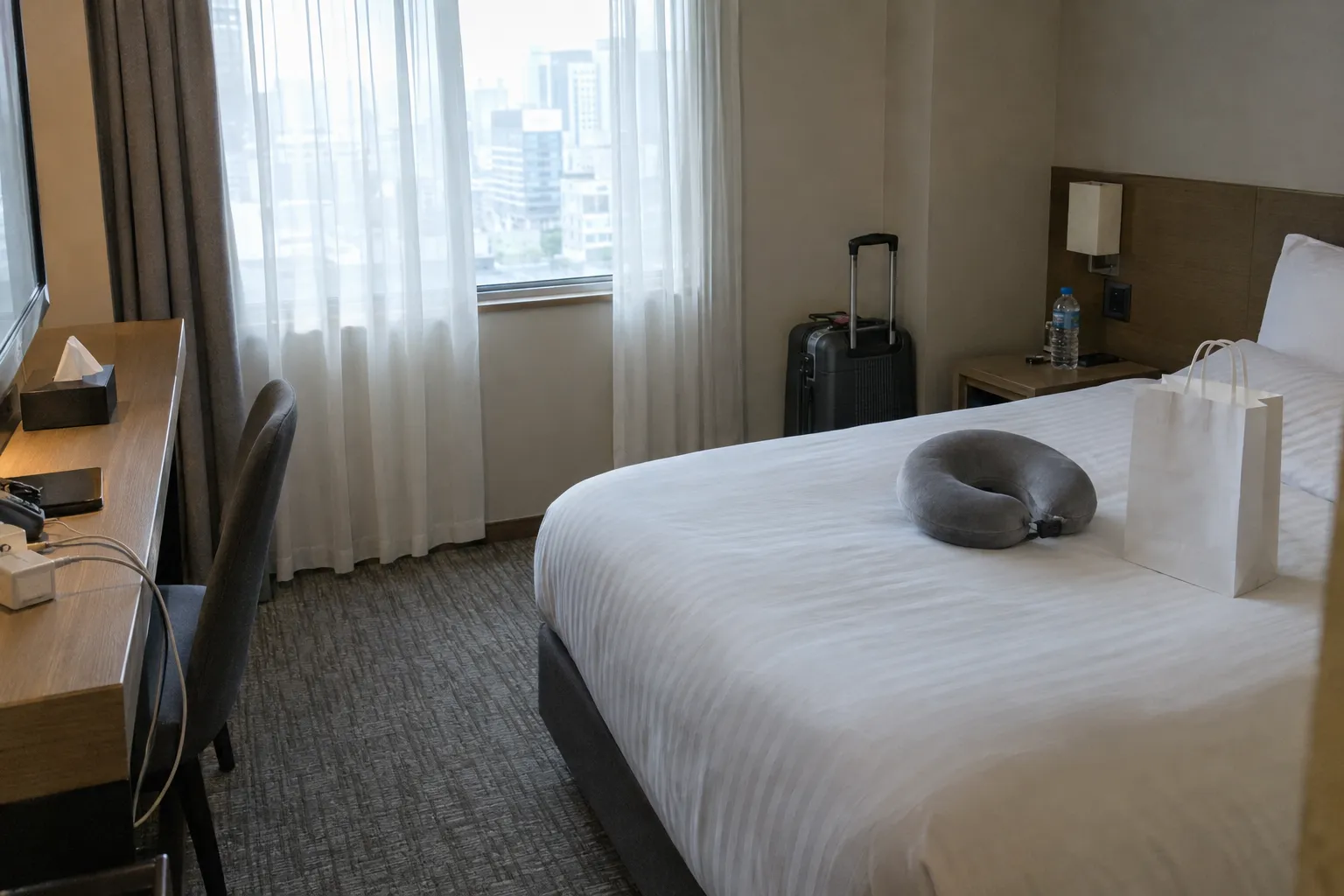
- Choose a hotel within ten minutes of the clinic, with a bed you can get into without sitting first.
Tummy tuck in Korea: who it suits
A tummy tuck in Korea is a less common request than in the US, because fewer Korean patients have the loose abdominal skin that follows large weight loss or several pregnancies. Surgeons who do them tend to be in larger clinics and hospitals with overnight beds. It is worth asking how many the surgeon performs in a year.
The operation removes loose skin and tightens the muscle wall under general anesthesia. It leaves a long scar low on the abdomen, often uses drains, and most surgeons want you nearby for about two weeks. It can be combined with liposuction. Combining it with a BBL in one session makes a long operation longer, and many careful surgeons prefer to stage them.
If your concern is fat and your skin is still firm, liposuction alone may do it. If the skin hangs, liposuction alone makes it worse. A surgeon can tell which you are from good photos, which saves you a trip when the answer is neither.
What moves the price
A Korean BBL is priced as liposuction areas plus the fat grafting. The number of donor areas is the main driver, followed by anesthesia time and whether you stay overnight. A tummy tuck is quoted as a single operation, with drains, garments and the overnight stay sometimes listed separately.
Ask for every line in writing, VAT included. Our guide to what a Korean surgery quote should list shows the lines to look for. When you are ready, clinic matching takes four questions, and you can meet the interpreters who would be with you on surgery day.