Body acne, cystic spots and hormonal breakouts: what a Seoul dermatologist does
Written by KCODI medical interpreter team · English deskUpdated · 8 min read

Korean body acne treatment is searched by people who have already worked through the shelves: the acid wash, the patches, the sprays for places you cannot reach. Those help mild cases and they do very little for deep, painful spots on the back and shoulders.
The useful thing about treating this in Korea is not a secret ingredient. It is access. You can see a dermatologist within a day or two, without a referral, and leave with a prescription plan rather than a recommendation to try something else from a shelf.
Here is what body acne actually is, what a Seoul dermatologist will do about the different kinds, and what one trip can realistically start.
Body acne is not just face acne lower down
Skin on the back and chest is thicker, the follicles are larger, and spots there tend to be deeper and more inflamed. That is why they scar more readily and why surface treatments reach less of the problem.
| What you have | Looks like | Usually needs |
|---|---|---|
| Comedonal spots | Small bumps, blackheads, rough texture | Topical retinoid, consistency, time |
| Inflammatory acne | Red painful spots that come and go | Topical plus often oral treatment |
| Cystic acne | Deep, tender lumps that last weeks and scar | Oral medication, sometimes an injection into a single lesion |
| Folliculitis, often mistaken for acne | Uniform itchy bumps, often after sweating or friction | A different treatment entirely; antifungal or antibacterial |
| Keloid-prone scarring | Raised scars on chest, shoulders and back | Early control of the acne, and specific scar treatment |
That fourth row matters. Fungal folliculitis on the back and chest is common in humid climates, looks like acne, and gets worse with acne treatment. A dermatologist distinguishes them quickly; a shelf product cannot.
Korean cystic acne treatment: the medical route
Deep painful lumps that last for weeks are not treated topically anywhere in the world, and Korea is no exception. The conversation will be about oral treatment, and often about isotretinoin, which is prescribed here by dermatologists under monitoring.
- Blood tests before and during treatment are standard. Ask what will be monitored and how often.
- It is not compatible with pregnancy and requires strict precautions. This is discussed thoroughly before anything is prescribed.
- Skin becomes dry and sun-sensitive, and it is not compatible with laser or aggressive procedures during and for a period afterwards. Say so if you were planning other treatments on the same trip.
- A single angry lesion can sometimes be settled quickly with an injection into the spot, which is a short appointment and not a long-term plan.
- Treatment runs for months, which means a Seoul trip can start it and your own doctor continues it. Ask for the plan and the dose in writing.
That last point is the practical limit of medical tourism for acne. A course cannot be posted to you, and you should not buy oral acne medication from a shop or online. Korean acne treatment for active breakouts covers the face equivalent in detail.
Hormonal acne, and what a dermatologist checks
Korean hormonal acne treatment usually starts with a pattern: spots along the jaw and lower cheeks, flaring with the cycle, in adults rather than teenagers. That pattern points toward treatments that work on hormones rather than only on the skin.
A dermatologist will ask about cycle regularity, hair growth pattern and weight change, and may suggest blood tests or a gynaecology referral if the picture suggests an underlying condition. That is thoroughness, not deflection.
Treatment options discussed internationally include certain oral contraceptives and anti-androgen medication, alongside standard topical and oral acne treatment. Availability and prescribing practice differ between countries, so ask what is available here and what your own doctor can continue.
What Korean skincare actually contributes
A korean acne wash or a gentle cleanser is a genuinely useful support. Korean formulations in this category are pleasant, widely available and reasonably priced, and a good cleanser plus a non-comedogenic moisturiser makes prescription treatment tolerable rather than unbearable.
What they do not do is clear deep acne. Over the counter acne treatment korea sells well because it works for mild cases and because it is the first thing anyone tries. If you have been trying for more than a few months without change, the shelf is not the problem, it is the wrong department.
- Korean acne care as a routine: gentle cleanser, treatment as prescribed, simple moisturiser, sunscreen daily.
- Stop layering. Adding acids on top of a prescription retinoid on a back that is already irritated makes everything worse.
- Wash after sweating and change out of damp clothing, which genuinely matters for back and chest.
- Patches are for a single surface spot. They do nothing for a deep lesion.
- Sunscreen is not optional, because acne marks darken in the sun and take months longer to fade.
Scarring is the part worth hurrying about
Deep body acne scars, and chest and shoulder skin scars more visibly than the face. Once a scar is formed it is a separate and much harder treatment problem, which is the argument for treating active acne quickly rather than waiting to see.
Brown or red marks left where a spot used to be are not scars. They fade over months with sun protection. A true scar is a change in the contour of the skin, raised or indented, and that is what needs its own plan.
Acne scar treatment carries the current range, keloid scar treatment in Korea covers raised scars specifically, and uneven skin tone and dark spots covers the marks that are not scars at all.
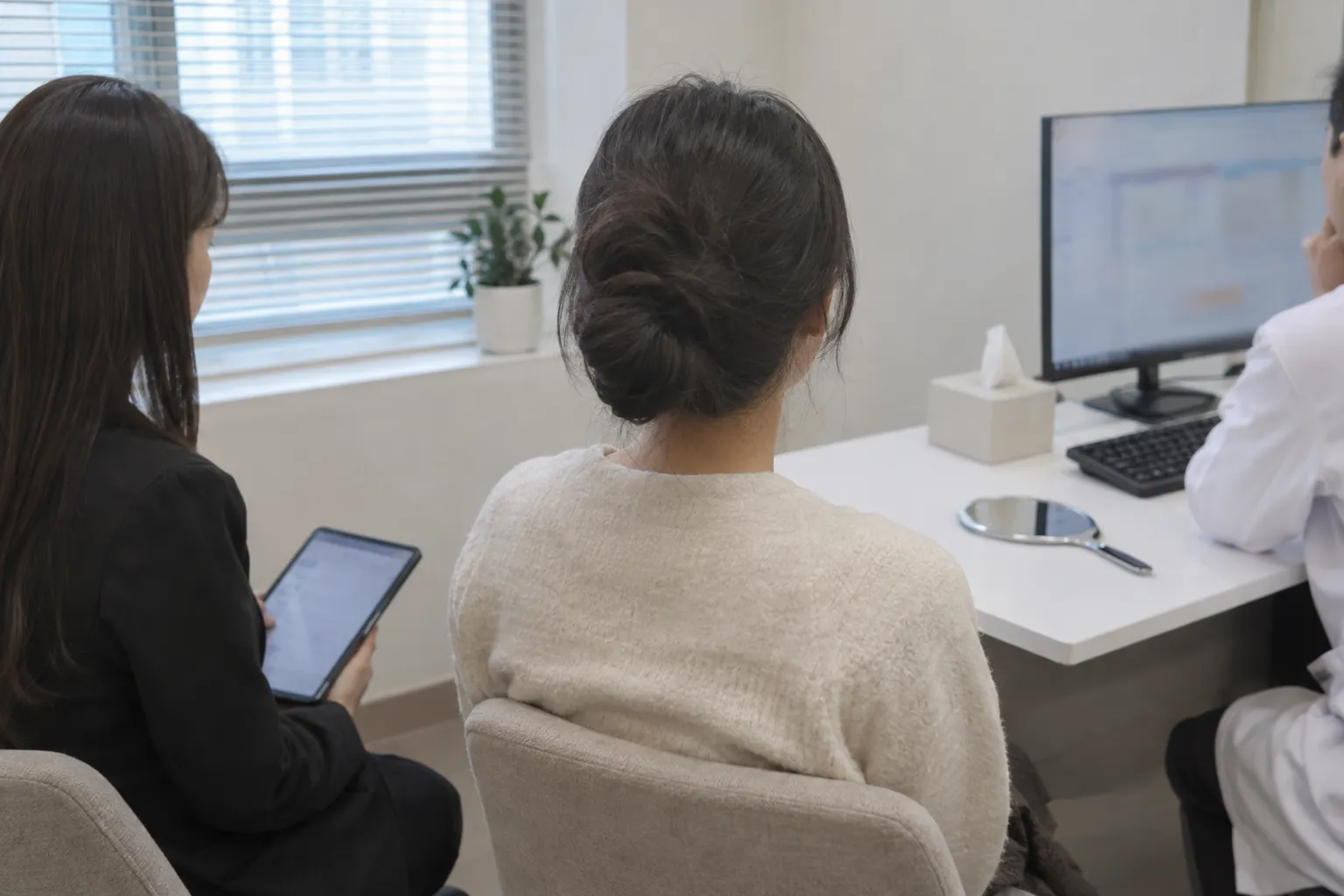
What one trip can realistically do
- Get a correct diagnosis, including ruling out folliculitis, which changes everything.
- Start a prescription plan, with the dosage and monitoring written down for your doctor at home.
- Have a single inflamed lesion settled if one is ruining your week.
- Buy the supporting products that actually suit your skin, chosen by a doctor rather than a shop assistant.
- Plan any scar treatment for a future trip, once the acne is controlled, because treating scars under active acne is wasted money.
Ask for your records and prescription details in English at the appointment, not afterwards. For how treatment plans map onto trip length, read how many days to visit Korea for treatment. To be matched with a dermatology clinic, use clinic matching, or meet the interpreters first.