Uneven skin tone in Korea: melasma, sun spots and marks are not the same thing
Written by KCODI medical interpreter team · English deskUpdated · 8 min read

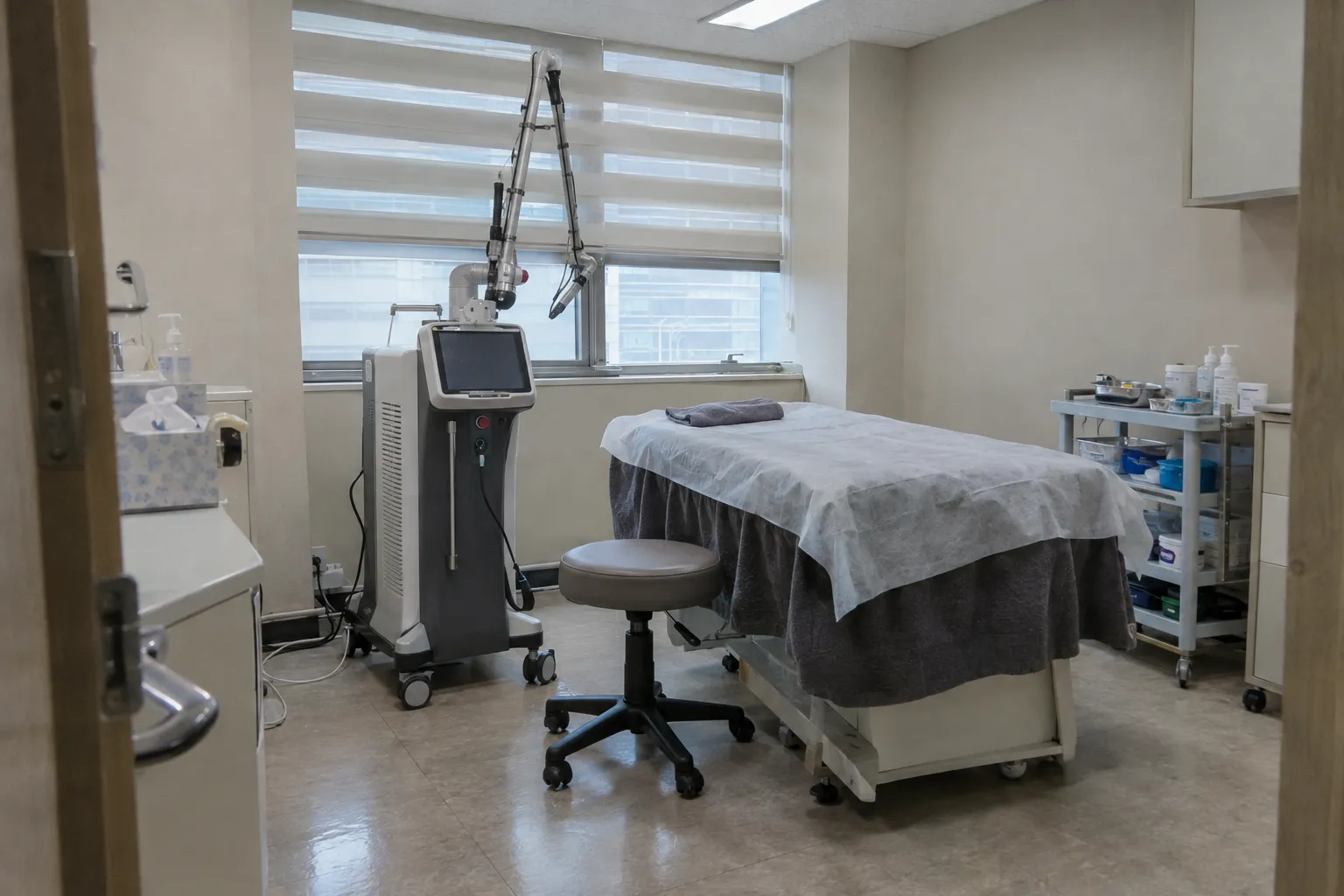
Korean skin treatments uneven skin tone is a search that covers at least four different problems: melasma, sun spots, post-inflammatory marks left by acne, and a general dullness that is mostly texture rather than pigment.
Korean dermatology is excellent at all of them and the clinics are full of the right equipment. The risk is not the equipment. It is being booked onto an aggressive treatment for the wrong diagnosis, which in this area does real and lasting harm.
Here is how the four are told apart, what a Seoul dermatologist does for each, and the question that protects you from the common mistake.
Telling them apart
| Appearance | Likely diagnosis | Behaves like | First-line approach |
|---|---|---|---|
| Symmetrical brown patches on cheeks, forehead, upper lip, worse in summer | Melasma | Chronic and recurring, provoked by heat, light and hormones | Sun protection, topical treatment, gentle options only |
| Discrete brown spots on sun-exposed areas, appearing with age | Solar lentigines, sun spots | Static, respond well to targeted treatment | Pigment laser or IPL over a short course |
| Brown or red marks exactly where a spot used to be | Post-inflammatory pigmentation | Fades on its own over months | Treat the acne first, then patience and sun protection |
| Overall dullness with rough texture, not obviously pigmented | Surface texture and sun damage | Improves with resurfacing and consistency | Gentle resurfacing, retinoid at home, sunscreen |
Mixed pictures are normal. Most adults over thirty have two of these at once, which is exactly why a doctor rather than a menu should be choosing the treatment.
Melasma: the one that punishes aggression
Melasma sits deeper and is driven by something ongoing: ultraviolet light, visible light, heat, hormones, sometimes pregnancy or contraception. Removing the visible pigment without removing the driver means it returns, and aggressive heat can make it return worse.
This is why a korean melasma peel is prescribed carefully and why Seoul dermatologists often use very low-energy laser settings over many sessions rather than one strong treatment. It looks slow. It is slow. It is also the approach that does not backfire.
- Daily broad-spectrum sunscreen, reapplied, is not optional. It is the treatment, not the aftercare.
- Heat matters as well as light. Saunas, hot yoga and the jjimjilbang floor can provoke it.
- Topical treatment is first-line and takes months. Korean clinics dispense compounded topicals; ask exactly what is in them and for how long it is safe to use.
- Low-energy laser programmes exist here and are used widely, over a course, with maintenance.
- It recurs. A doctor who says it can be cured in one visit has told you something useful about the clinic.
Sun spots and marks: the treatable ones
A korean treatment for dark spots that are discrete, sun-related and static is genuinely satisfying, because they respond. Pigment lasers and IPL target them directly, the spots darken over several days and then flake away.
Plan for that darkening. It is the treatment working, and it lasts roughly three to seven days on the face. Booking this the day before an important event, or the day before flying home to a wedding, is the regret interpreters hear most.
Post-acne marks are different again. Brown marks fade on their own over months with sun protection, and red marks fade faster. What they need is for the acne to stop first. Korean acne treatment for active breakouts covers that order, and PicoSure, Genesis and IPL in Korea explains which device does what.
Body pigment, including the request nobody says out loud
Korean armpit whitening is a real and common request in Seoul clinics, usually from people whose underarm skin has darkened from shaving, friction, or ingrown hairs rather than from anything systemic.
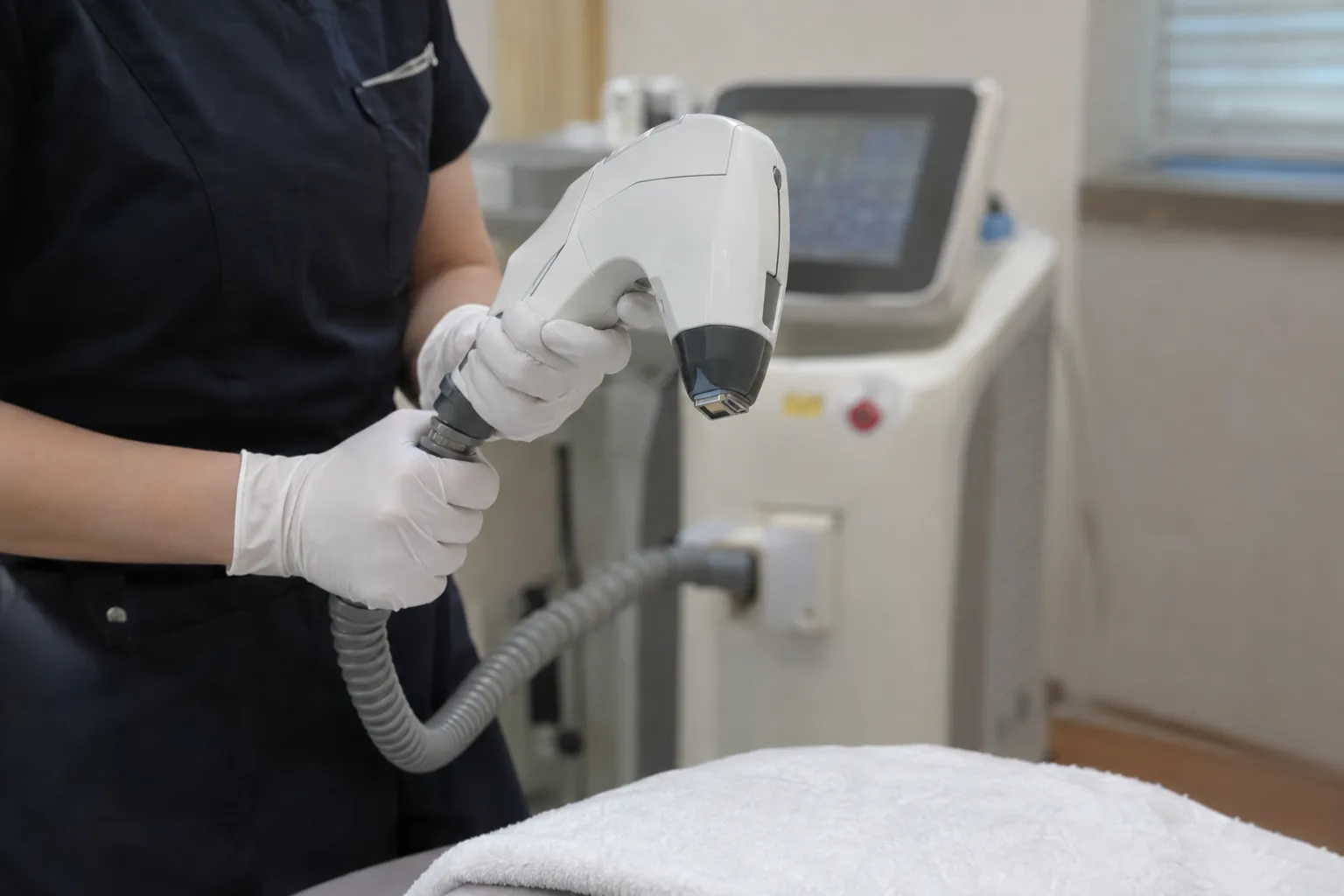
The honest answer is that the cause has to stop first. Repeated shaving and friction keep provoking pigment, so laser hair removal is often the treatment that actually changes the colour, indirectly, over several sessions. Bleaching creams sold for this purpose are frequently unregulated and some contain ingredients that damage skin.
- Ask what is causing the darkening before asking what will lighten it.
- Laser hair removal reduces the friction and ingrown cycle. It takes several sessions weeks apart, so a single trip covers one of them.
- Gentle topical treatment prescribed by a doctor is safer than anything bought over a counter for this purpose.
- Deodorant ingredients and tight synthetic fabric can be part of it.
- Expect gradual change over months. Anyone promising a fast result on body pigment is selling.
Laser hair removal in Korea covers the session arithmetic and what a single trip can realistically achieve.
Crepey skin and what actually changes it
Korean crepey skin treatment requests usually describe fine, papery texture on the cheeks, under the eyes, or on the neck and décolletage. That is sun damage and collagen loss rather than pigment, and it responds to different things.
What helps: consistent sun protection, a retinoid at home, and in clinic either gentle resurfacing over a course or energy-based treatments that stimulate collagen. What does not help: pigment lasers, which are aimed at a different target entirely.
Korean microneedling and RF devices covers the collagen route, and Korean skin boosters covers the injectable one. The pigmentation laser page carries the current range for pigment work.
Planning pigment work into a trip
Pigment treatment is a course, not an event, and that is the awkward truth for a visitor. What a single trip can realistically do: get a correct diagnosis, start the right topical treatment, and have one well-chosen session.
- Book the consultation early in the stay so there is time to act on what is found.
- Ask for the topical plan in writing with the ingredients named, so you can continue it or replace it at home.
- Have any darkening treatment early in the trip, not the day before the flight.
- Buy and use sunscreen from day one. Seoul summer sun undoes sessions quickly.
- Ask what to continue at home and when to come back, if coming back is part of the plan.
To be matched with a dermatology clinic, use clinic matching, or meet the interpreters first.