Full body laser hair removal in Korea: how it is priced and what a trip can cover
Written by KCODI medical interpreter team · English deskUpdated · 7 min read


Full body laser hair removal cost korea searches usually assume one number and one appointment. Neither exists. Korean clinics price hair removal per area, then bundle areas into a body package, and then sell that package as a course of sessions spread over months.
That last part is the one that decides whether this belongs on your Korea trip at all. Hair grows in cycles, and a laser only affects hairs in the active phase, which is why every clinic in the world sells sessions in multiples.
This guide explains how Seoul menus are structured, what changes your own session count, and which areas are genuinely worth booking on a short visit. The estimated range per area is on the laser hair removal in Korea page.
How the menu is built
| Layer | What it means | What to ask |
|---|---|---|
| Per area | Underarm, lower leg, bikini, chin, and so on | Which areas are counted separately |
| Per session | One pass over the chosen areas | Is this a first-visit event price |
| Course | A set number of sessions, usually paid up front | How many sessions, valid for how long, refundable |
| Body package | Several areas bundled | Exactly which areas, and are face and bikini included |
| Top-ups | Maintenance after the course | Priced per session or discounted for course patients |
A full-body package in Seoul is a bundle of areas, and clinics define full body differently. Face, hands, feet, bikini and buttocks are the ones most often excluded or charged as extras. Ask for the list in writing.
What changes your session count
- Hair colour and thickness. Dark, coarse hair responds best. Fine, light or grey hair responds poorly to most lasers.
- Skin tone. Device and setting choice matters more on deeper skin, and the wrong setting risks burns or pigment change.
- The area. Underarms and bikini usually need fewer sessions than legs or a back.
- Hormonal factors. Facial hair driven by hormones can need maintenance indefinitely.
- Medication. Some drugs make skin light sensitive, which is a question the doctor asks at the consultation.
- Your own cycle. Sessions are spaced weeks apart for a reason, and doing them closer together does not speed it up.
What is worth doing on a short trip
If you are in Korea for a week, a full-body course is not something you can finish. What does work is starting areas you will continue at home, or treating small areas where one or two sessions make a visible difference until you are back.
- Underarms and bikini: small, fast, and the most satisfying single-session results.
- Korea laser hair removal face treatments such as upper lip and chin: quick, but avoid them right before an event because of redness.
- Beard line and neck shaping for men: seoul laser hair removal men bookings are common and the chest and back are also popular.
- Legs and back: worth starting only if you have a plan to continue the course elsewhere.
- Nothing at all if you are tanned from your own holiday. Recent sun exposure is a reason clinics postpone treatment.
If you are building a treatment plan across a short trip, our Korean skin treatments compared guide sorts everything by downtime and session count.
Before and after the appointment
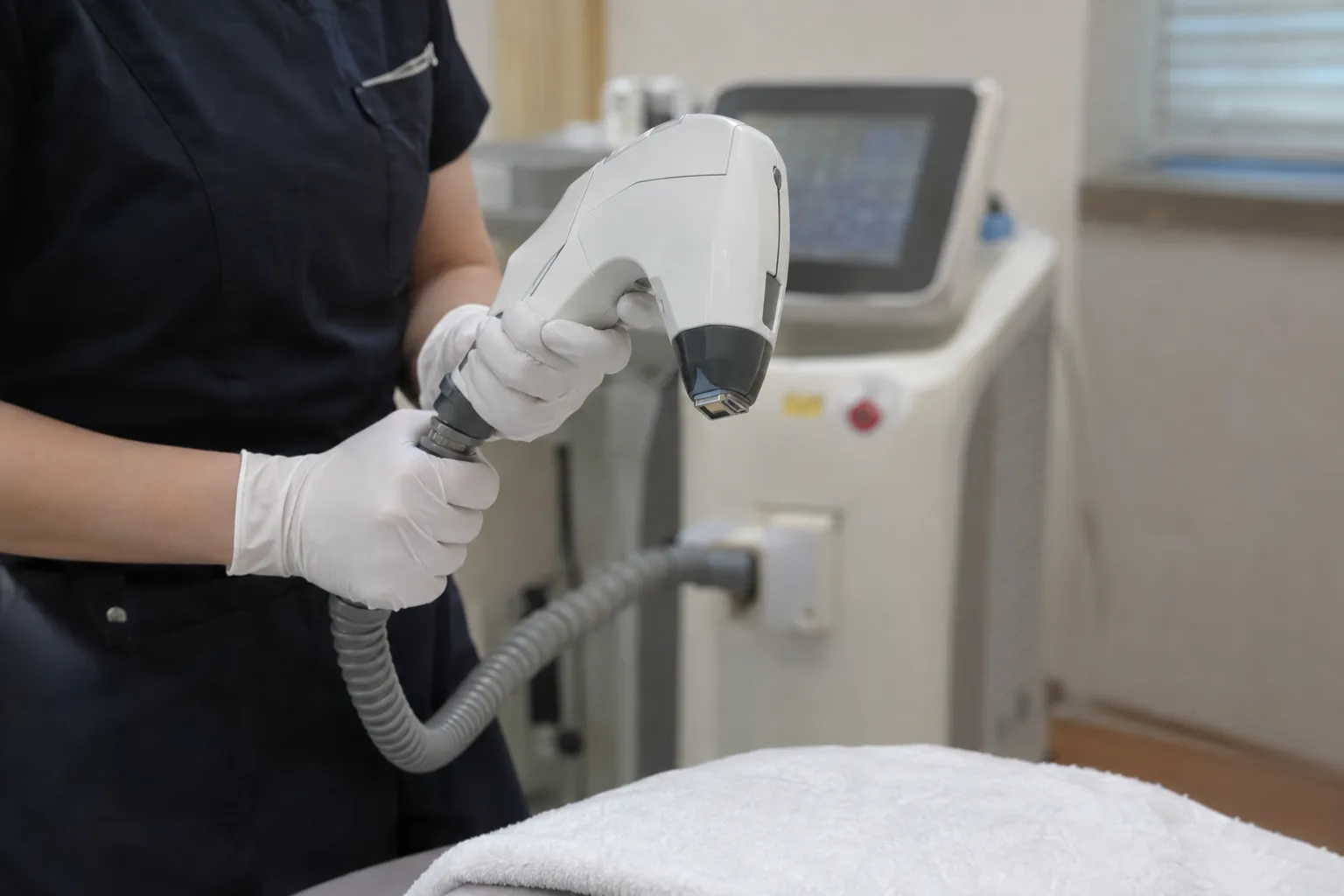
- Shave the area the day before, unless the clinic tells you otherwise. Do not wax or pluck for weeks beforehand, because the laser needs the root.
- No sun, no self-tan and no tanning beds for the period the clinic specifies.
- Tell the doctor about medication, recent peels, retinoids and any history of cold sores near the treated area.
- Afterwards: redness and bump-like swelling around follicles for hours to a day is normal.
- No sauna, jjimjilbang, hot bath or gym that day, and sunscreen on exposed areas afterwards.
- Hairs shed over the following one to three weeks. That shedding is the result, not regrowth.
If you are treating an area where ingrown hairs or pigment marks are the real complaint, mention it. That may be a pigmentation laser or an acne-type treatment rather than a hair removal course.
Clinic laser or the home device you saw in a shop
Korea sells a lot of home hair removal devices, and visitors often ask whether buying one instead is the smarter move. They are different tools doing a similar job at very different strengths.
| Clinic laser in Seoul | Home device | |
|---|---|---|
| Strength | Medical devices, settings chosen for your skin | Limited output by design, for safety |
| Who operates it | A clinic under a doctor's supervision | You |
| Skin tone safety | Device and settings adjusted for deeper skin | Many devices are restricted to a narrower range |
| Result | Longer-lasting reduction over a course | Reduction that usually needs continuous upkeep |
| Sensitive areas | Face and bikini handled clinically | Often not recommended |
A home device can maintain an area that has already responded to a clinical course. It is a poor substitute for starting one, especially on the face or on deeper skin tones where the settings matter most.
Choosing a clinic, and course refunds
Laser hair removal is a medical treatment in Korea and belongs in a licensed clinic with a doctor on site. Our clinic licence guide shows how to verify one, and best skin clinic in Seoul for foreigners covers what to look for beyond the licence.
The commercial risk with hair removal is specific: courses are paid up front and have an expiry period. If you are unlikely to return to Korea inside that window, buying a long course is buying sessions you will not use. Ask whether unused sessions can be refunded or transferred, and get the answer in writing before you pay, in the same way our quote in won guide describes.
If you would rather not sort through clinic menus at all, treatment matching takes about two minutes, or meet the interpreters who attend dermatology appointments in Seoul.