Korean eyes are four separate features, and only some of them are surgical
Written by KCODI medical interpreter team · English deskUpdated · 9 min read

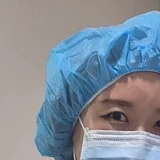
Almost everyone who asks about Korean eyes is holding a picture. Sometimes it is an actor, sometimes a stranger on an app, sometimes their own face with a piece of tape on the lid. The picture is clear. What is being asked for is not.
Inside the consultation room a surgeon does not see one shape. They see four features stacked on top of each other, and they can move each one separately. Two of them are operations. One is a filler appointment. One is often nothing but eyeliner and lighting.
So this is the version interpreters end up giving before the surgeon comes in, because it is the part that makes the rest of the appointment make sense.
There is no single Korean eye shape
Korea has monolids, deep natural creases, hooded lids and everything between, in the same family. The look that travels online is a fashion, put together from a crease of a particular height, an inner corner that shows a little more of the pink, a slightly rounded lower lid and makeup that exaggerates all three.
That matters practically. A surgeon cannot give you a shape; they can raise or lower a crease, open or close a corner, remove or reposition fat, and lift a lid that sits low. Everything else in your reference photo is bone, skin thickness, brow position and cosmetics.
So the useful question at the desk is never make my eyes Korean. It is: which of these four features do you want changed, and what happens to the other three when you do.
The four features a Seoul surgeon names
| Feature | What it is | What changes it | Not surgery |
|---|---|---|---|
| The crease | Whether the upper lid folds, and how high | Double eyelid surgery, incisional or buried-suture | Tape, glue, eyeshadow placement |
| The inner corner | How much the fold of skin covers the pink corner | Epicanthoplasty, a small incision at the inner corner | Eyeliner drawn past the corner |
| Lid fullness | Puffiness or hollowing from fat and muscle | Fat removal, fat repositioning or fat grafting | Concealer, light |
| Lid height | Whether the lid sits low over the pupil | Ptosis correction, which works on the lifting muscle | Nothing; makeup cannot lift a lid |
Ptosis is the one people miss. A lid that sits low makes the eye look sleepy and small, and it is a functional issue as much as a cosmetic one. Adding a crease to a low lid can make the eye look worse, not better, because the crease appears and the opening stays narrow. A good surgeon checks this before discussing anything else.
The full appointment shape, stay length and price range for the crease operation sit on the Korean eyelid surgery page, and the difference between having a crease and not having one is worked through in monolid vs double eyelid.
The epicanthal fold, and why Korea does corner work so often
The epicanthal fold is the small web of skin at the inner corner of the eye. Where it is prominent it shortens the eye horizontally and hides the pink inner corner. Opening it lengthens the eye towards the nose and makes the two eyes look closer together.
Korean clinics offer it constantly, usually bundled with a crease, because the two together change the proportion more than either alone. That bundling is also where foreign patients get surprised: they agreed to double eyelid surgery and the quote includes a corner they did not ask about.
- The inner corner is the one part of eye surgery that can leave a visible scar in some people, because the skin there is thin and sits in a crease line.
- It is difficult to reverse. Skin taken from the corner does not come back.
- It can make wide-set eyes look balanced, and close-set eyes look too close. The starting distance decides.
- Outer corner work is a separate operation again, and it is not the same conversation.
Aegyo sal is not surgery, usually
The small roll under the lower lash line is the feature most often mistaken for an operation. In Korea it is most commonly makeup, then filler, then in a minority of cases fat or a graft. It reads as youthful and slightly smiling, which is why it turns up in every reference photo.
Filler there is a short appointment at a skin clinic, not a surgical booking. It is also one of the more technique-dependent areas of the face, because the skin is thin and lumps show. The Korean lip and facial filler page covers how that appointment runs, and Korean filler brands explains which products can be dissolved if you dislike the result.
Confusingly, the opposite complaint arrives at the same clinics: under-eye bags that age the face rather than soften it. That is a different operation again, covered on the Korean eye bag surgery page. A surgeon who cannot tell you which of the two you have is not looking carefully.

If you are not Korean, what carries over
Plenty of patients arrive worried that Seoul surgeons only know one kind of eye. The techniques are anatomy-based and transfer fine. What does not transfer is the reference photo, because the frame around the eye is different: brow height, orbital rim, skin thickness and the amount of lid show at rest all change what a crease will look like on you.
- Thicker lid skin holds a higher crease badly and tends to look puffy above the line. Surgeons often go lower than the photo you brought.
- A heavy brow pushes the lid down. Sometimes the honest answer is that the brow is the problem, not the lid.
- Deep-set eyes already have a crease; adding a second line is not the fix, and someone should say so.
- Age changes the plan. Loose skin above the lash line is a skin question before it is a crease question.
This is also why before and after photos are read carefully rather than collected. A result on a different starting eye is a demonstration of the surgeon's taste, not a preview of your face.
Before you book: the questions that change the plan
- Do I have ptosis, and if so is the crease alone going to disappoint me?
- What crease height suits my lid skin, and why is it lower or higher than the photo I brought?
- Is the inner corner necessary for this result, or is it being added by default?
- Buried suture or incision, and what happens if the buried one loosens later?
- How long until the line looks settled rather than surgical, and what does month one look like?
- Who answers me after I fly home, and in what language?
Eyes settle slowly. The line sits high and firm for weeks and the anxious moment usually lands long after the flight home, when the clinic's front desk no longer answers in your language. Agreeing in advance who replies then is worth more than a ranked list of clinics.
Browse every operation on the Korean plastic surgery page, let clinic matching shortlist surgeons in two minutes, or meet the interpreters who would be with you. If something goes wrong while you are in Korea, the Medical Korea Support Center answers on +82-1577-7129 and K-MEDI handles medical dispute mediation.