What Do You Ask for When You Want Korean Glowing Skin?
Written by KCODI medical interpreter team · English deskUpdated · 7 min read
Edited by KCODI medical interpreter team
In shortKorean glowing skin is usually a mix of four things: water held in the skin, a smooth surface, even tone and calm redness. In a Seoul clinic, the doctor checks which one is missing for you before suggesting anything.
The word that gets lost most often in a Seoul skin consult is "glow". Korean has several words for it, and a dermatologist hears each one as a different problem. Ask for "Korean glowing skin" without saying which kind, and the conversation tends to drift toward whatever the clinic's menu is built around.
So here is the short answer. Glowing skin, Korean style, is skin that holds water, has a smooth surface that reflects light evenly, an even tone, and little visible redness. A large part of that comes from a gentle routine and daily sunscreen. Clinic treatments can add to one of those four parts, and which part is something a doctor decides after seeing your skin in person.
If your skin is reactive, acne-prone or blotchy, and stacking more products has only made it angrier, this is written for you. It covers the Korean vocabulary, what a consult day looks like, and the reasons a doctor may tell you to wait.
What does "glowing skin" mean in a Korean clinic?
Glowing skin in a Korean clinic means light bouncing evenly off skin that is hydrated, smooth and calm. Korean clinics rarely treat "glow" as one thing; they split it into parts and ask which part you're missing.
Think of a window. Clean glass reflects light. Glass with condensation, scratches or a tint doesn't, even though it's the same glass. Dehydration is the condensation, rough texture is the scratches, and uneven pigment or redness is the tint. A treatment aimed at the wrong one changes little you can see in the mirror.
This matters most when your skin is hard to treat. Someone with easy flushing and someone with dull, dehydrated skin can both say "I want glow" and may need quite different plans.
The Korean words an interpreter listens for
Five Korean words carry most of the meaning, and picking the right one changes where the consult starts. Here is how they usually map onto what a doctor examines.
| Korean term | Roughly means | What the doctor usually looks at | Treatment families often discussed |
|---|---|---|---|
| mul-gwang | "water glow", a dewy shine | hydration, fine dryness lines | skin boosters, hydrating facials |
| yun-gwang | a soft satin sheen | surface texture, oil balance | facials, gentle resurfacing |
| pibu-gyeol | skin texture | pores, roughness, old acne marks | resurfacing lasers, microneedling |
| ton / japti | tone / small spots | pigment, sun damage | pigment lasers, toning |
| hongjo | redness, flushing | visible vessels, sensitivity | vascular lasers, barrier care |
Our interpreters often see foreign patients say "glow" when the thing that bothers them is really pibu-gyeol (texture) or hongjo (redness). Once the right word is on the table, the doctor's questions get much more specific, and so do the options.
Can you build Korean glowing skin at home?
For many people, yes, a large share of it. Hydration, sun protection and not damaging the skin barrier do much of the work people call Korean glow, and none of it needs a clinic.
The routine behind it is less exotic than ten-step lists suggest: a mild cleanser, water-based hydrating layers, a moisturiser, and sunscreen every day. Exfoliation is where reactive skin usually goes wrong. The American Academy of Dermatology advises matching exfoliation to your skin type, being gentle, and taking extra care if you use retinoids or benzoyl peroxide, since exfoliating on top of those can leave skin red and irritated.
Creams also have a ceiling. A paper in Experimental Dermatology proposed the "500 Dalton rule": molecules much larger than about 500 daltons pass through intact skin poorly. That is one reason a cream listing collagen works mainly on the surface, and why clinics place some ingredients into the skin with needles instead.
If "Korean skin" to you means lighter skin, it helps to separate that from glow. The clinic vocabulary is about reflection and evenness. A dermatologist will usually talk about fading spots and calming redness, and whether that is realistic for your skin is a judgment made at the exam.
What a Seoul skin consult looks like when you ask for glow
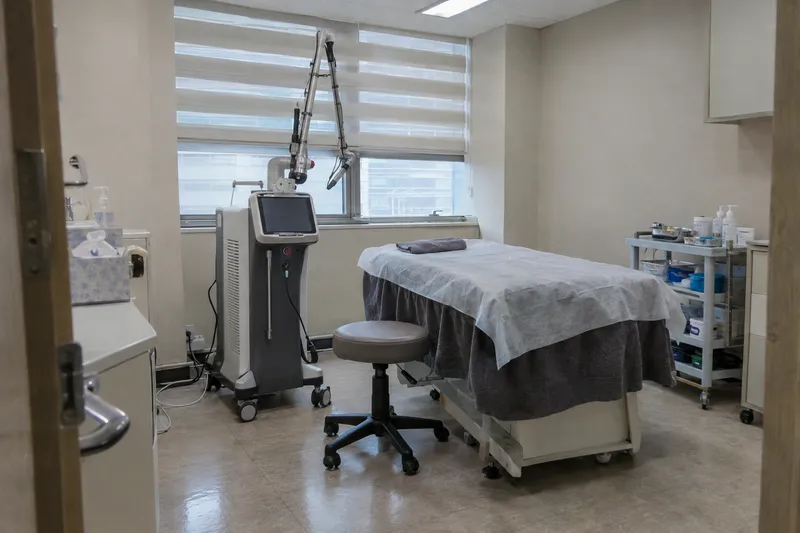
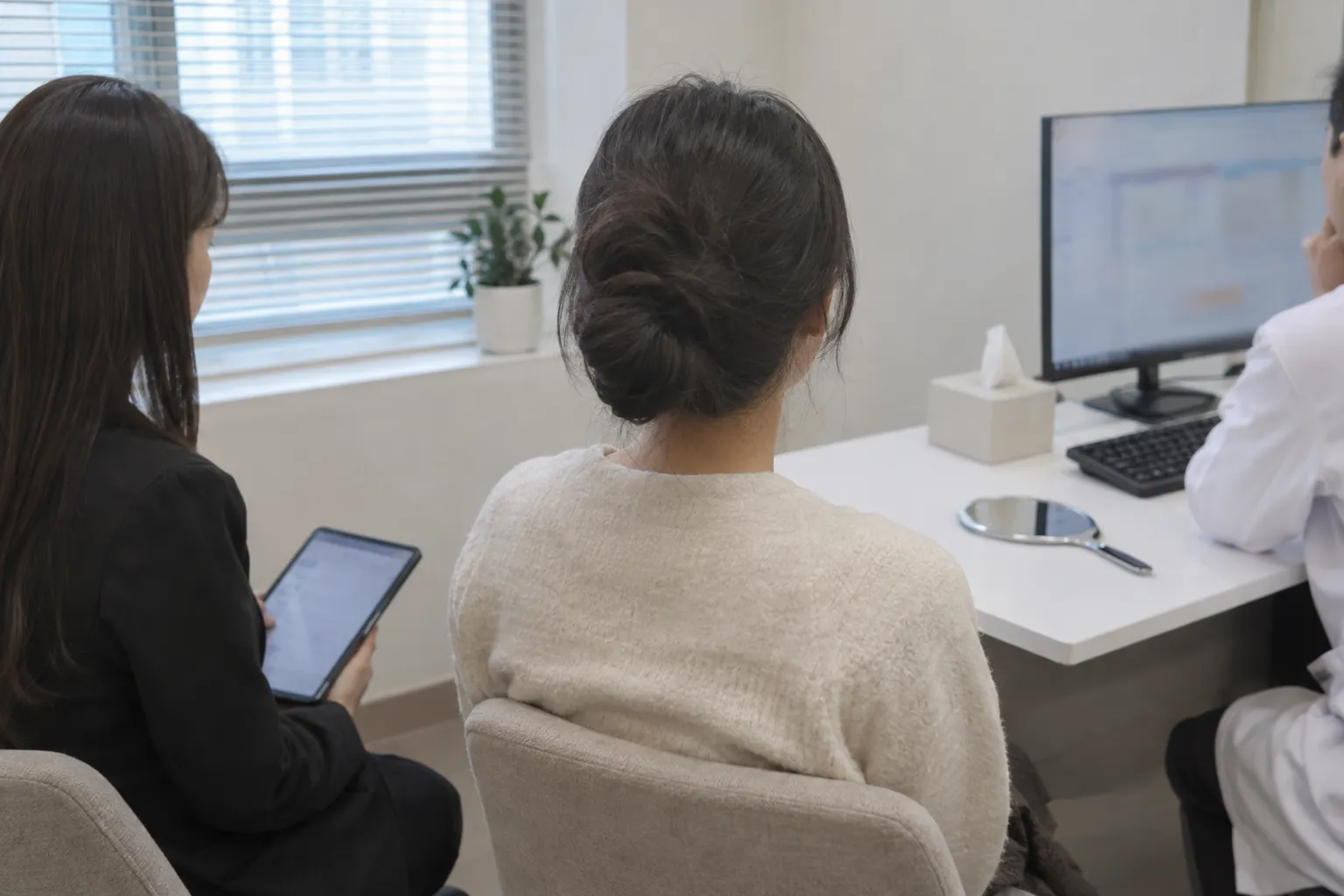
A glow consult is mostly questions and looking, not treatment. Expect a medical form, a cleansed face, often standardised photos, and then the doctor examining your skin up close while asking about your routine, medicines and flight date.
The form asks about allergies, medicines, pregnancy and past procedures. If you go with an interpreter, this is where it matters most, because a missed answer here can change the plan. After the exam, the doctor explains which of the five parts they see in your skin and what could address it. Some treatments may be offered the same day; others may need a separate visit.
Bring these to the consult:
- photos of the labels of every product you use now, especially retinoids, acids or benzoyl peroxide
- the names and dates of any prescription acne or skin medicine from the past year
- a short note on past lasers, peels or injections, and how your skin reacted
- your flight date home
- a note if you are pregnant, breastfeeding or planning to be
- which Korean word from the table above sounds most like your concern
If you haven't chosen a clinic yet, the clinic matching page is where that starts.
Which clinic treatments come up for glow, and how strong is the evidence?
The usual candidates are facials, skin boosters, and lasers for tone or redness. The evidence differs a lot between them, so it is fair to ask the doctor what a treatment is expected to change and for how long.
A Korean facial works on the surface: cleansing, gentle exfoliation, hydration. The effect is short-lived and the risk is low. Our post on what is actually in a glass skin facial goes through the steps.
Skin boosters are small injections that place hydrating or regenerating material into the skin. Polynucleotide (PN) boosters are among the most discussed in Korea; see the skin booster page. A 2024 systematic review in the Journal of Cosmetic Dermatology reported improvements in skin quality measures across the studies it included, while noting that larger controlled trials are still needed. For a side-by-side of booster types, read Rejuran, Juvelook and exosomes compared.
Lasers come in when the missing part is tone or redness rather than water. Pigment and vascular lasers are different machines aimed at different targets, and blotchy pigment can turn out to be melasma, which behaves differently; this guide to uneven tone and melasma covers that.
Risks, side effects and who should wait
Some skin should not be treated yet, and a doctor saying "not this trip" is a normal outcome. The treating doctor at the clinic makes that call; these are the situations where it commonly comes up.
- An active breakout, infection or cold sore in the treatment area is a common reason to postpone.
- Recent oral acne medicine such as isotretinoin often leads doctors to delay lasers and resurfacing.
- Pregnancy or breastfeeding usually means many injectables and lasers are deferred.
- Darker skin tones can be more prone to dark marks after some lasers, so the doctor may change settings or suggest a different approach.
- Over-exfoliated skin, from a strong home routine in the weeks before travel, can sting and redden more after treatment.
Injections carry their own risks. For hyaluronic acid injectables, the U.S. Food and Drug Administration lists bruising, redness, swelling, pain and itching among common effects, and rare but serious problems such as accidental injection into a blood vessel. How your own skin reacts varies, and only the in-person exam can judge it.
How close to your flight can you schedule it?
Earlier in the trip is safer. Small bumps, redness or crusting can follow some treatments, and you want time for them to settle, and for a check if the doctor asks for one, before you board.
The order that tends to fit a short stay is consult early, treatment soon after, flight last. Ask the doctor directly what your specific treatment usually looks like on day one and day three, and plan sightseeing around that. Cabin air is dry, so moisturiser goes in your carry-on, and sunscreen with a hat matters more than usual after lasers.
If a Seoul trip is on your mind, send your travel dates and a photo of the products on your shelf now to us on WhatsApp. With those two things, the consult can start from your real routine and your real flight date.