What LASIK costs in Korea is decided by your screening, not the package
Written by KCODI medical interpreter team · English deskUpdated · 8 min read

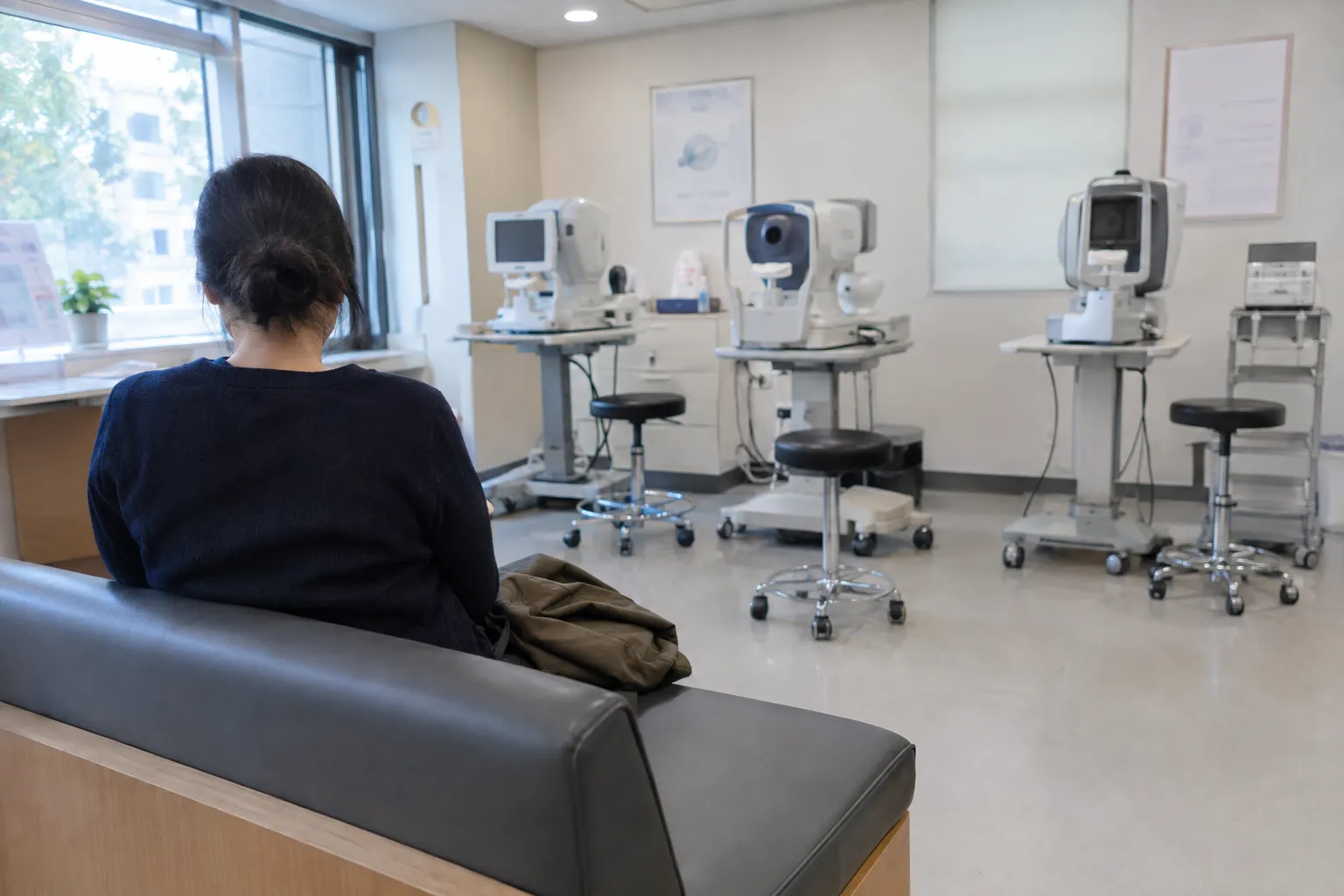
Asking how much does LASIK cost in Korea produces a tidy advertised figure and a much less tidy reality. The advertised figure is for a standard case on a standard cornea with a standard laser. Whether that is you is decided by a screening that takes around two hours.
Korean eye clinics screen thoroughly, and a meaningful share of people who walk in expecting LASIK walk out with a recommendation for LASEK, SMILE or a lens implant instead. That is not an upsell. It is what the corneal map says.
Here is what the screening measures, what changes the number, and how many days a visitor should keep free.
What the screening decides
The scan measures corneal thickness, corneal shape, pupil size, tear film quality and the stability of your prescription. Those five numbers decide which procedures are safe for you, and the safe list decides the price.
| Finding | What it changes | What to ask |
|---|---|---|
| Thin cornea | Flap-based LASIK may be ruled out; surface treatment or a lens is suggested | How much tissue is left after treatment? |
| High prescription | Pushes towards lens implantation rather than laser | Am I inside the safe correction range for laser? |
| Dry eyes | Affects recovery and sometimes the choice of procedure | How is my tear film, and what does that mean for recovery? |
| Laser platform | Clinics run different generations of laser at different prices | Which laser, and why that one for my eyes? |
| Aftercare included | Drops and follow-up visits may be bundled or charged separately | Which follow-ups are in the quote? |
The ranges partner clinics work in for each route sit on the laser vision correction and ICL lens implant pages. Two quotes only become comparable once both name the procedure, the laser and the follow-up schedule.
LASIK, LASEK and the recovery you can actually afford
LASIK creates a flap, and vision clears fast, usually within a day or two, with mild discomfort. LASEK works on the surface without a flap, suits thinner corneas, and takes longer to settle, with several genuinely uncomfortable days and blurred vision for weeks.
That difference matters more than price for a visitor. A LASEK recovery inside a seven-day trip means most of the trip is spent indoors with sunglasses on, and the flight home lands in the worst window. Clinics will tell you this if asked directly.
- Day of surgery: the procedure itself takes minutes. Expect to rest with eyes closed for the remainder of the day.
- Day one: a check the next morning is standard. Do not book this flight out.
- Days two to four: LASIK vision is usually functional; LASEK is still blurred and light-sensitive.
- Around day seven: a further check before most people fly. Ask for this to be scheduled before you book tickets.
- Weeks after: drops continue, and night glare settles gradually. Dry eyes are the most common ongoing complaint.
When laser is the wrong question
Over roughly forty-five, the lens inside the eye is changing, and correcting distance with a laser can trade one inconvenience for another. Clinics will raise reading vision, monovision and, for some people, lens-based options instead.
If clouding of the natural lens has already started, the conversation moves to cataract surgery, which is a different operation with a different recovery and is usually planned around a hospital rather than a walk-in laser centre. Ask which department would handle it and whether the same clinic does both.
A comparison of the eye operations Korean clinics actually offer, and who each one suits, is in which Korean eye operation you need. Eyelid surgery is a separate matter entirely, covered in upper blepharoplasty for hooded eyelids.
Planning the trip around the eyes
Keep at least five to seven days, book the screening on arrival day and the surgery a day later, and do not plan a flight the morning after surgery. Recommended stay lengths for each route are on the eye clinic pages.
- Bring your current glasses and any prescription history you have. Stability of the prescription is part of the assessment.
- Stop contact lenses before screening, soft lenses usually for about a week, hard lenses for longer. Ask the clinic for their exact figure before you fly.
- Pack sunglasses and expect to wear them indoors for the first days.
- Arrange who collects you after surgery. You will not be driving or reading signs clearly.
- Ask what would count as a problem after you fly, and who you contact from abroad.
One more honest note about advertised numbers. A very low package price is usually an older laser platform or a narrower list of included follow-ups, not a trick. It may be completely appropriate for your eyes. Ask what is different rather than assuming the worst, and compare the two quotes on the same five lines.