Rejuran is four different products, and clinics rarely say which one you booked
Written by KCODI medical interpreter team · English deskUpdated · 8 min read
A rejuran treatment is one of the most-booked appointments foreigners make in Seoul, and one of the least explained. You book Rejuran, you get injected, you leave with small bumps and a vague sense that something good happened.
What almost nobody is told is that the name covers a family of products. They share the same base material, a polynucleotide derived from salmon DNA, but they differ in concentration, in what else is in the syringe, and in where in the skin they belong.
Booking the wrong one is not dangerous. It is simply a wasted appointment and a wasted week of your trip. Here is how the versions differ and what to ask before the needle is drawn up.
The four names on a Seoul menu
| Version | Generally used for | Depth and technique | What patients notice |
|---|---|---|---|
| Healer | Overall skin quality, fine lines, the classic first course | Many small injections across the face | Bumps that settle over a day or so |
| HB | Skin that also needs hydration; blended with hyaluronic acid | Similar technique, softer feel afterwards | Less bumpy, more immediate plumpness |
| i | The thin skin around the eyes | Shallow, very small volumes | Bruising here is more likely than elsewhere |
| S | Focal work on scars and texture | Targeted rather than spread across the face | Slower, judged over a course |
Clinics mix and match within a single appointment, which is reasonable. What is not reasonable is not telling you which was used, especially when you are comparing the price against a quote from another clinic that used a different version.
One practical consequence: two quotes that look far apart are often quoting different versions in different volumes, and neither menu says so. Asking for the version and the syringe count turns two mystery numbers into a comparison you can actually make, and it takes about ten seconds at the counter.
It is also worth knowing that clinics in Seoul buy these products at different prices depending on volume, so the same version genuinely does cost different amounts in two buildings on the same street. That is ordinary commerce rather than a trap, and it is why the partner rate matters more than a promotion.
The current range partner clinics work in is on the Rejuran and skin boosters page, and how this product sits against other boosters is in Korean skin boosters compared.
What a rejuran injection actually does
It is not a filler. Nothing is being added for volume and nothing lifts on the day. The material is placed into the skin to prompt repair, and what you are buying is your own skin's response over the following weeks.
That has two consequences people find annoying. The first is that a single session shows very little. Courses are the norm, spaced a few weeks apart, which is awkward for a visitor. The second is that the result is a change in skin quality rather than a change in shape, so photographs rarely capture it and the person who notices first is usually you, in the mirror, at week four.
Who it suits, and who should spend the money elsewhere
- Thin, crepey skin that looks tired rather than lined. This is the best fit.
- Skin that has been over-treated with lasers and needs a repair phase rather than another aggressive session.
- Under-eye texture, where the i version is used and where expectations need to be lowest.
- Post-acne texture as part of a longer plan, not as the whole plan.
It is a poor choice for volume loss, for sagging that needs lifting, and for deep indented scars, all of which need a different intervention. It is also a poor choice when acne is active. Pigment is a different problem again and belongs with the treatments on the pigmentation and laser page.
Pregnancy, breastfeeding and active skin infection are the usual reasons a doctor will decline, and a history of keloid scarring is worth mentioning because any needle is an injury. If you are taking anything that affects bleeding, say so, because bruising after dozens of small injections is the difference between a good week and a covered-up one.
If your skin is dry rather than thin, the version question matters even more, and the best PDRN in Korea for dry skin goes through that specific decision.
What the appointment is like and what follows it
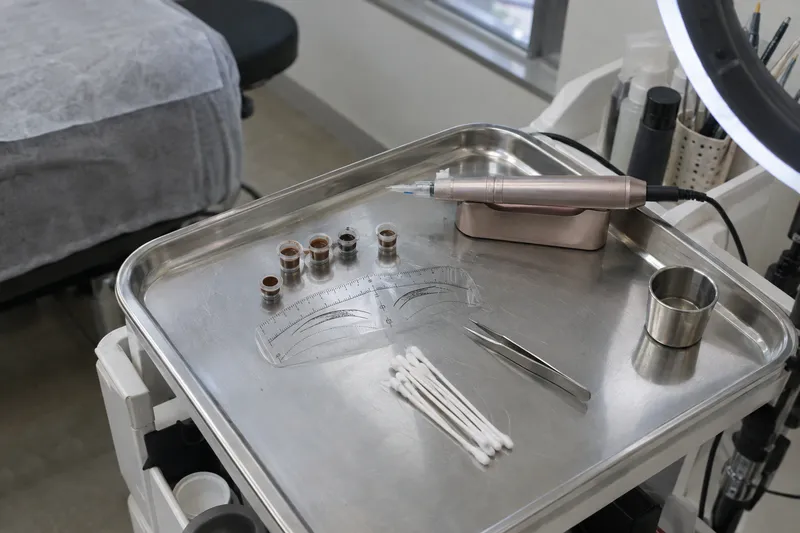
Numbing cream goes on for around twenty to thirty minutes. The injections themselves take ten to fifteen. It stings more than filler and less than most people fear. Afterwards the face carries small raised bumps where the product sits.
- Bumps generally settle within a day, sometimes two. Do not book it the morning of an event.
- Bruising is possible anywhere and likelier under the eyes. Arnica does not prevent it; planning does.
- Skip saunas, alcohol and hard exercise that day, which in Seoul mostly means skipping the jjimjilbang.
- Keep the skin simple for a couple of days: no acids, no retinoids, no scrubs.
- Sunscreen, which is the boring instruction everybody drops while sightseeing.
If you are only in Korea once, say so. A doctor planning a single session chooses differently from one planning a course of four, and the honest version of that conversation is worth more than a discounted package you will never finish. For the whole menu side by side, see Korean skin treatments compared or let clinic matching shortlist for you.