Seoul skin is a schedule, not a single appointment
Written by KCODI medical interpreter team · English deskUpdated · 8 min read

The thing people call Seoul skin is real enough to be worth a flight, and it is almost never produced the way visitors assume. It is not one strong treatment. It is a lot of small ones, spaced out, on top of a boring daily routine, in a city where a clinic visit costs about as much as dinner and takes twenty minutes on the way home from work.
That difference in rhythm is the whole story. A visitor with six days wants a transformation. A person living in Gangnam has a maintenance habit, and the result you are looking at is the compound interest on it.
So the useful planning question is not which treatment is strongest. It is which parts of the habit you can compress into one trip, and which parts have to continue at home.
Three layers, and only one of them is dramatic
| Layer | What it actually does | Where | How often here |
|---|---|---|---|
| Barrier and sun care | Keeps the surface intact so everything else works | At home, daily | Every day, no exceptions |
| Maintenance treatments | Evens tone, keeps texture smooth, adds hydration | Clinic, short appointments | Every few weeks to monthly |
| Procedures | Changes structure: scars, laxity, deeper pigment | Clinic, planned | A course, then long gaps |
Visitors book the third row and skip the first. Residents live in the first two and touch the third occasionally. That is why a strong single treatment on unprepared, unprotected skin so often looks worse for a fortnight and no better afterwards.
Which treatment belongs in which row is laid out by downtime and visit count in Korean skin treatments compared, and the everyday clinic menu sits on the Korean skin clinic page.
What one trip can change, and what it cannot
- Changes in one trip: surface texture, dullness, hydration, small raised spots, a first pass at mild pigment. These are the appointments people fly home happy from.
- Needs a course over months: acne scars, stubborn melasma, laxity, anything structural. One session of these is a down payment, not a treatment.
- Does not respond to a holiday at all: active inflamed acne, which needs a medical plan and follow-up, not a facial.
- Gets worse with a rushed schedule: sensitive skin stacked with three strong treatments in five days. Clinics here will do it if you insist. A good doctor will argue with you first.
This is also the honest answer to the question of whether it is worth coming. If your goal is the first row, a trip does it well. If your goal is the second, the sensible plan is a first course here and a way to continue it wherever you live, which is worth saying out loud in the consultation so the doctor plans around your flights.
The unglamorous layer everyone skips
Ask a Seoul dermatologist what produces the effect and the first answer is rarely a machine. It is that the surface is not damaged: not stripped by harsh cleansing, not inflamed, not repeatedly sunburnt. Everything a clinic does sits on top of that, and none of it holds if the base is irritated.
- Gentle cleansing. The multi-step reputation is largely about mildness, not about the number of bottles.
- Sun protection used daily and reapplied, including in winter and indoors near windows. This is the single biggest difference between treated skin that holds and treated skin that rebounds.
- One active ingredient at a time, introduced slowly, rather than five bought in a duty-free rush.
- Leaving things alone. Picking and over-treating produce most of the pigment problems that then get lasered.
Pigment is where this bites hardest. Melasma in particular reacts badly to heat and aggressive treatment, and a sizeable share of the difficult cases in Seoul clinics started as a well-meant attempt to fix it faster.
Choosing where to go in Seoul
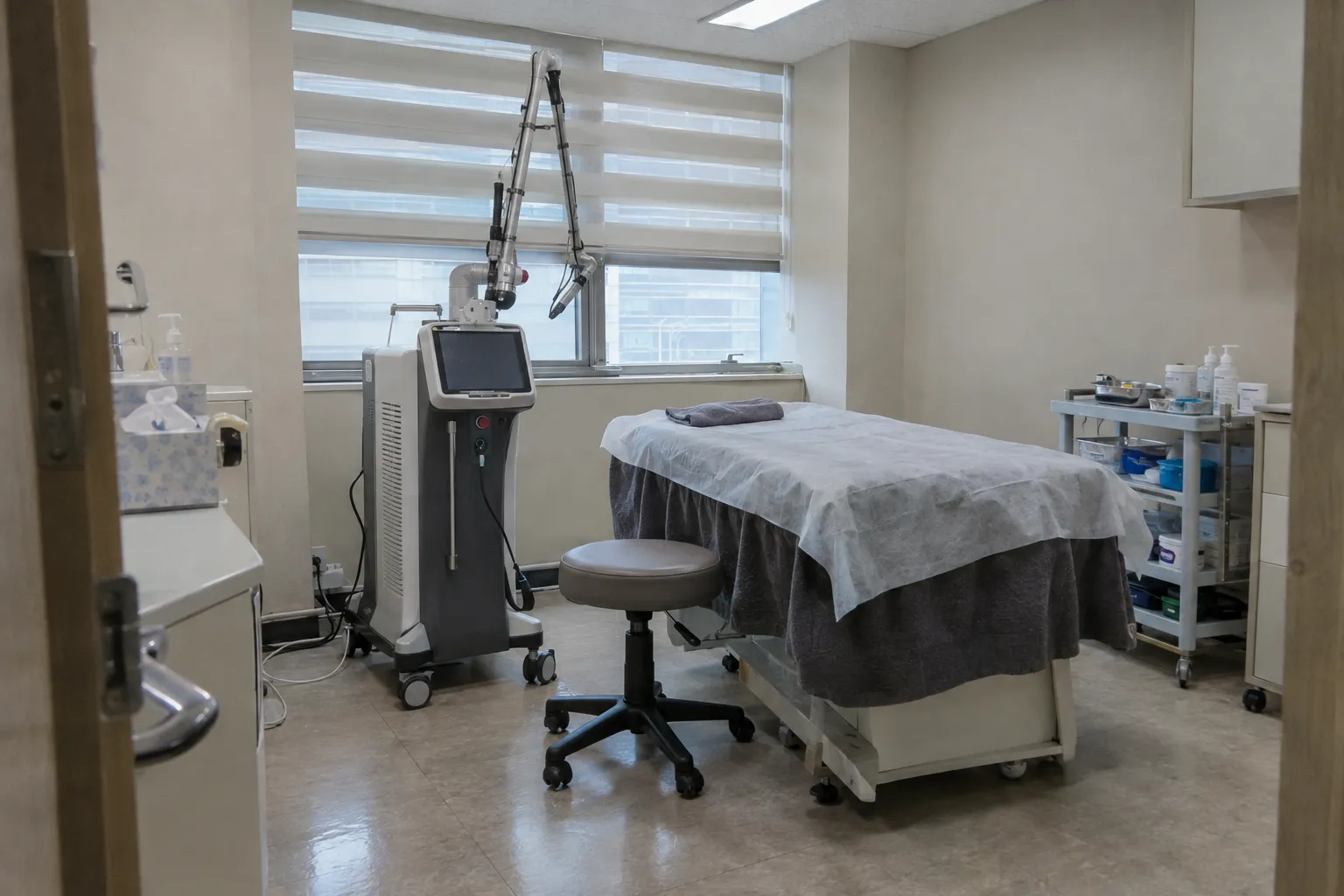
The word clinic covers several different businesses here, and picking the wrong kind is the most common way a trip is wasted. A doctor-led skin clinic, an aesthetic salon and a medi spa all advertise in English with similar photographs.
- Anything involving a medical laser, an injection or a prescription is a doctor's decision and belongs in a clinic with a named specialty.
- Extraction, massage and mask work can be excellent at a salon, and cheaper. It is not medicine and should not be sold as it.
- Ask who performs each step. Doctor-performed and therapist-performed are both normal in Korea and the price reflects it.
- Ask whether the quote is one session or a course, and whether the unused part expires. Packages are the default here.
The three business types are separated in where to get a facial in Seoul, the vetting checks are in the best skin clinic in Seoul for foreigners, and the most searched menu item of all is unpacked in the Korean glass skin facial.
Taking it home
The part that travels is the routine and the plan. The part that does not is the twenty-minute appointment on a Tuesday. Before you fly, get three things in writing: what was done, what was used, and when the next session should happen.
That last one matters more than people expect. Several of the treatments that produce the biggest change are designed as a series, and a series abandoned after one session mostly buys you the downtime without the result. If you can only come once, tell the doctor that at the start and let them choose differently.
Let clinic matching shortlist the right kind of clinic in two minutes, or meet the interpreters who would come to the counter with you. If something goes wrong while you are here, the Medical Korea Support Center answers on +82-1577-7129.