Aegyo sal in Korea: is it filler, fat or surgery, and is the word Korean or Japanese
Written by KCODI medical interpreter team · English deskUpdated · 7 min read

In shortAn aegyo sal injection korea appointment usually means a small amount of hyaluronic acid placed very superficially under the lash line. It lasts months, not years, and it is the wrong treatment if you actually have eye bags.
You have been looking at the small roll under Korean idols' eyes, the one that appears when they smile, and you want to know what it is called and what it costs. An aegyo sal injection korea search is how most people arrive at this, usually with the wrong assumption about which procedure it is.
The word is Korean: 애교살, from 애교 — charm, acting endearing — plus 살, flesh. Japanese has its own word for the same feature, so the two languages named it separately; if someone told you the term was Japanese, they were thinking of 涙袋.
In Seoul it is made three different ways, and they have nothing in common except the outcome they aim at. One is injected and temporary. One is surgical and permanent. One is pigment and is not a medical procedure at all.
What is aegyo sal, and what is the Korean under eye fat name?
Aegyo sal is the small ridge of tissue directly under the lower lash line that becomes visible when you smile. Korean clinics write it 애교살 and use it as the menu name; in English it is described as the under-eye roll, and there is no medical term that matches the beauty concept precisely.
The critical distinction is between that ridge and an eye bag. An aegyo sal sits high, right at the lash line, and reads as youthful. An eye bag sits lower, in the hollow under the orbital rim, and reads as tired — it is fat pushing forward through weakened tissue.
Many people who ask for aegyo sal filler already have the second thing, and adding volume there makes it worse. An honest consultation says so, and points to eye bag removal and lower blepharoplasty instead.
Filler, fat, surgery or tattoo — which is which?
Four routes, four different durations and four different ways of going wrong.
| Route | What is done | How long it holds | Main risk |
|---|---|---|---|
| Hyaluronic acid filler | A very small amount placed superficially under the lash line | Months; commonly under a year | Bluish tint if placed too shallow, lumps, puffiness |
| Fat grafting | Your own fat, processed and placed in tiny amounts | Longer, and partially unpredictable | Irregularity, overfilling, needs a surgeon |
| Surgery (aegyo sal surgery) | A graft or suture technique that builds a permanent ridge | Long term | Asymmetry, visible edge, revision is harder |
| Semi-permanent tattoo | Pigment shaded under the eye to imply a shadow | 1–2 years, fading | Pigment in thin eyelid skin; not a medical fix |
Filler is what most visitors receive and it is the reversible one: hyaluronic acid can be dissolved if the result reads as puffy rather than charming. That single fact is why doctors reach for it first here, and why the surgical version deserves a slower decision.
What does it cost in Korea, and what goes wrong?
It is among the least expensive injectable appointments on a Seoul menu because the volume used is tiny — often a fraction of a syringe. The aegyo sal surgery cost in korea sits in a different bracket entirely, because it is an operation with theatre time.
- Volume. A small amount does this job. A clinic proposing a full syringe under both eyes is proposing something else.
- Product. Only thin, soft products belong in eyelid skin; ask which one and see the box.
- Who injects. Lower-lid skin is under a millimetre thick in places. This is a doctor's needle, not a trainee's.
- Bruising is likely, not possible. Plan three to seven days before anything photographed.
- The bluish tint that can follow superficial placement — the Tyndall effect — is the classic complication here, and it is corrected by dissolving rather than by waiting.
The current bracket for injectable work is on the filler treatment page, and how the wider under-eye area is assessed is in Korean eyes, shape and eyelid surgery.
Is the tattoo version a good idea?
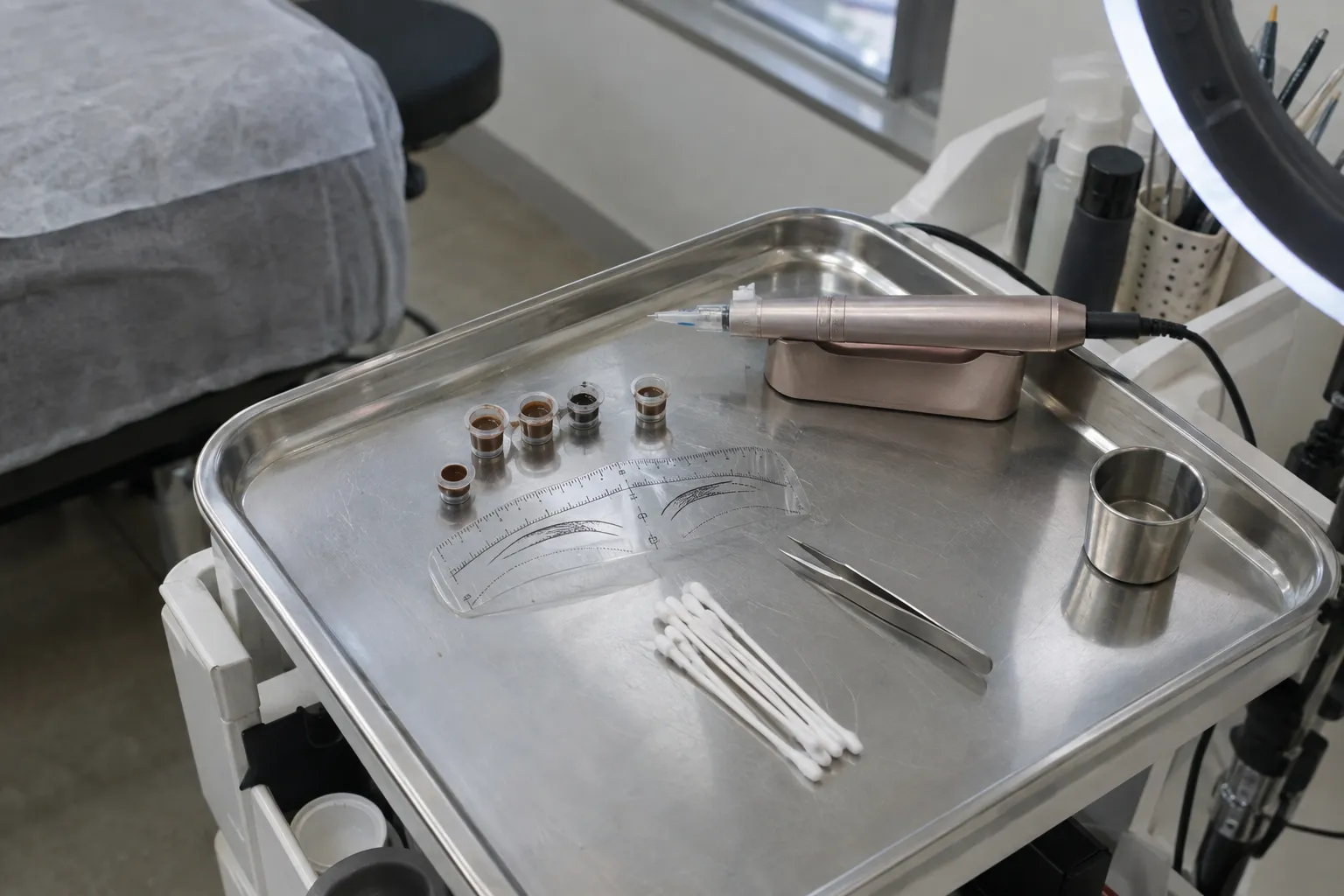
It is the shortcut, and it is the one to think hardest about. Pigment shaded under the lower lash line implies the shadow an aegyo sal casts, without adding any volume — so at a distance it works and up close it is makeup that does not wash off.
The risks are the ones that apply to any cosmetic tattooing in thin eyelid skin: colour that shifts as it fades, migration, difficulty removing pigment so close to the eye, and the fact that it is not performed in a medical setting everywhere it is offered. Korean courts have long treated tattooing as a medical act and the regulatory picture has been under debate, so ask who is doing it and where.
What if you already look tired rather than young?
Then this is the wrong menu item, and that is the most useful sentence in this article. Dark circles, hollowing and true eye bags are three separate problems, and each has its own treatment.
Hollowing under the orbital rim is treated with careful deep placement or fat repositioning, not with a superficial roll. Pigmented dark circles are a skin problem. Protruding fat is surgical. Adding an aegyo sal on top of any of the three amplifies the thing you dislike.
The honest sorting is in Korean dark circles under-eye treatment and under-eye fat repositioning in Korea. If you would rather have a doctor decide than choose from a menu, use the matching form or meet the interpreters.