An aqua peel facial is a suction machine, not a magic peel
Written by KCODI medical interpreter team · English deskUpdated · 7 min read

An aqua peel facial is the treatment visitors book first in Seoul, usually because it is the least frightening line on the menu and the one the clinic's photos look best on. A handpiece runs over your face, water and a mild acid go in, and what comes out of your pores is shown to you in a little tank at the end.
That tank is why the treatment sells. It is satisfying, it is visible, and it is over in under an hour with nothing to hide afterwards. All of that is true and none of it is a reason to expect more from it than it can do.
Here is what it clears, what it cannot touch, and how to read the version your clinic is offering, because several very different treatments are sold under this one word in Korea.
What is actually happening to your skin
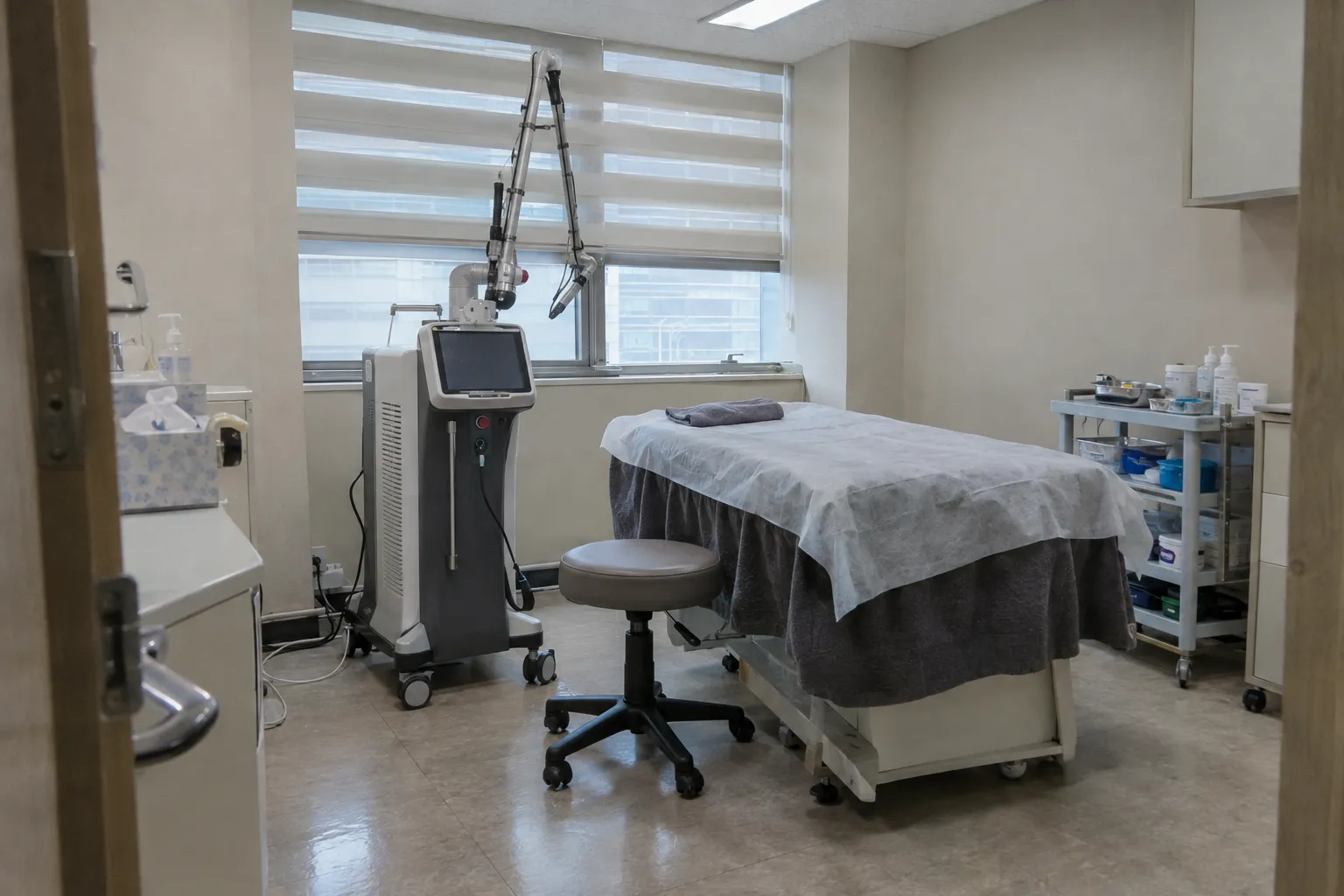
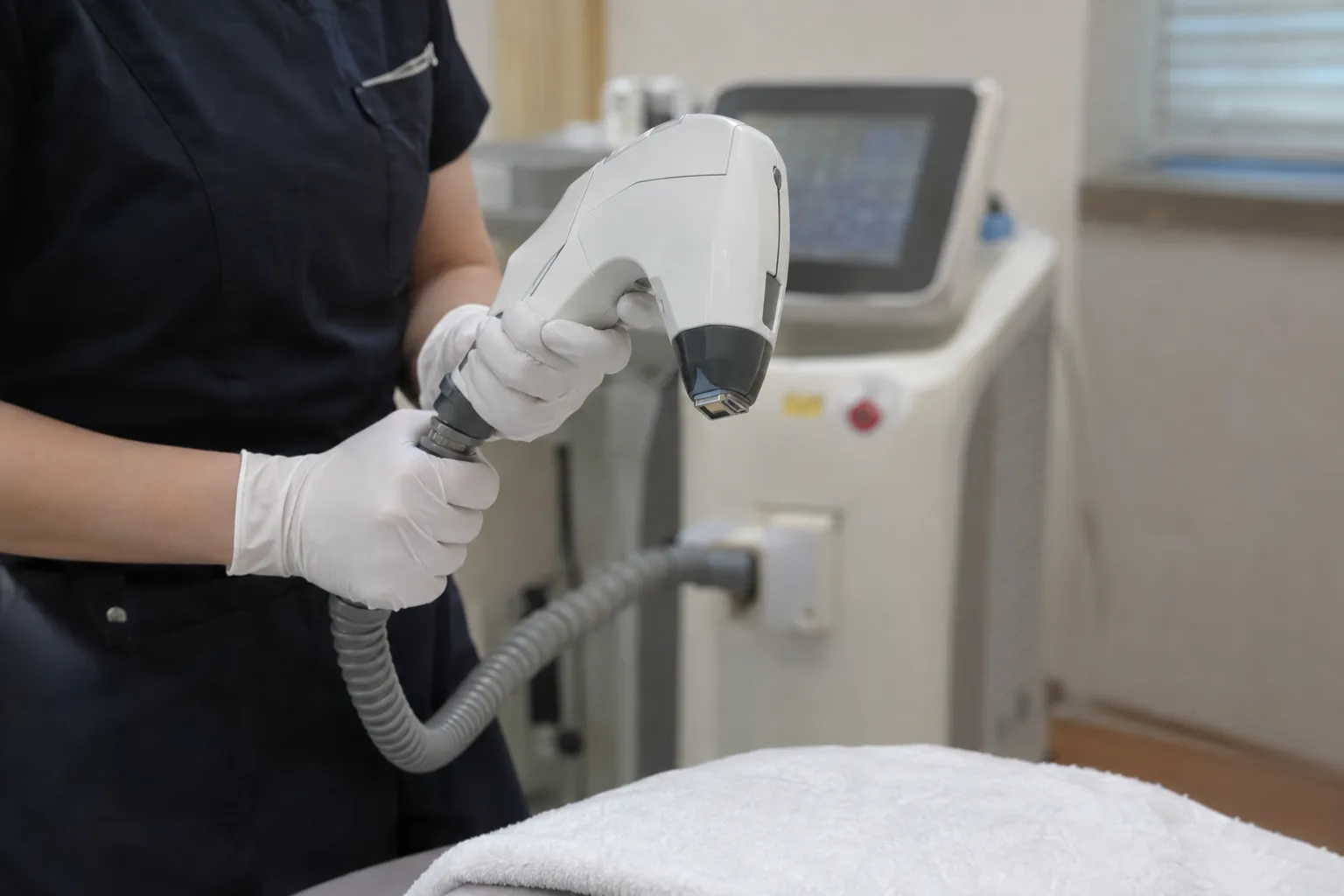
The handpiece does three things at once: it softens the surface with a water-based solution containing a mild exfoliating acid, it loosens the plug sitting in the pore, and it lifts the debris out with gentle vacuum. Then a soothing or hydrating solution goes on through the same tip.
It is the machine version of what an aesthetician does by hand with a loop and a lot of pressure. That is the real advantage. Less squeezing means less bruising and less of the post-facial redness that keeps people indoors for a day.
| Menu name | What it is | Best at | Visible afterwards |
|---|---|---|---|
| Aqua peel, aqua peeling, hydro peel | Water, mild acid, vacuum extraction | Blackheads, dullness, rough surface | Mild flush for an hour or two |
| Branded hydrodermabrasion facials | The same principle on a named platform, usually with extra serum steps | The same, with more add-ons sold around it | Mild flush |
| Manual extraction facial, often called care | An aesthetician works by hand, sometimes after steaming | Stubborn plugs a machine will not lift | Redness and small marks for a day or more |
| Chemical peel | An acid applied and left to work, no suction | Pigment, texture, acne-prone skin, over a course | Flaking for several days, sometimes longer |
If you want the whole Seoul menu side by side rather than this one treatment, Korean skin treatments compared sorts them by downtime, and the Korean facial page carries the current range.
What it is good at, and what it will not fix
- Blackheads and the grey, congested look across the nose and chin. This is the treatment's home ground.
- A dull, rough surface before an event, since makeup sits differently on a freshly decongested face.
- Maintenance between stronger treatments, which is how most Korean patients actually use it.
- A first look at your skin by a clinic that can then recommend something real, which matters more than the facial itself.
What it will not do: fade melasma, flatten an indented acne scar, shrink a pore permanently, or clear inflamed acne. Pore size is largely structural. Anyone promising otherwise from a suction handpiece is selling the tank, not the treatment. Active breakouts need a medical plan first, which is the order set out in Korean acne treatment for active breakouts.
Why the number on the window is not the number you pay
The advertised line is almost always the bare machine pass. What lands on the receipt depends on what was added while you were lying down, which is a conversation that is hard to have with your eyes covered and no shared language.
- Number of steps. Two-step and five-step versions of the same facial sit on the same menu under the same name.
- The serum or ampoule pushed in at the end, which is priced separately and is where most of the upsell lives.
- An LED or mask finish, often bundled in photos and charged on its own.
- Whether a doctor consults first. A doctor-led visit costs more and is worth it if your skin has a problem rather than a dull day.
- Course pricing. Ten sessions cost less per session and are useless to someone flying home on Thursday.
Decide before you lie down what you will and will not add, and have it written on the quote. That single sentence, said in Korean at reception, is the difference between the advertised facial and a bill that has doubled quietly.
Fitting it into a Seoul trip
This is one of the few treatments that fits anywhere. There is no real downtime, so it works on an arrival day when you are too tired for anything bigger, or on the morning of a dinner you care about.
Two cautions. Skip the sauna and the hot-spring floor of a jjimjilbang for the rest of that day, because freshly cleared pores and heat are a bad pairing. And do not book it on the same day as a laser or a peel unless the doctor has planned both together.
If your visit is short and you want one appointment to count, ask the clinic whether a doctor-led consultation plus a smaller treatment would beat the facial. Interpreters hear that question answered honestly far more often than visitors expect, because a clinic would rather have you back next year than sell you one satisfying tank of debris.
For where these appointments happen and how the venue types differ, read where to get a facial in Seoul and Korean facial near me versus a Seoul clinic. To be matched in two minutes, use clinic matching, or meet the interpreters first.
How to tell a good aqua peel appointment from a bad one
- The tip is opened in front of you, or you are shown that it is single-use.
- Someone asks what you are using on your skin at home, including acids and retinoids, before touching your face.
- Suction strength is adjusted when you say it stings, not defended.
- Nothing is added without being named and priced while you can still say no.
- You leave with a plan that is not simply the next session of the same thing.
None of that is exotic. It is the ordinary standard in Korean clinics, and it slips most often with foreign visitors, for the simple reason that nobody in the room can explain in your language what is about to go on your face.