BBL HERO in Seoul is broadband light, and BBL means three different things in Korea
Written by KCODI medical interpreter team · English deskUpdated · 7 min read

In shortBBL stands for BroadBand Light, Sciton's pulsed-light platform, and BBL HERO is its high-output version used for pigment, redness and acne. It has nothing to do with the other BBL, a Brazilian butt lift.
You typed BBL HERO Seoul into Google and the results were a mixture of skin clinics, buttock surgery and a basketball league. That is not a search failure; three unrelated things share the acronym, and one of them is a light device.
Our interpreters read Korean clinic menus daily and this is one of the genuinely confusing entries, because Korean pages usually transliterate the brand name and do not translate what it does. Patients arrive expecting a laser and get a bright flash instead.
This guide explains what the device is according to its manufacturer, what it treats, how Forever Young BBL fits in, and how to check whether the clinic you are booking actually has one.
What does BBL stand for in a skin clinic?
BroadBand Light. Sciton, the manufacturer, uses BBL for its BroadBand Light platform and describes the technology as proprietary BroadBand Light photorejuvenation developed since 2004. It is an intense pulsed-light device rather than a laser: it emits a broad band of wavelengths and uses filters to target what you want treated.
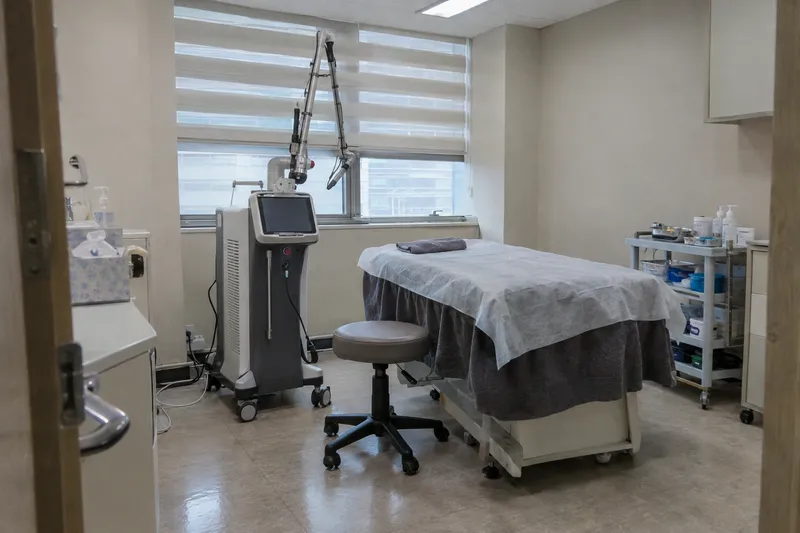
The high-output versions carry their own names. BBL HERO and the newer BBL HEROic are marketed by Sciton as its smart pulsed-light devices, with automated pulse delivery and control technology. Forever Young BBL is one of the treatment protocols the company lists on the same platform.
The difference from a laser matters in the room. A laser emits one wavelength at a precise target. A filtered pulsed-light device covers several targets at once, which is why it suits mixed complaints — brown patches and redness together — and why it is less precise on any one of them.
What does BBL treat, and what does it not?
According to the manufacturer's own list: benign pigmented lesions, dyschromia and sun spots; vascular lesions, rosacea, cherry angiomas and telangiectasias; mild to moderate inflammatory acne; and hair removal. It is described as suitable for skin types I to V.
| Complaint | Pulsed light (BBL type) | Better handled by |
|---|---|---|
| Brown sun spots, freckle-like pigment | Good | — |
| Facial redness, visible vessels, rosacea | Good | Vascular lasers for larger vessels |
| Mild to moderate inflammatory acne | Helpful as part of a plan | Medical acne treatment first |
| Melasma | Risky; can worsen it | Careful toning lasers plus medical management |
| Acne scars, deep texture, large pores | Little effect | Fractional CO2 or microneedling RF |
| Loose skin, jawline definition | No effect | HIFU, RF or surgery |
Melasma is the row to take seriously. Reviews of light and laser treatment for pigment consistently treat melasma as a condition that can flare with heat and aggressive light, which is why Seoul dermatologists often combine gentler settings with topical or oral medical treatment. Our guide to Korean treatment for melasma and uneven tone explains that order of operations.
Can I actually get BBL HERO in Seoul?
Some clinics have Sciton platforms; many use other manufacturers' pulsed-light devices instead. This is one of the few cases where asking which machine is genuinely worth doing, because the outcome you read about online was produced on a specific device with specific filters.
The question to send before booking is simple: which manufacturer and model, and which filter for my concern? A clinic that answers precisely is telling you they know their own equipment. A clinic that answers "our IPL is the latest model" has told you nothing.
If the clinic has a different pulsed-light platform, that is not automatically worse. The devices are broadly comparable in category, and the operator's settings matter more than the badge. What you should not accept is paying a premium for a named protocol on a machine that cannot deliver it.
What does a session feel like, and how many will I need?
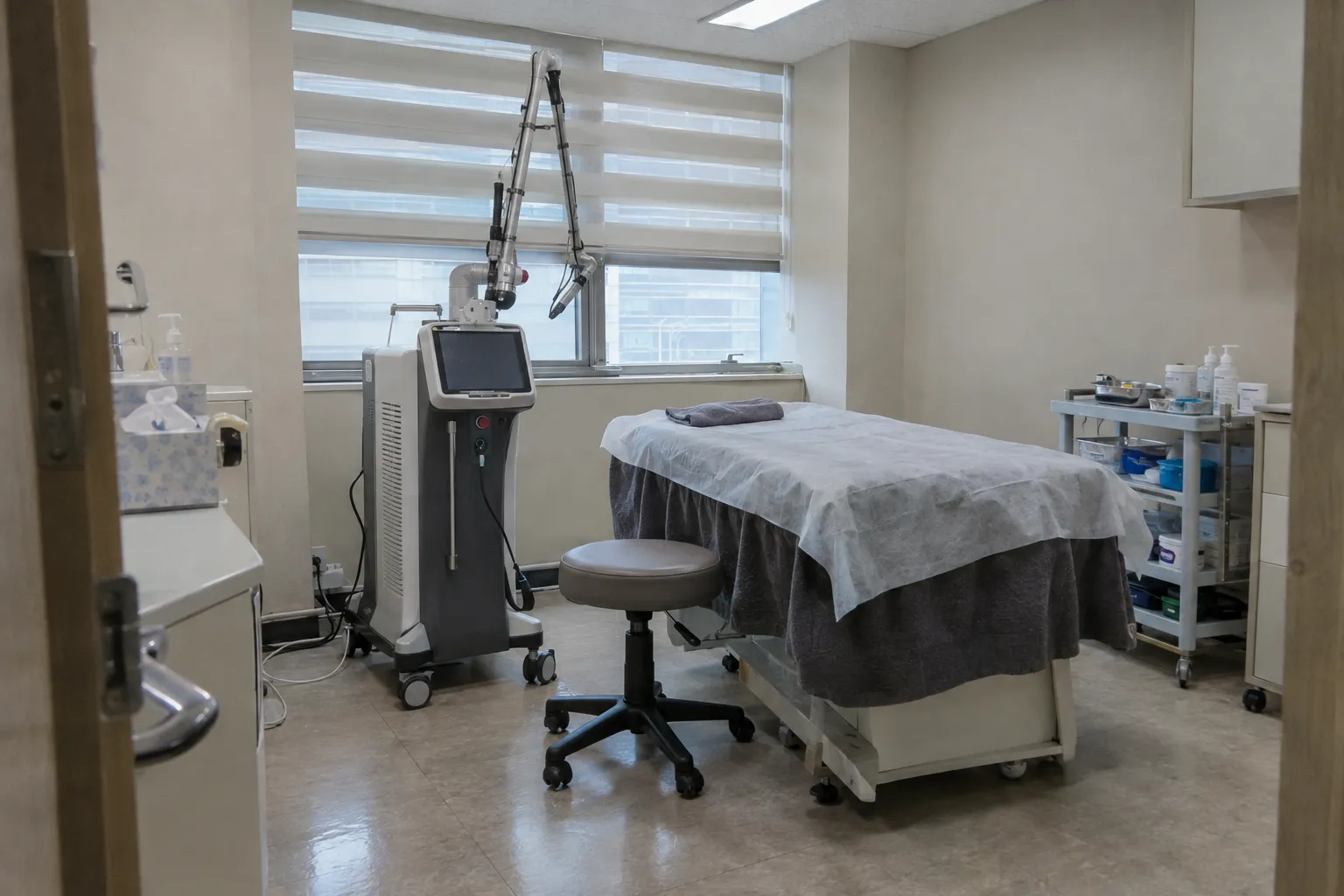
A warm snap with each flash, like a rubber band against warm skin, with cold gel and eye shields throughout. Twenty to thirty minutes for a full face. Afterwards you look flushed for a few hours and pigmented spots often darken before flaking away over the following week — which is the part patients find alarming and is usually normal.
- Expect a series. Three to five sessions a few weeks apart is a common plan for pigment; maintenance afterwards.
- Ask the number of passes and the filter used, and ask for it written on the quote so a second clinic can be compared.
- Tell the doctor about recent sun exposure. A tan raises the risk of burning, and Seoul summers are strong.
- Say if you have ever had melasma or a patch of skin darken after treatment. This changes the settings, or the plan.
- Plan around events. Spots get darker before they fade, so leave two weeks before a photograph you care about.
And the other BBL?
A Brazilian butt lift — buttock augmentation with your own fat or with filler — is an entirely separate treatment that happens to share the acronym. If that is what you were searching for, our Korean BBL and fat transfer guide covers it, and the third BBL, a basketball league, is not our department.
The confusion is worth knowing about for a practical reason: clinic enquiry forms and translation tools mangle it constantly. Our interpreters have had messages forwarded where a skin clinic patient was quoted for surgery and a surgery patient was quoted for a light session. Write out the full words in your first message and the problem disappears.
For pigment treatment specifically, see typical session ranges on the pigmentation laser page, compare devices in PicoSure, Genesis and IPL in Korea, and browse the whole menu on the Korean skin clinic page. KCODI books at the local partner rate Korean patients use, with a written quote before any deposit and a free medical interpreter with you. Meet the interpreters or answer four questions in clinic matching.