Why Korean checkups add an ultrasound to the mammogram
Written by KCODI medical interpreter team · English deskUpdated · 7 min read

Anyone reading about breast cancer in Korea runs into two facts quickly: it is the most commonly diagnosed cancer in Korean women, and the country screens for it systematically through a national programme. What is less obvious to a visitor is how the screening itself is put together.
Korean centres routinely pair mammography with ultrasound rather than treating ultrasound as an extra. The reason is dense glandular tissue, which is common in younger women and in Asian women generally, and which shows up white on a mammogram, the same colour as the things radiologists are looking for.
Here is what a screening appointment contains, how results are handled, and what to do with a finding once you are home.
What is in the appointment
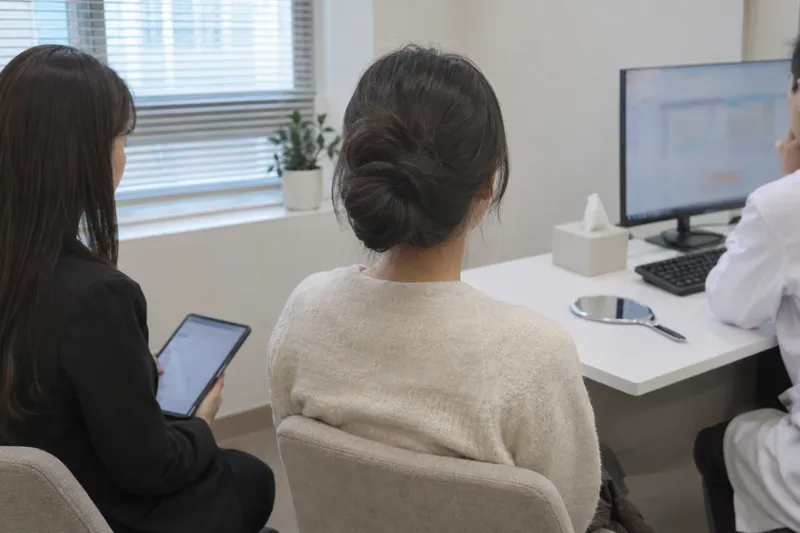
A breast component inside a comprehensive checkup usually means mammography in two views per side, an ultrasound performed by a radiologist, and a clinical examination. Some packages add MRI for higher-risk histories, which is a separate decision rather than a default.
| Test | Good at | Limitation |
|---|---|---|
| Mammography | Microcalcifications, established screening evidence | Dense tissue reduces sensitivity |
| Ultrasound | Distinguishing cysts from solid masses, dense tissue | Operator dependent, finds benign things too |
| Clinical examination | Skin and nipple changes, palpable lumps | Misses small deep lesions |
| MRI | High-risk screening, extent of known disease | Costly, more false alarms, not a routine screen |
The scope of the packages partner centres run is on the cancer screening page, and the general checkup structure is on the health checkup pages. The breast component is usually one block of a half-day appointment rather than a standalone visit.
How Korean centres handle results
Ultrasound findings are typically read on the spot, with a written report following within days. Anything suspicious triggers a same-week recommendation rather than a letter weeks later, which is one of the practical advantages of screening in Korea.
- Booking: fasting is required for the wider checkup, not for the breast tests themselves.
- On the day: mammography first in most centres, then ultrasound by a radiologist.
- Immediate feedback: the sonographer or radiologist will usually say if something needs attention.
- Report: a written report in a few days, with a category describing how suspicious a finding is.
- Next step if needed: a biopsy is arranged at a hospital, not at the screening centre.
Who should consider it, and when
Screening guidance differs by country and by age, and your own doctor's advice should come first. Korea's national programme invites women from their forties on a regular cycle, which is why screening capacity here is high and the appointments are routine rather than exceptional.
- A family history of breast or ovarian cancer changes the conversation. Bring the details, including ages at diagnosis.
- If you have been told you have dense breast tissue, say so at booking. It affects which tests are worth doing.
- If you have found a lump, this is not a screening appointment. Ask for a diagnostic clinic instead.
- Bring previous images if you have them. Comparison over time is how small changes get noticed.
- Schedule imaging in the first half of the menstrual cycle if timing allows, which makes it less uncomfortable.
Korea publishes its own cancer statistics, including survival rates, through the National Cancer Information Center, which is the right place to read figures rather than a clinic's brochure. Those figures reflect a population that is screened systematically, so they do not transfer directly to an unscreened one.
If something is found
Most findings on ultrasound are benign: cysts, fibroadenomas, ordinary lumpy tissue. The report category tells you how confident the radiologist is, and the recommendation follows from it: ignore, repeat in six months, or biopsy.
A biopsy in Korea can usually be arranged within days at a hospital, which is faster than many home systems. Whether to do it here or at home depends on where you will be treated if it matters, and that is a genuine choice rather than a formality.
If the answer turns into treatment, the department question becomes the important one, and how international patients choose a Korean hospital covers it. What an admission looks like is in surgery in a Korean hospital. The other organ-specific screens are covered in thyroid nodule screening and the national screening programme.