How to choose a Korean hospital when the illness is serious
Written by KCODI medical interpreter team · English deskUpdated · 8 min read


Searching for the best hospital in korea for international patients usually happens on a bad week, with a diagnosis in hand and a deadline. The honest answer is that Korea has several large tertiary hospitals doing high-volume work in oncology, transplantation and complex surgery, and the right one depends on your diagnosis, not on a ranking.
What separates a smooth admission from a frustrating one is almost never the hospital's reputation. It is whether your papers arrived in a form the department can read, and whether someone booked you through the right door.
Here is how that process works, and what to prepare before anyone can give you a date.
Start with the department, not the hospital
Korean tertiary hospitals are organised around departments and disease centres. A brain tumour goes to neurosurgery and a neuro-oncology board; a kidney transplant goes to a transplant centre with its own donor workup; liver cancer may be managed by surgery, interventional radiology or oncology depending on the stage.
| If you are looking for | Ask the hospital about | Papers they will want |
|---|---|---|
| Brain tumour treatment | Neurosurgery volumes, the tumour board, radiotherapy options on site | MRI images on disc, pathology report, current medication list |
| Kidney transplant | Living-donor protocol, donor eligibility for foreigners, workup duration | Dialysis history, blood group and tissue typing, donor's records |
| Liver cancer treatment | Whether surgery, ablation, embolisation or transplant is considered | CT or MRI on disc, tumour markers, hepatitis status |
| Proton therapy | Whether the facility treats your tumour type and current waiting time | Pathology, staging imaging, prior radiotherapy records |
| CAR-T therapy | Eligibility criteria, whether foreign patients are accepted for that programme | Full haematology history and prior treatment lines |
| Maxillofacial surgery | Whether it sits in dentistry or plastic surgery at that hospital | CT, panoramic X-ray, orthodontic records |
Asking a hospital whether it is the best is a question nobody can answer. Asking how many cases like yours that department treats a year, and who would lead it, is a question with an answer.
The international healthcare centre is the door
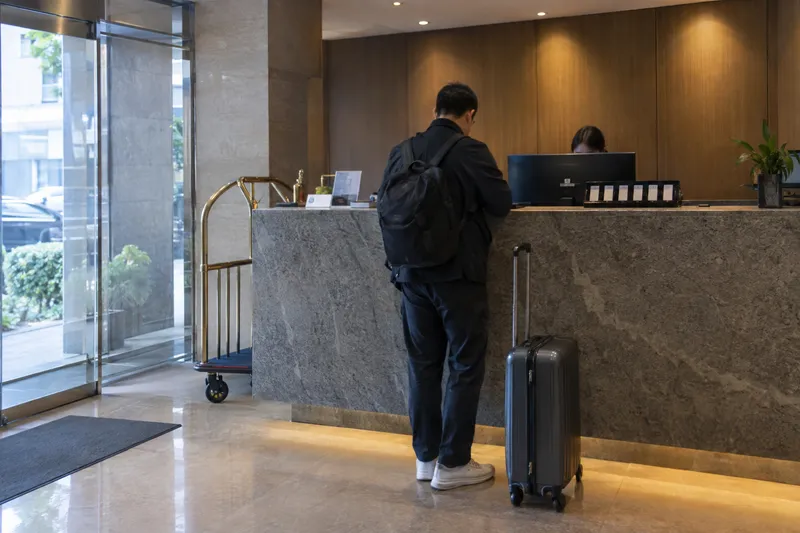
Major Korean hospitals run an international healthcare centre that coordinates appointments, interpretation, admission and billing for patients from abroad. Approaching a department directly, in English, without records, generally produces silence. Approaching the centre with a translated summary produces a reply.
- Gather imaging on disc or in DICOM form, pathology reports, a treatment summary and a current medication list.
- Have the summary translated, with the diagnosis written in standard terminology.
- Contact the hospital's international centre and state the diagnosis, what has already been done, and what you are asking for.
- Ask for the estimated cost and the estimated timeline in writing, including the workup before any treatment starts.
- Ask what happens if the department's assessment differs from your home diagnosis, because it sometimes does.
What you can reasonably ask for
Requests that feel awkward to make in a foreign hospital are usually routine. A female doctor for an examination, a second opinion before consenting, an interpreter in the room, a copy of every result: all normal, all easier when asked in Korean by someone who does this daily.
- Ask for a female doctor if that matters to you. Large hospitals will accommodate it where the department allows.
- Ask for a second opinion appointment rather than treating the first plan as final. Korean hospitals run formal second-opinion services.
- Ask who will actually perform the procedure, not only who consults.
- Ask for copies of imaging and reports to take home, on disc, before you leave.
- Ask what the follow-up looks like once you have flown, and whether remote review is possible.
Waiting time is the one thing a hospital cannot bend far. Tertiary hospitals are busy, and an outpatient slot with a named professor can be weeks away even for domestic patients. That is worth knowing early rather than after booking flights.
Hospitals, clinics and where checkups fit
Korea's system separates small clinics from large hospitals sharply, and the word clinic on a sign means something specific. Choosing the wrong level wastes days, and the practical distinction is explained in Korean hospital versus clinic.
If you are not yet ill but want investigation, the comprehensive checkup route is faster and far cheaper than an outpatient referral chain. The health checkup pages cover what a package contains, and the national cancer screening programme explains what Korea screens for and why.
For what happens around an admission, including hospital days, transfer and getting home, see surgery in a Korean hospital. For emergencies, the number and the process are in Korea's emergency number.