Chaum clinic Seoul: what the Cheongdam site states, and what a screening booking needs from you
Written by KCODI medical interpreter team · English deskUpdated · 8 min read

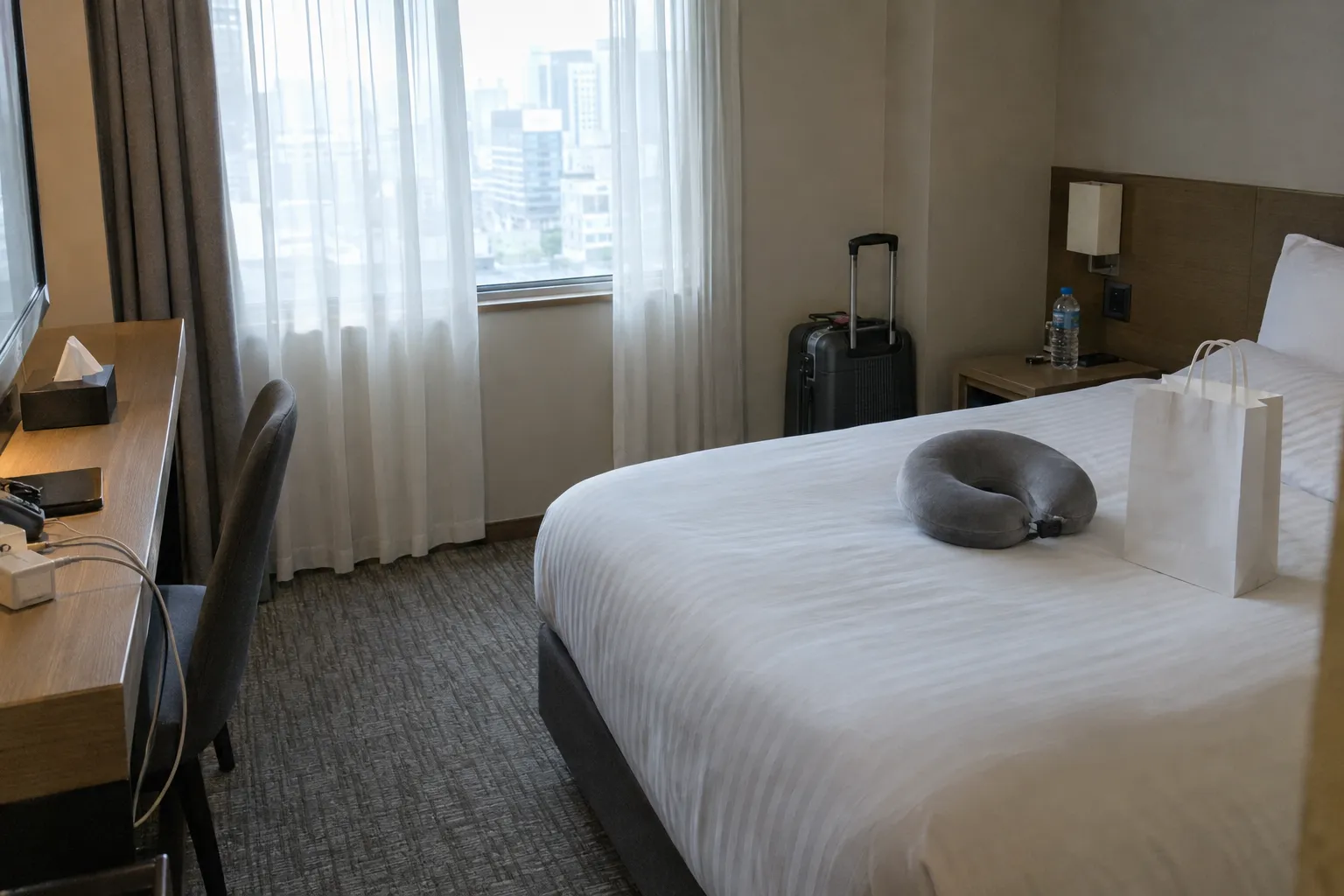
People who type chaum clinic seoul are rarely browsing. They have a name, a rough date in Seoul, and one practical worry: what does a morning there actually consist of, and will anyone explain it in a language they think in.
Below is what the facility states on its own site, what to settle in writing before a screening date is held, how to read reviews of a place that runs screening and clinics side by side, and how to hold a second itemised quote while you decide.
KCODI is a booking and medical-interpretation service. We are not affiliated with this facility and take no position on it.
What the official site states
The Korean name on the site is 차움, rendered in English as CHAUM. The address given is 442 Dosan-daero, Cheongdam-dong, Gangnam-gu, Seoul, and the operator is listed as the Sung Gwang Medical Foundation.
The site describes a health screening centre with personal programmes, corporate programmes and overnight programmes running across one to two days. Alongside those it lists clinics covering anti-ageing, detox and slimming, food therapy and chronic inflammation, immunity, neuro-musculoskeletal care, skin and cosmetic treatment, and hair care. Outpatient departments listed include family medicine, endocrinology, obstetrics and gynaecology, plastic surgery, gastroenterology, neurosurgery, cardiology, rehabilitation medicine and neuropsychiatry. Page versions are offered in Korean, English, Chinese and Russian. Those are the facility's own statements as of the date checked above.
What a Korean screening day covers in practice is on our comprehensive health check-up page, and the wider health check-up section explains how the packages are built.
What visitors are really comparing when they search this name
A centre that runs screening and clinics under one roof is attractive for an obvious reason: one address, one morning, one coordinator. It also means two different conversations happen on the same day, and they are easy to confuse.
The screening conversation is diagnostic. It produces test results and, sometimes, a recommendation to see someone. The clinic conversation is elective: drips, skin work, programmes you choose. Both are legitimate. They should not arrive as a single number on a single sheet of paper.
- Ask which line items on the quote are tests and which are treatments. Two columns, not one.
- Ask whether a treatment was recommended by the doctor who read your results or offered by a coordinator afterwards. The answer changes what it is worth.
- Ask what the screening alone costs before any programme is added, so you have a baseline you can compare elsewhere.
- Ask how long the report takes and whether a doctor explains it face to face or sends it.
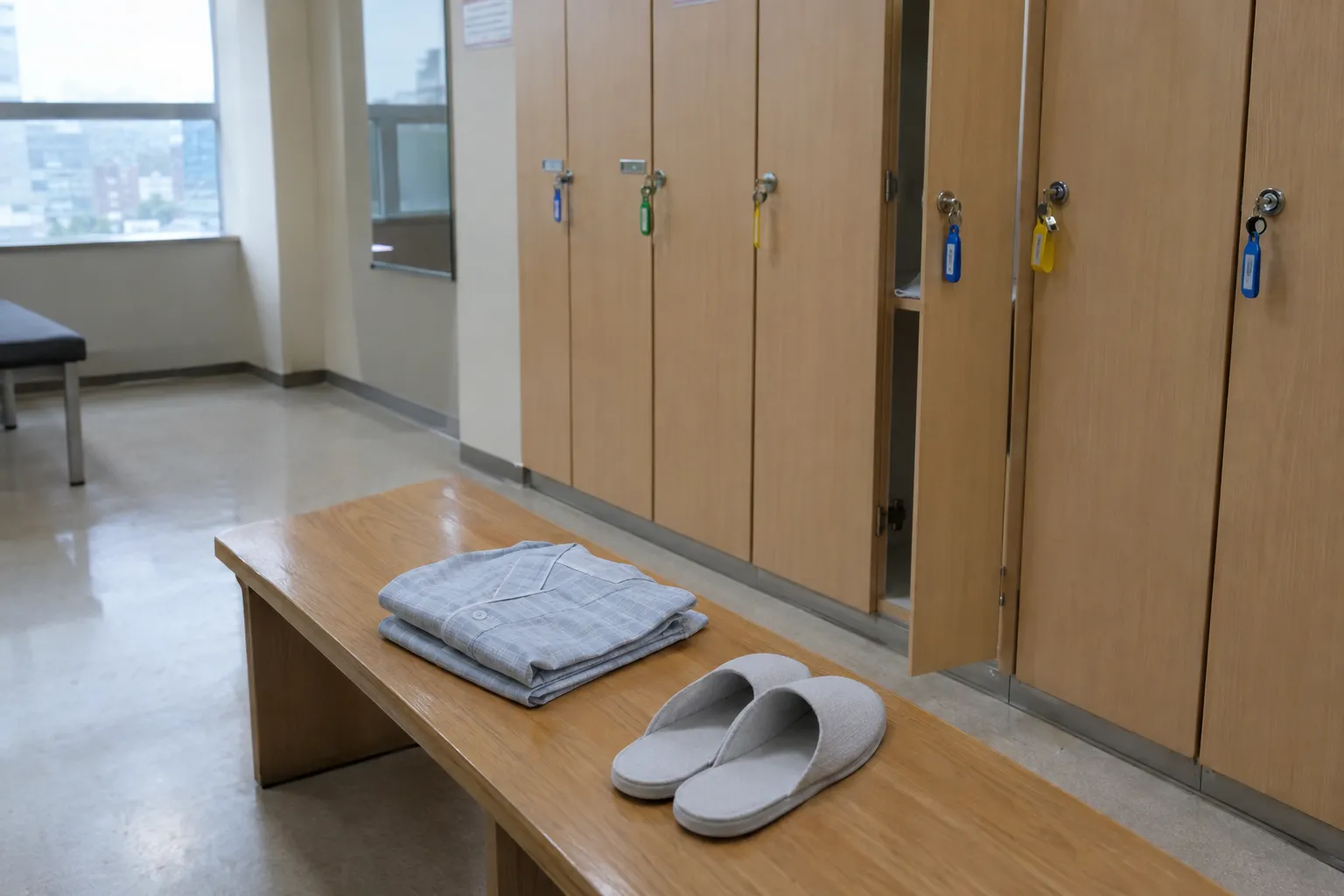
The overnight format deserves its own question. A one-night or two-night programme spreads the same tests over more hours, adds imaging and gives your body time between the demanding parts. It also means a night in the building, meals included in the schedule, and a second morning you have to keep free. Ask which tests are actually added by the longer format rather than assuming that more hours means more coverage.
If you are travelling with a partner and only one of you is being screened, ask early what the other person does for those hours, and whether they can be present when the results are explained. Most centres are relaxed about this, and it is much easier to arrange before the day than on it.
Six things to check before booking any Korean screening centre
None of this is specific to one address. Our interpreters run through the same list in Korean every week, and the answers come back quickly when the questions are numbered.
| Check | How to phrase it | Why it decides something |
|---|---|---|
| The test list | Send every test and consultation as separate lines | A package name tells you nothing; the lines tell you everything |
| Sedation | If endoscopy is included, who monitors sedation and stays in the room | Sedation is the only part of a screening morning with meaningful risk |
| Imaging detail | Which scans, of which organs, with or without contrast | Contrast changes preparation, allergy questions and timing |
| Report and timing | Who explains the results, in which language, on which day | A report you cannot read is a receipt, not a health check |
| Foreign-patient registration | Is the institution registered to attract foreign patients | It is a public record, so it can be verified rather than believed |
| What happens next | If something is found, how many extra days does follow-up need | This is the answer that decides whether your flight home still works |
The verification step is worth doing yourself; how to check a clinic's licence and registration walks through where to look.
How to read reviews of a screening centre
Reviews of screening centres describe hospitality far more often than they describe medicine, because hospitality is the part the writer can judge on the day. Read them for that and nothing more.
Hold a second itemised quote while you decide
A second quote is not about paying less. It is about seeing the same test list priced twice, which is the only way to tell whether a package is thorough or simply long.
If you are not sure which programme fits the reason you are worried, clinic matching sorts it in about two minutes, and the interpreters page shows who would be with you.
The week before, and the week after
A screening morning is short. The preparation and the aftermath are where it either works or gets repeated.
- Confirm the fasting hour in writing, not from memory. Misread fasting instructions are the single most common reason a screening gets rebooked.
- List medication, supplements and herbal preparations by generic name, and ask which to pause. Blood thinners and some herbal mixtures matter here.
- Book the morning slot if you can. It shortens the fast and gets you out before the centre fills.
- Put the results date next to your flight home, and ask now how the report reaches you if you have already left.
- Ask for the report in a form your own doctor can use. Numbers with reference ranges travel; a summary paragraph often does not.
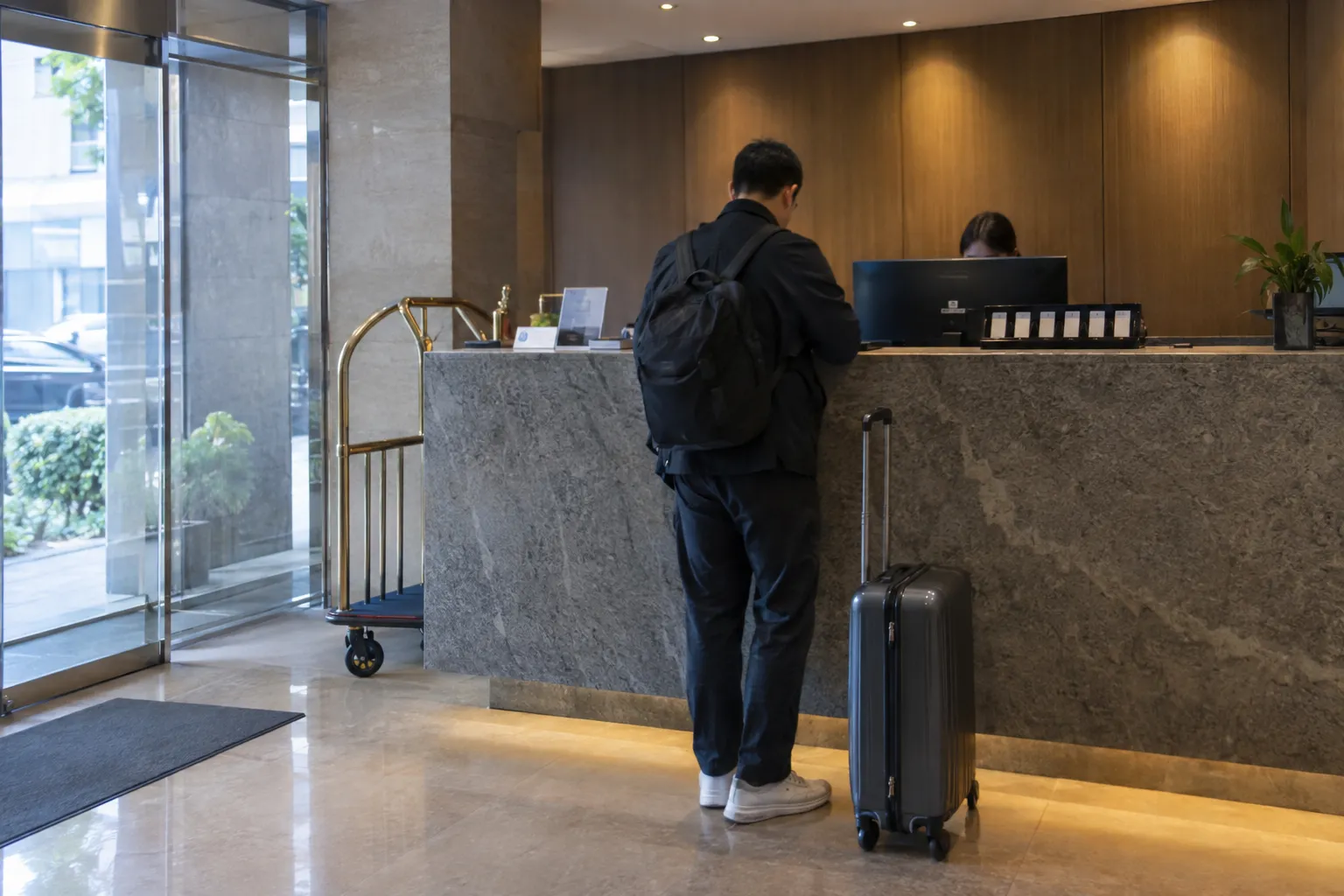
Where you sleep the night before matters more than people expect. A fasting start at seven in the morning is a different experience from twenty minutes away than from across the river, and Gangnam traffic does not care about your appointment time.
If the results recommend anything further, take it home before you act on it. A screening finding read calmly at home with cancer screening in Korea for context is a better decision than one made in a corridor while a coordinator waits.