Seoul National University Hospital: what foreign patients should prepare
Written by KCODI medical interpreter team · English deskUpdated · 8 min read

Searching seoul national university hospital usually means something serious: a diagnosis you want checked, a treatment you want a second view on, or a thorough screening you cannot arrange at home.
This page covers what the hospital publishes about its international services, what foreign patients should prepare and expect to pay, and how interpretation works when the conversation is about a diagnosis rather than a treatment menu.
KCODI is a booking and medical-interpretation service. We are not affiliated with this hospital and take no position on it.
What the hospital states
Seoul National University Hospital gives its address as 101 Daehak-ro, Jongno-gu, Seoul, in the centre of the city rather than in the southern districts where most cosmetic clinics sit.
Its English site describes an International Healthcare Center serving foreign patients, including those without Korean national health insurance, along with language services and health screening programmes. A contact number and weekday office hours for that centre are published on the site. Those are the hospital's own statements as of the check date above.
What Korean screening programmes actually cover is on our cancer screening page, and the difference between hospital and clinic care in hospitals versus clinics in Korea.
What foreign patients pay, and why the number varies
Korea's national health insurance subsidises care for residents who are enrolled. Visitors are generally not, which is the single largest factor in what you will be charged.
| Situation | What usually applies |
|---|---|
| Short-term visitor, no Korean insurance | Unsubsidised rates; payment usually expected at the time |
| Long-term resident enrolled in national insurance | Subsidised rates as for any resident |
| Covered by private travel or expatriate insurance | You often pay first and claim afterwards; check pre-authorisation rules |
| Screening and check-up programmes | Priced as packages, rarely covered by insurance |
| Elective second opinion | Usually self-paid; most travel policies exclude it |
What to bring for a second opinion
- Your actual imaging files on a disc or drive, not a report describing them. Korean radiologists will want to read the images themselves.
- Pathology reports and, where relevant, the slides or blocks. Ask your home hospital well in advance; this takes time to release.
- A medication list using generic drug names, with doses.
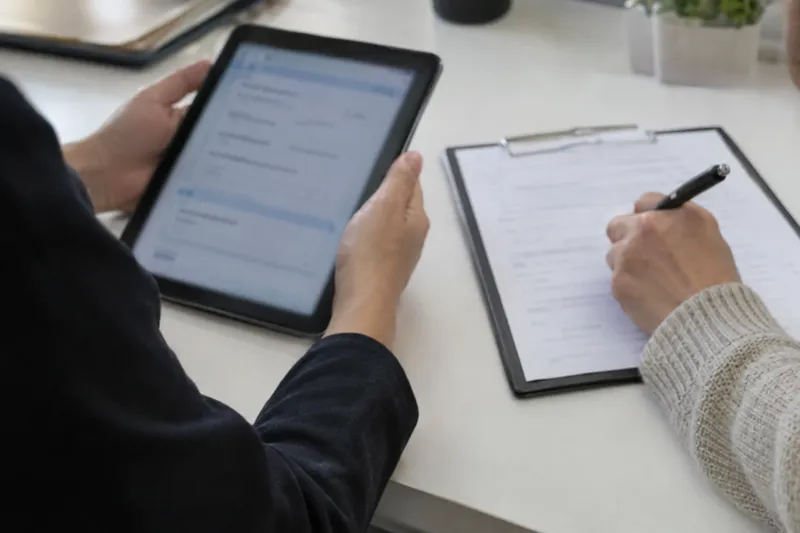
- A one-page timeline: when symptoms began, what was found, what was done, what was proposed.
- Any prior operation records, translated if you can manage it.
- Your passport, and details of any insurance you intend to claim against.
The timeline is the item that makes the biggest difference and is the one nobody brings. A specialist reading a clear chronology can use the appointment for opinion rather than for reconstruction.
Write your questions down as well, in order of importance, and hand the list over at the start rather than saving them for the end. Korean specialist consultations are efficient, and the last three minutes are usually taken by administration. A written list also survives interpretation better than a question asked hurriedly while a doctor is already standing up.
Expect the opinion to be about the specific question you asked. If you want to know whether a proposed operation is necessary, ask exactly that. If you want to know what a Korean team would do differently, ask that instead. Broad requests to "check everything" produce broad answers, and they use up an appointment that could have resolved one thing properly.
Why hospital reviews are not much help
Reviews of a national university hospital mostly describe volume: waiting rooms, queue numbers, a short consultation, difficulty finding the right building. All of that is accurate and none of it tells you about the medicine.
Korean tertiary consultations are short by design, because the system concentrates enormous case volume into specialist clinics. A consultation of ten minutes with a surgeon who performs the operation hundreds of times a year is a different thing from ten minutes elsewhere. What you can control is how prepared you are when it starts.
Read reviews instead for the administrative route: how the international office responded, whether appointments were arranged before arrival, whether records were released in a usable form.
Interpretation when the subject is a diagnosis
This is where interpretation stops being a convenience. Staging, margins, recurrence risk, the difference between what is recommended and what is possible: those sentences need to arrive whole.
You can meet the interpreters before deciding, or use clinic matching if you are unsure what kind of appointment you need.
Practical notes for a hospital trip
- Allow a week rather than a weekend. Tests are usually on different days from consultations, and results take time.
- Jongno-gu is central Seoul, well served by subway, and parking is difficult. Stay somewhere on a direct line rather than somewhere that looks close on a map.
- Ask for everything in writing at the end: the opinion, the recommended plan, and any test results, in English if possible.
- Ask whether your imaging can be copied for you to take home. Usually it can, on the day, if you ask.
- If treatment is recommended, ask what it would involve in Korea and what it would involve at home. Sometimes the answer is that going home is the better plan, and a good specialist will say so.
- Keep receipts. Insurance claims for overseas care depend on documentation you cannot recreate later.
For questions while you are in the country, the Medical Korea Support Center answers foreign patients on +82-1577-7129, and the Korea Medical Dispute Mediation and Arbitration Agency handles formal complaints.