Ewha Womans University Seoul Hospital: a practical guide for visiting patients
Written by KCODI medical interpreter team · English deskUpdated · 8 min read

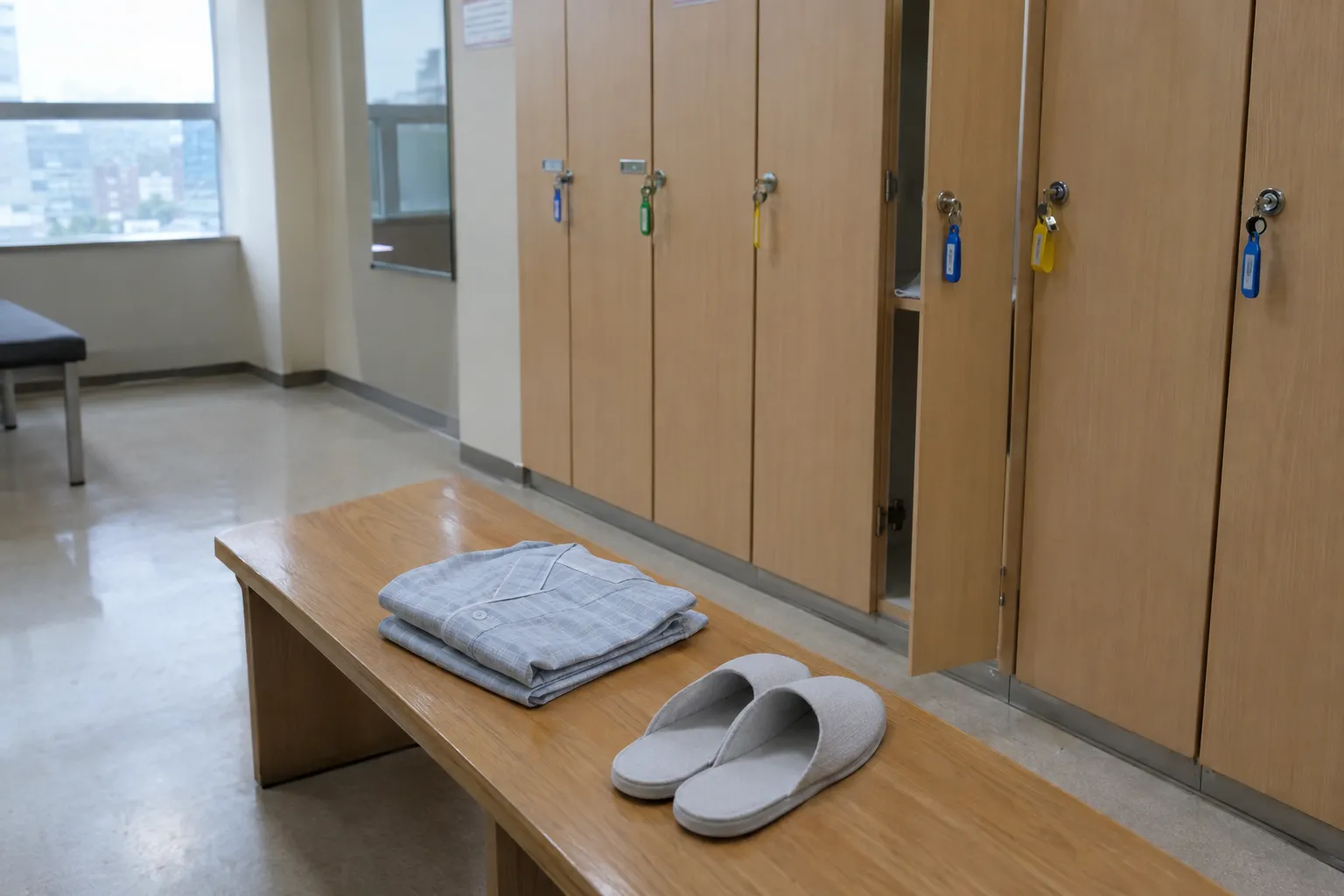
Searching ewha womans university seoul hospital usually means one of two things: you want a thorough health check while you are in Korea, or you want a specialist opinion and you have noticed this hospital sits unusually close to the airports.
Below are the facts the hospital publishes in English, what its location changes about planning a trip, what a Korean screening programme involves, and how interpretation works for a medical rather than a cosmetic appointment.
KCODI is a booking and medical-interpretation service. We are not affiliated with this hospital and take no position on it.
What the hospital states
Ewha Womans University Seoul Hospital gives its address as 260 Gonghang-daero, Gangseo-gu, Seoul, in the Magok area in the west of the city. Its English site describes an International Healthcare Center offering treatment guidance, reservation assistance and help with billing and insurance, with a published phone number and weekday hours.
Languages listed include English, Russian, Mongolian, Arabic and Chinese. The hospital also publishes an International Health Promotion Center for health assessment programmes, and names specialty centres including a cancer centre for women, a urology institute, cerebrovascular and vascular hospitals and a mother and baby hospital. Those are the hospital's own statements as of the check date above.
What a Korean screening programme covers is on our comprehensive health check-up page.
Why the location changes your planning
Gangseo-gu is the western edge of Seoul, closer to Gimpo Airport than to the city centre, and well away from the Gangnam clinic district. For a medical trip that is an advantage, and for a mixed trip it is a constraint.
| Consideration | What it means here |
|---|---|
| Airport transfer | Short from Gimpo, manageable from Incheon |
| Accommodation | Fewer patient-oriented hotels than around Gangnam; book near the hospital rather than downtown |
| Repeat visits | Every follow-up is a journey if you stay in the centre |
| Combining with other appointments | A Gangnam clinic on the same day means crossing the city twice |
| Getting there | Subway line 5 and 9 serve the Magok area; check your exact route before the first morning |
Preparing for a screening programme
- Confirm exactly which tests your programme includes and which are optional extras, in writing.
- Ask for the preparation instructions in English, especially fasting times and bowel preparation if endoscopy is included.
- Tell the hospital about medication in advance. Blood thinners, diabetes medication and some supplements change what can be done that day.
- Allow a separate day for the results consultation. It is often not the same day as the tests.
- Ask whether results and images can be provided in English and copied for you to take home.
- Ask for a written cost estimate, since visitors without Korean national health insurance pay unsubsidised rates.
If sedated endoscopy is part of the programme, do not plan to fly, drive or do anything demanding that day. Patients underestimate this constantly.
One more thing worth settling early: what the hospital does if a screening finds something. A good international office will tell you before you book whether it can arrange a same-week specialist appointment, how quickly biopsy results come back, and what happens if you need to extend your stay. Those answers shape how many days you should allow, and they are much harder to obtain once a result is in front of you and you are reading it on a phone at an airport.
What reviews of a university hospital tell you
Mostly about buildings, signage, waiting and administration. A newer hospital tends to review well on those points and it says little about the clinical care, which is the reason to come.
- Worth reading: how the international office communicated before arrival, and whether English-language records were provided.
- Worth reading: whether appointments ran to time and whether results arrived when promised.
- Not worth reading: comparisons with private clinics, which offer a different level of care for different problems.
- Not worth reading: opinions on price, which depend entirely on insurance status and on which programme was booked.
Interpretation for a medical appointment
A screening results consultation can turn into a serious conversation without warning. That is precisely the moment when partial understanding is worst.
You can meet the interpreters first, or use clinic matching if you are not yet sure what kind of appointment you need.
If you are combining a check-up with a longer trip
A great many visitors book a Korean health check at the end of a holiday, which is usually the wrong end.
- Put the screening early. If something needs a further test, you want days left rather than a boarding pass.
- Do not schedule it after a long-haul flight without a rest day. Dehydration and disrupted sleep affect several blood results.
- Skip alcohol for a few days beforehand. Liver values are part of almost every panel and they respond quickly.
- If you are also having cosmetic or dental treatment on the same trip, tell both providers. Recent procedures, anesthesia and medication all affect screening results and scheduling.
- Keep every document. Overseas insurance claims and any follow-up at home depend on paperwork you cannot recreate from memory.
If a finding needs action, ask the doctor plainly whether it should be handled in Korea or at home. Both answers are legitimate, and a hospital that engages with the question honestly is telling you something reassuring about itself.