Hair transplant Korea vs Turkey: an honest side-by-side from a Seoul interpreter
Written by KCODI medical interpreter team · English deskUpdated · 8 min read
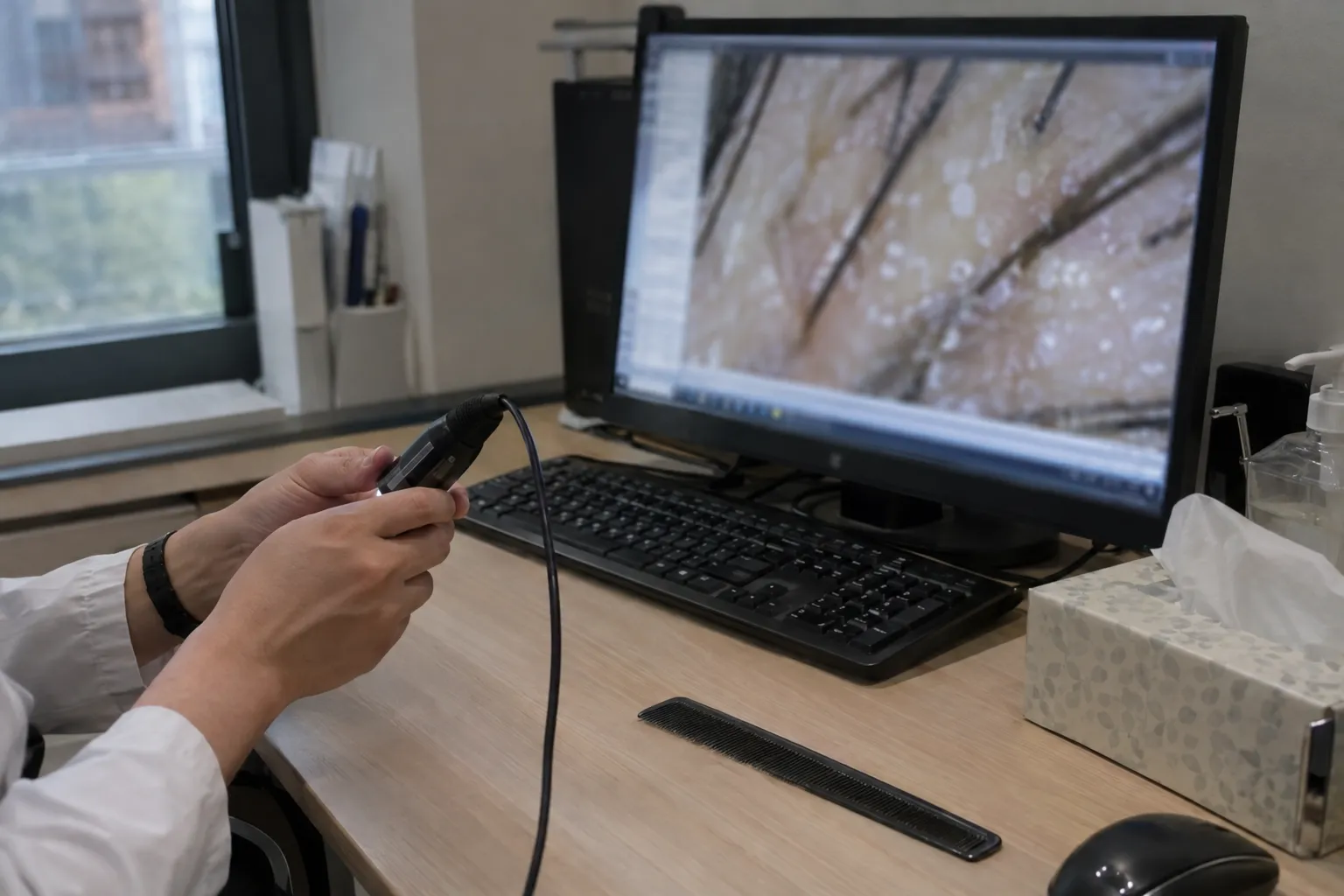
Everyone in your group chat has an opinion. One friend came back from Istanbul with a full hairline and a hotel story. A colleague says Seoul is where the careful work is done. You have the tabs open, and the hair transplant Korea vs Turkey question is no clearer than it was last week.
Our interpreters sit in hair transplant consultations in Seoul, and patients across the desk often have a Turkish quote on their phone. We are not going to tell you Turkey is bad. It is not. The two countries sell the same operation in two different ways, and the difference tells you what to ask in either place.
Two ways of selling the same operation
Turkey's clinics, mostly in Istanbul, are built around the all-inclusive package. One figure covers the surgery, a hotel, airport transfers and often a maximum-graft session. It is simple to buy from abroad, and the volume is very large.
Korean clinics quote by graft count. The doctor examines your donor area, designs a hairline, counts what you need and what you can spare, and prices that number. Hotel and transfers are your own business, or your coordinator's. Sessions tend to be smaller and planned with a second procedure in mind, because hair loss keeps moving after surgery.
Neither model is right in itself. A package makes the total easy to see. A per-graft quote makes it harder to be sold more grafts than your donor area can afford.
Korea vs Turkey, side by side
| Korea (mostly Seoul) | Turkey (mostly Istanbul) | |
|---|---|---|
| How it is priced | By graft count, after examination | Package, often with hotel and transfers |
| Typical session | Moderate counts, often planned in stages | Large single sessions are common |
| Who operates | Ask. A doctor leads, with a nursing team placing grafts at many clinics. | Ask. It varies widely. Technician-led surgery is a known concern. |
| Shaving | Non-shaven and partly shaven FUE widely offered | Full shave is the norm. Non-shaven is less common. |
| Hairline style | Conservative and soft. Much experience with Asian hair and female hairlines. | Often lower and denser. Much experience with European and Middle Eastern hair. |
| Language support | Varies. A medical interpreter closes the gap. | English-speaking sales teams are standard. Medical interpreting varies. |
| From Australia | About ten hours direct from Sydney | Around twenty hours or more, with a stop |
| From the UK | About thirteen to fourteen hours direct | About four hours direct |
| Recovery stay | Three to five days | Usually three to four days in the package |
The question that matters in both countries: who holds the punch?
The International Society of Hair Restoration Surgery has warned for years about clinics where unlicensed technicians perform the surgery while a doctor is present in name only. It names no single country, and the problem exists wherever volume is high. Overharvested donor areas and unnatural hairlines are what it produces, and neither can be fully undone.
In Korea, a hair transplant is a medical act. The doctor designs the hairline, gives the anesthetic and makes the recipient sites. At many clinics the doctor also extracts, and a trained nursing team places the grafts. At some, more is delegated. So ask, in either country, and get the answer in writing.
- Who draws my hairline, and will that person be in the room all day?
- Who extracts the grafts: the doctor, or staff?
- Who makes the recipient incisions?
- How many patients does the doctor operate on in one day?
- Is the clinic registered to treat overseas patients? Here is how to check a clinic license in Korea.
Graft counts: why the same head gets three different numbers
Patients arrive with a Turkish quote for one number of grafts and a Korean quote for much less, and conclude that Korea is giving them less hair. Often the two quotes are not counting the same thing.
The second reason is philosophy. Your donor area is a lifetime supply, and it does not grow back. Many Korean doctors plan conservatively and keep reserves for the day your loss progresses. A very large single session can look impressive at month twelve and leave little for age fifty. Ask any clinic how much donor hair you will have left.
Cost: comparing a package with a per-graft quote
On headline figures, Turkey is usually lower, sometimes by a lot. Labour costs, clinic scale and currency all play a part. Korea sits above Turkey and, for many visitors from Australia, the UK or North America, still below quotes at home. The estimated Seoul range is on our FUE hair transplant page.
To compare fairly, rebuild both quotes to cover the same things: surgery, hotel nights, flights, medication, aftercare washes, and any PRP or follow-up treatment the package lists. Then check these.
- Is the count in grafts or in hairs?
- Is there a maximum-grafts promise? Does your donor area support it?
- Non-shaven FUE costs more per graft everywhere, because it is slower. Do you need it for work?
- Who operates, in writing?
- What is the policy if growth is poor at twelve months?
KCODI books Korean clinics at the local partner rate, with no foreigner markup and an itemised written quote before any deposit. We do not book Turkish clinics, so take our view as one side of the comparison and check the rest yourself.
Recovery and the flight home
The surgery day is long, often most of a working day under local anesthetic, with a lunch break in the middle. The days after matter as much. The clinic usually does your first hair wash and shows you how to do the next ones. Scabs fall away over seven to ten days. Transplanted hairs commonly shed in the first weeks, then regrow, and the result is judged at about twelve months.
In Seoul, plan three to five days and about three clinic visits. Your interpreter is with you for the design discussion, which is where most regret begins. A hairline drawn too low is very hard to raise again. She also sends the practical list: a hotel near the clinic, how to sleep propped up, which hat is safe for the airport, and a late pharmacy.
A long flight is fine for most patients after a few days, once the doctor clears it. From Australia the shorter route to Seoul is a real advantage in that first week. From the UK, Istanbul is closer. Count it.
Who tends to choose which
Patients who choose Turkey usually need a large session, want one all-in figure, and live in Europe. Do the who-operates checks twice over, and choose the doctor, not the package.
Patients who choose Korea usually care most about hairline design, want a non-shaven option, have Asian or fine hair, or are women lowering a hairline. See our female hairline transplant page. Many are already coming to Seoul for something else. If you are not sure surgery is the next step at all, a scalp and hair loss consultation at a Seoul clinic is a low-commitment start.
However you settle the hair transplant Korea vs Turkey question, put the same questions to the clinic and get the answers in writing. For Seoul, start on the hair transplant Korea page, let clinic matching shortlist for you, or meet the interpreters. Planning dental work on the same trip? Read our comparison of Korean implant brands.