What a skin analysis in Seoul measures, and how to read the result
Written by KCODI medical interpreter team · English deskUpdated · 7 min read

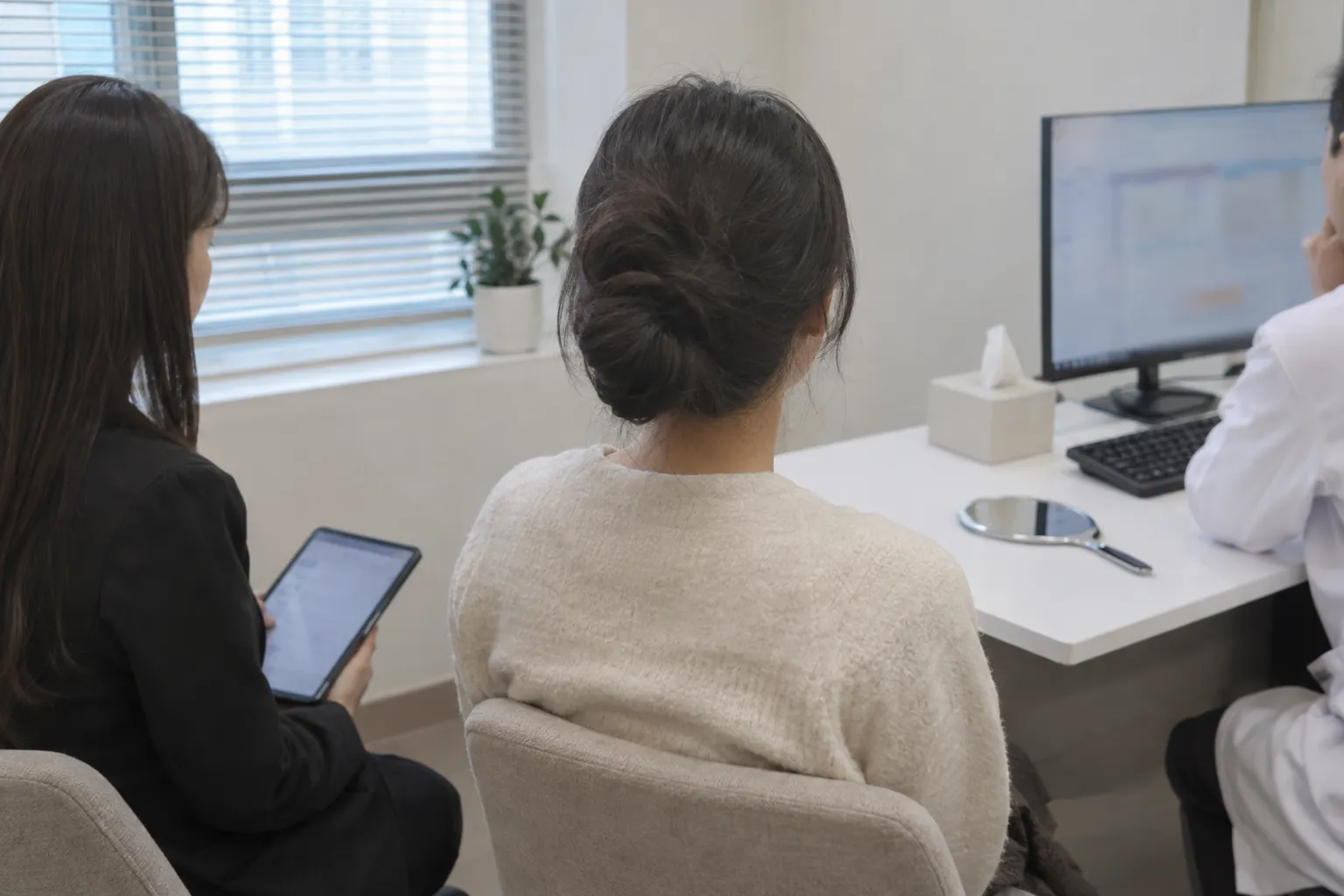
Almost every skin clinic in Gangnam starts the same way. You put your chin on a rest, a hood closes over your face, three or four flashes go off, and a screen fills with red blotches, brown blotches and a number out of a hundred. That is a skin analysis, and in Seoul it is usually free or folded into the consultation.
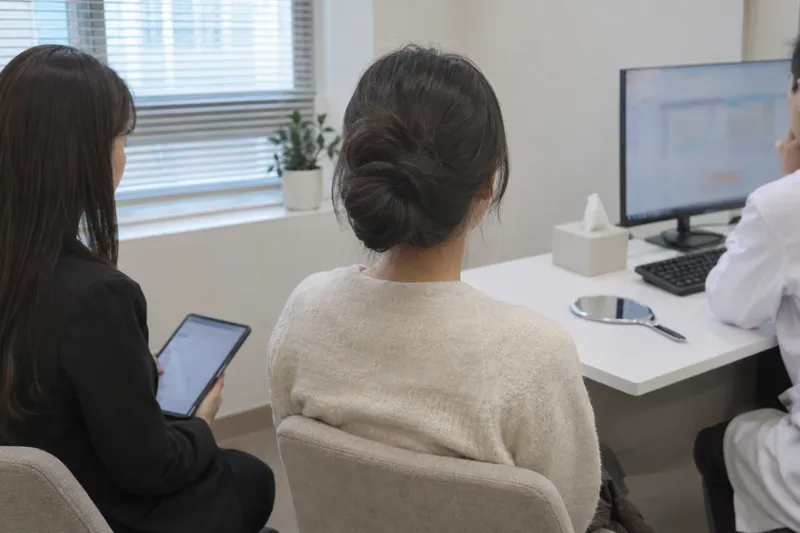
Then the counsellor talks for four minutes and hands you a quote. If you did not follow the four minutes, you are buying a plan you cannot evaluate. Our interpreters translate that conversation several times a week.
This guide explains what each image actually shows, which findings justify a treatment and which do not, and how to get an honest reading rather than a sales sheet.
What the machine is really photographing
Most clinics use a multi-spectral facial camera. It takes the same face under different light and separates what sits on the surface from what sits deeper. The brand on the box changes; the physics do not.
| Panel | Light used | What it actually shows |
|---|---|---|
| Surface / texture | Normal and raking light | Pore size, roughness, fine lines |
| Brown spots | Cross-polarised | Melanin: freckles, lentigines, melasma |
| Red areas | Cross-polarised | Haemoglobin: inflammation, flushing, broken vessels |
| UV or deep pigment | Ultraviolet | Pigment not yet visible to the eye |
| Porphyrin | Ultraviolet | Bacterial activity in pores, linked to acne |
| Moisture / oil | Probe on the cheek | A single-point reading on that day, in that room |
Two honest caveats. The moisture number changes with the weather, the flight you just took and how long you sat in the waiting room. And the score out of a hundred is a marketing layer on top of the images, not a medical grade.
Which findings justify a treatment, and which do not
A good counsellor points at the image and names the thing. A weak one points at the score and names a package. Here is the translation you need.
- Deep pigment under UV that you cannot see in the mirror: real, and it explains why a surface treatment did nothing. Ask whether it is melasma, because that changes the whole plan.
- A red map across the cheeks and nose: inflammation or vessels. Heat-based treatments can make this worse, so the doctor should say so.
- High porphyrin with visible congestion: supports extraction and an acne protocol, not a lifting device.
- Pore size on the texture panel: real, but the honest fix is repeated resurfacing over months, not one visit.
- A low moisture number alone: not a diagnosis. Hydration readings move all day.
- A score that dropped since your last visit: not evidence of anything on its own.
Where a skin analysis in Korea is done, and what it costs
Three kinds of places run a scan, and they are not equivalent.
| Dermatology clinic | Skin-care shop | Cosmetics counter | |
|---|---|---|---|
| Doctor can interpret it | Yes | No | No |
| Can act on the finding same day | Yes, laser or injection | Surface treatments only | Product only |
| Charge for the scan | Usually free with consultation | Usually free | Free |
| What the result is used for | A treatment plan | A course of facials | A basket |
A separate thing shares the name: personal colour analysis, the studio session that tells you which shades suit you. It is popular in Seoul, it is not medical, and it measures nothing about your skin. Do not book one expecting the clinic version.
How to get the best skin analysis in Seoul, not the fastest
- Arrive with a bare face. Make-up, sunscreen and even a heavy moisturiser change the pigment and porphyrin panels.
- Book it at the start of your trip, not the end. Anything the doctor recommends will need days you do not have on the last morning.
- Ask for the raw images, not only the score. Most clinics will print or email them.
- Ask what each red or brown area is called. A named finding can be checked; a score cannot.
- Ask what happens if you do nothing. An honest clinic has an answer for that.
- Keep the images. A second clinic can compare against them, and so can your dermatologist at home.
If the scan turns up pigment, the next page is pigmentation laser. If it turns up congestion and scarring, read Korean acne treatment. If the finding is a mole or a changing spot rather than pigment, that belongs with skin cancer screening in Seoul.
What to do with the plan you are handed
The quote that follows a skin analysis in Korea is usually a course: a number of sessions of one or two treatments, priced as a block. Blocks are cheaper per session and harder to leave. Before you sign, three questions settle most of it.
- How many sessions before I could see a change, and what would that change look like?
- What happens to the unused sessions if I fly home? Ask whether they refund, hold or expire, and get the answer in writing.
- Which single treatment would you do first if I only had one visit?
That last question is the useful one. It separates a plan from a package. Our guide to choosing a skin clinic in Seoul covers how to check the licence and the doctor, and clinic matching will shortlist for you if you would rather start from your concern than from a clinic name.