Korean facial benefits, side effects, and which skin it is good for
Written by KCODI medical interpreter team · English deskUpdated · 8 min read


Most people searching for Korean facial benefits have already seen the videos: the water peel handpiece, the rubber mask peeled off in one piece, the flat glow afterwards. What nobody explains is which part of that hour does anything for your skin, and which part is atmosphere.
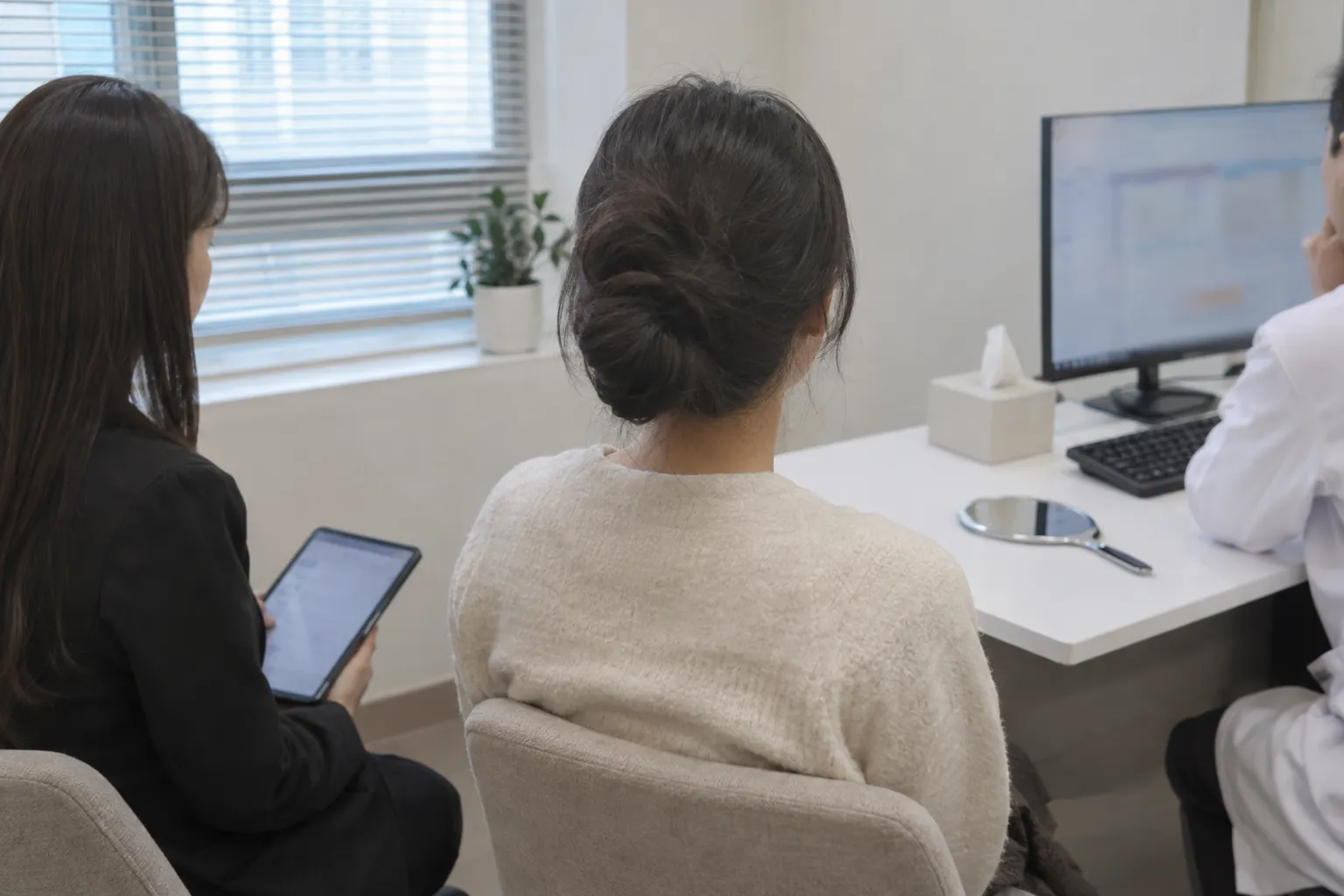
Our interpreters sit through these sessions in Gangnam every week, in the room, translating the skin check that comes before the treatment. That check is where the real answer lives.
This guide walks through what a session actually changes, what it cannot change, the side effects that are normal, and how a clinic version differs from a hydrafacial or a shop facial.
What a Korean facial is, step by step
Korean clinics call it skin management, not a facial. The sequence is standardised enough that you can predict it: double cleanse, a warm softening step, a water-and-suction handpiece that lifts sebum and dead skin, manual extraction, an ampoule or a light needling-free infusion, LED, then a cooling modelling mask.
Fifty to seventy minutes, no anesthesia, no downtime beyond some redness. The full step list and the estimated range are on our Korean facial page.
- Cleansing and softening: opens the follicle so extraction hurts less. Skippable at home, not skippable here.
- Water peel or aqua peel: the step most visible results come from. It removes surface debris, not scars.
- Extraction: the step that decides whether you leave calm or blotchy. Technique matters more than the device.
- Ampoule or infusion: hydration and a short-term plumping effect. Lasts days, not months.
- LED and cooling mask: settles redness so you can go outside. Comfort, mostly.
Korean facial benefits: what actually changes
Be concrete about the outcome and you will book the right thing. One session gives you a clean, hydrated, evenly reflective surface for roughly a week. That is a real benefit and it is also the whole benefit.
| What you want | Does a facial do it? | What clinics use instead |
|---|---|---|
| Clogged pores, blackheads, rough texture | Yes, visibly | Repeat every 2–4 weeks |
| Dehydrated, flaky, tight skin | Yes, for about a week | Skin boosters for longer effect |
| Dull tone before an event | Yes | Book 2–3 days before, not the same day |
| Active inflamed acne | Partly, and only with a doctor's opinion | Acne treatment protocol |
| Freckles, melasma, sun spots | No | Pigmentation laser |
| Acne scars, enlarged pores, sagging | No | Microneedling, lasers, lifting devices |
So the honest answer to whether a Korean facial is good for skin: it is good maintenance, and it is a cheap way to have a doctor look at your face once. It is not a treatment for a condition.
Korean facial side effects, and what is not normal
Most people leave pink and settle within a few hours. Some leave with small scabs where extraction was aggressive. Both are common. What matters is knowing the line between normal and something to report.
- Normal: redness for a few hours, mild stinging under the mask, tiny scabs over extraction points for 2–3 days.
- Normal: a few small pimples surfacing in the following week, especially on a first visit.
- Not normal: burning that gets worse after you leave, swelling that spreads, or blistering. Contact the clinic the same day.
- Avoid for 24 hours: sauna, jjimjilbang, hot yoga, strong actives, and direct sun without cover.
- Tell the clinic if you had filler or toxin in the last two weeks, and if you are pregnant.
If you want the wider view of what goes wrong with aesthetic treatments in Korea and how clinics handle it, read injectables gone wrong.
Korean facial or hydrafacial: which is better for you
This comes up in every consultation. A hydrafacial is a branded device protocol: cleanse, acid peel, vortex extraction, serum infusion, in about half an hour. A Korean clinic facial is a longer programme built around manual extraction, with a device doing part of the work.
| Korean clinic facial | Hydrafacial | |
|---|---|---|
| Length | 50–70 minutes | 30–45 minutes |
| Extraction | Manual, thorough, can sting | Suction only, gentler |
| Best for | Congestion, blackheads, first visit with a skin check | Sensitive or reactive skin, no downtime at all |
| Consistency | Depends on the aesthetician | Protocol is fixed by the device |
| Add a laser the same day | Common in a clinic | Possible, depends on the clinic |
Which is better is a question about your skin, not about the treatments. Congested and oily with blackheads: the Korean version. Reactive, thin, flushing easily: the gentler device protocol, or a hydration-only programme.
Korean facial for dry skin and for sensitive skin
Dry and sensitive are different problems, and clinics treat them differently even though the menu word is the same.
For dry skin, the useful steps are the infusion and the mask, and the step to shorten is extraction. Ask for the hydration programme rather than the deep-cleansing one. Many clinics will suggest a booster afterwards; that is a separate decision, explained on our skin boosters guide.
For sensitive or rosacea-prone skin, say so before the steam. Heat, strong suction and long extraction all provoke flushing. A good clinic swaps to a cool programme without argument. A shop that has no doctor on site may not know to ask.
Our comparison of what each treatment actually does is in Korean skin treatments compared, and if you are choosing between a clinic, a medi spa and a hotel spa, start with where to get a facial in Seoul.
What a Korean face treatment price covers
Clinics quote per session, and the number moves with the programme, not with your nationality. What changes the figure is the number of steps, whether an infusion or LED is included, whether the visit includes a doctor's consultation, and whether you buy a course of sessions.
- Ask which programme the advertised number refers to. Event pricing for a first visit is normal and openly used.
- Ask what the same programme charges on a second visit. This is the number that matters if you live nearby.
- Ask whether extraction and the mask are included or added.
- Ask whether a doctor sees you, or only an aesthetician.
- Get it in writing before you pay a deposit. We do this in Korean as a matter of course.
The estimated range for a session is rendered on the Korean facial page, and the wider dermatology menu sits under dermatology in Korea. If you would rather not pick alone, clinic matching narrows it in about two minutes, or meet the interpreters who cover skin clinics.