Menu
September surgery-day interpreter slots are filling. Hold yours, free

Korean Medicine

Acupuncture in Korea and Chuna therapy, explained before your first session

Acupuncture in Korea is what many Koreans try first for a stiff neck, a sore lower back or a sprained ankle. You get it at a Korean medicine clinic, where the doctors are licensed after six years of university training. A typical session lasts forty to sixty minutes: a consultation, acupuncture, often cupping or heat, and Chuna, a hands-on therapy in which the doctor mobilises your spine and joints. No anesthesia, one visit, and you can walk straight back into your day. For a long-standing problem, one session is a taste, not a fix.

Typical price in Seoul

$22 – $110

₩30,000 – ₩150,000 · per session

Stay in Korea
1–2 days
Procedure time
40–60 min
Anesthesia
None needed
Clinic visits
1 visit

Market estimate, not a quote. Your written quote comes after a free consultation.

  • One visit of 40–60 minutes. Visitors on a short trip usually fit in one to three sessions.
  • Sterile single-use needles are standard. Mild soreness or a small bruise afterwards is common.
  • Numbness, weakness or pain after an accident needs a hospital examination first, not manual therapy.
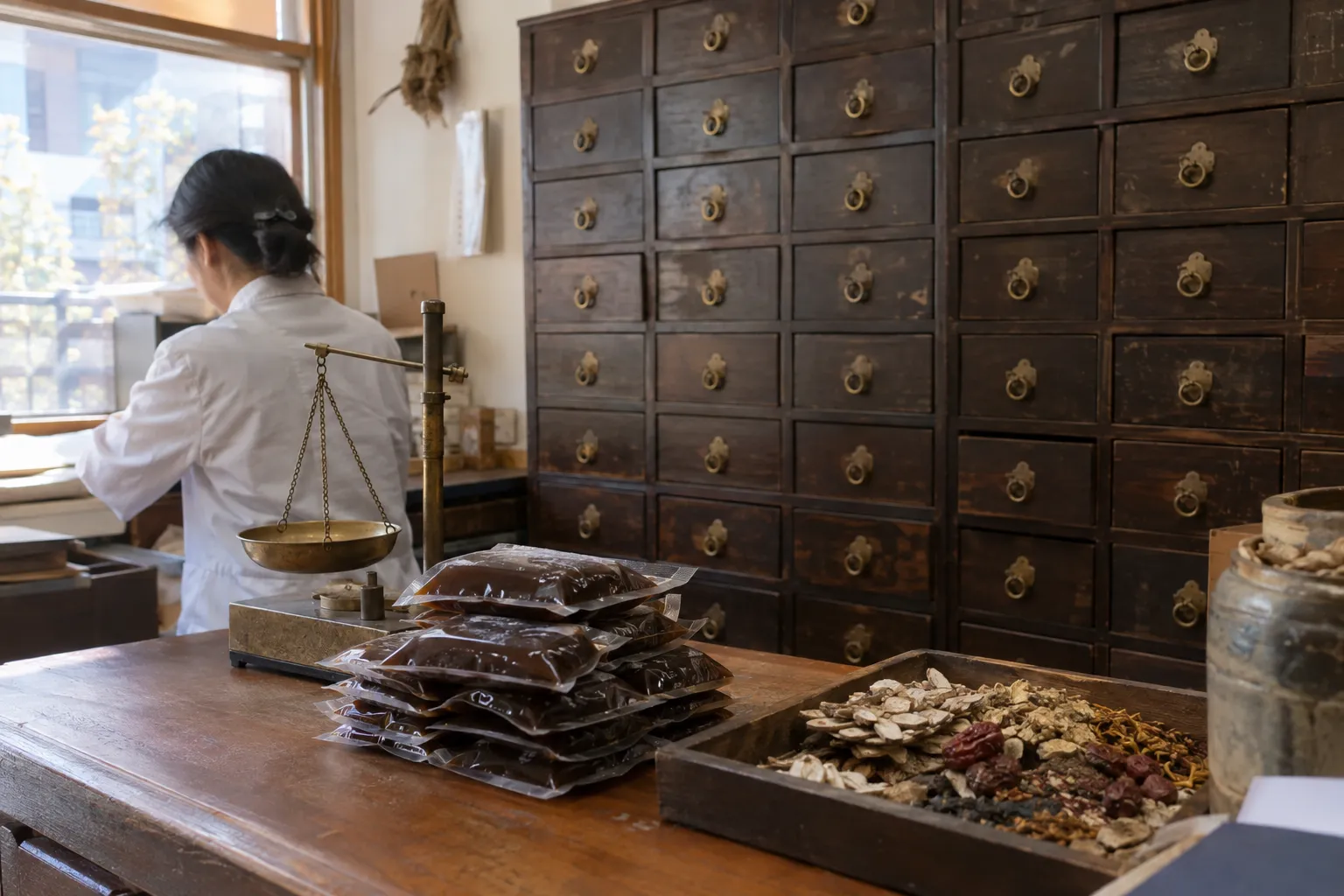
A traditional Korean medicine clinic with a wooden cabinet of herbal drawers, a scale, and packaged herbal decoctions on the counter (illustrative image)

What she does on your clinic day

  1. At the consultation

    Where it hurts, since when, what makes it worse, and your medication list. She translates precisely, because blood thinners, pregnancy and bone conditions change what the doctor will do.
  2. During treatment

    She explains each step before it happens: needles here for fifteen minutes, then cupping, then Chuna. If a needle aches or a movement feels wrong, she tells the doctor at once.

  3. Afterwards

    She passes on the doctor's advice on stretching, heat and what to avoid that day, and books a second session if you want one before you fly.


Meet the interpreters

Stay in Korea

  1. 0:00

    Check-in and consultation

    A short form, then the doctor examines your posture, range of motion and tender points.

  2. 0:15

    Acupuncture

    Fine needles stay in for fifteen to twenty minutes, often with an infrared lamp. Most people feel a dull heaviness, not sharp pain.

  3. 0:35

    Cupping or heat therapy

    Optional. Cupping leaves round marks for several days. Say no if you have beach plans.

  4. 0:45

    Chuna manual therapy

    The doctor uses hands and a drop table to mobilise the spine and joints. Five to fifteen minutes.

Typical price in Seoul

The figure on this page is per session. Acupuncture alone sits at the lower end. Sessions that include Chuna, pharmacopuncture or longer treatment times sit higher. Korean residents pay less through national insurance, which does not cover visitors. Your interpreter confirms the uninsured price before you go. Herbal prescriptions are separate: see herbal diet medicine.

  • You have neck, shoulder or lower back tension from desk work or long flights
  • You have a minor sprain or muscle strain and want to try what locals use
  • You are curious about Korean medicine and want a doctor to explain what they are doing and why

Questions patients ask us

What is Chuna therapy?
Chuna is a Korean manual therapy in which a Korean medicine doctor uses hands and body weight to mobilise joints and soft tissue, mainly around the spine. It resembles aspects of chiropractic and osteopathic treatment. It is performed by licensed doctors in clinics, not in spas.
Does acupuncture hurt?
The needles are much thinner than injection needles. You may feel a brief prick, then a dull ache or heaviness that practitioners consider normal. Tell the doctor if anything is sharp or electric, and the needle is adjusted.
Is one session enough?
For a fresh stiff neck, it may bring clear relief. For chronic pain, locals attend a series over weeks. On a short trip, think of it as relief and an introduction, and ask the doctor what to continue at home.
Who should avoid acupuncture or Chuna?
Tell the doctor if you take blood thinners, are pregnant, have osteoporosis, a recent fracture, a spinal implant or cancer affecting bone. Some techniques will be skipped or modified. New numbness, leg weakness or loss of bladder control needs a hospital, not a clinic.
Is it safe and hygienic?
Licensed clinics in Korea use sterile, single-use disposable needles, and treatment is given by doctors with a national licence. Minor bruising and soreness are the usual side effects. Serious complications are rare, and choosing a licensed clinic is how you keep them rare. See all Korean medicine options.

Korean Medicine

See all treatments

Booking direct vs booking with KCODI

Same clinic, same surgeon. What changes is who is on your side of the desk.

InterpreterBooking direct:The clinic's coordinator, if one speaks your languageKCODI:Your own medical interpreter, assigned free
Surgery dayBooking direct:You check in aloneKCODI:She stays from check-in to discharge
QuoteBooking direct:Often verbal, in a chat windowKCODI:Written and itemised before any deposit
Price listBooking direct:Overseas-patient price list at many clinicsKCODI:Partner rate agreed in advance, no foreigner markup
Recovery daysBooking direct:You search hotels and food yourselfKCODI:Hotel, soft food and pharmacy list for your clinic's area
After you fly homeBooking direct:Email the clinic in English and waitKCODI:Message your interpreter, she relays it in Korean

What clinics offer differs. Ask us about the clinic you have in mind and we tell you what applies there.

What you can hold us to

  • Quote first, deposit later

    You never pay a deposit before you hold a written, itemised quote.

  • A name and a face before you fly

    You know who your interpreter is, and which language she speaks, before you board.

  • You pay us nothing

    No booking fee, no interpreter fee, no fee for asking. The clinic pays our coordination fee.

Doing more than one thing on this trip?

Skin treatments usually fit around a surgery consultation, and a checkup takes half a day. Tell us everything on your list and we put it in one schedule, with one interpreter.

Plan my whole trip

Ask first. Decide later.

Replies in about 10 minutes, 09:00–22:00 KST