Ain Hospital Korea: what to confirm before you book anything in Incheon
Written by KCODI medical interpreter team · English deskUpdated · 8 min read

Most people who type ain hospital korea into Google are not browsing. They have been given the name by a friend in Incheon, or they live near the airport, or a Korean doctor's letter has that hospital on it. The question underneath is always practical: can I actually be seen there, and how.
This page gives the facts the hospital publishes about itself, the checks that apply at any Korean hospital, an honest note on what hospital reviews measure, and a second itemised quote for the same check-up if you want to compare.
KCODI is a booking and medical-interpretation service. We are not affiliated with this hospital and we are not recommending it or warning you away from it.
What the official site states
The site gives the name as 아인병원, Ain Hospital, on Gyeongin-ro in Michuhol-gu, Incheon. This is a general hospital, not a cosmetic clinic, and the department list reflects that: obstetrics and gynaecology, fertility treatment, orthopaedics, spine surgery, general surgery, internal medicine with gastroenterology, cardiology, endocrinology and respiratory subspecialties, paediatrics, ENT, neurology, radiology, anaesthesiology and laboratory medicine.
Separate centres are listed for breast and thyroid, thyroid cancer, robotic hernia surgery, weight management, digestive cancer, sleep, and fertility. A comprehensive health screening centre is listed apart from the outpatient departments, which is the usual arrangement in Korea: screening runs on its own floor, its own booking line and its own morning schedule.
The footer states certification by the Ministry of Health and Welfare and a designation as an obstetrics and gynaecology specialty hospital. The site mentions support for foreign residents living in Korea. Those are the hospital's own statements as of the date checked above. What the site does not spell out is how a visitor arriving from abroad books, so ask that in the first message rather than assuming. Our comprehensive check-up page sets out what a Korean screening package normally contains.
Who ends up searching this hospital in English
Three groups, roughly, and they need different things from the same hospital.
- People already living in or near Incheon who want a hospital within a bus ride, usually for a check-up, a pregnancy or a joint problem that a small clinic has sent upward.
- Patients continuing something that started elsewhere, where the important question is whether records and images from the previous hospital can be read and reused rather than repeated.
- Visitors with a short trip who want screening done near the airport instead of crossing Seoul for it. For them the deciding factor is whether the results arrive before the flight home.
The difference between a hospital and a neighbourhood clinic in Korea is a practical one, not a prestige one, and it changes the booking route. We explain it in hospital or clinic in Korea.
Six things to check before booking any Korean hospital
None of these are specific to this hospital. They are the six answers that decide whether your appointment turns into a useful morning or a wasted one.
| What to check | Why it matters | How to ask |
|---|---|---|
| Department, not hospital | Large hospitals run each department on its own schedule and waiting list | Name the symptom and ask which department takes it, then ask that department's next opening |
| Screening versus outpatient | Check-up centres book separately from clinics and often only in the morning | Ask whether the slot is in the screening centre or an outpatient room |
| Foreign-patient registration | Only registered institutions may legally attract and treat overseas patients | Ask for the registration and check it yourself against the official list |
| Language on the day | Front desk English and consultation-room English are not the same thing | Ask who will be in the room, not whether staff speak English |
| Results timing and language | Written reports are issued in Korean by default | Ask the issue date and whether an English report can be requested at booking |
| What is not included | Endoscopy sedation, extra imaging and repeat visits are commonly billed apart | Ask for the package contents and the exclusions in one written list |
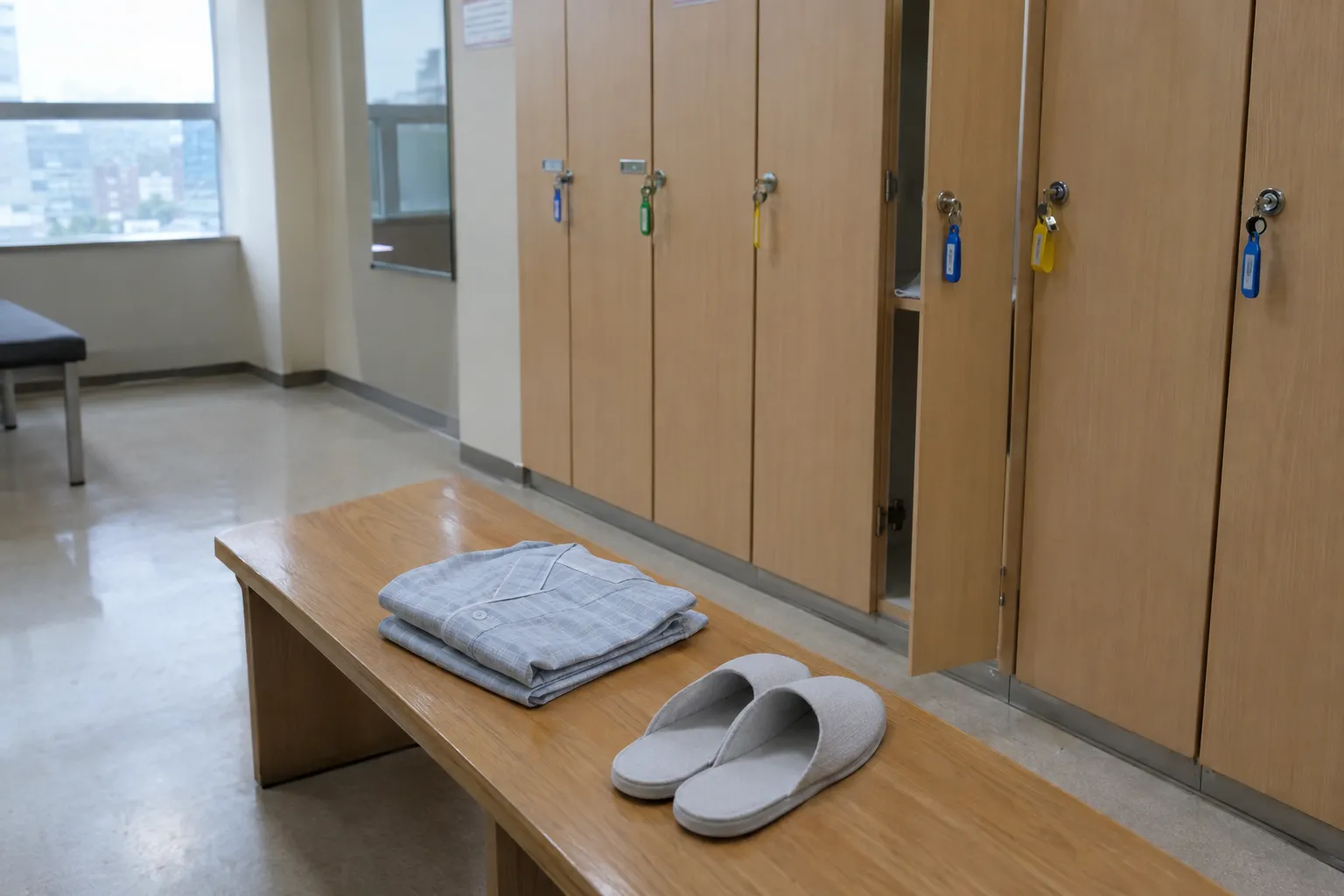
What hospital reviews measure, and what they do not
Reviews of a general hospital are not like reviews of a cosmetic clinic. Almost nobody reviews an accurate diagnosis. People review the parts they could see.
- Waiting time, signage and parking. Real, observable, and mostly about the building rather than the medicine.
- Whether staff were kind under pressure. Worth reading, and heavily influenced by which department and which hour the writer visited.
- Billing surprises. The most useful category, because a surprise means something was not explained at booking, and that is a process failure you can prevent by asking.
- Outcome claims. Least reliable. One person's result describes one person's body, and the people with unremarkable results rarely write anything at all.
Use reviews to find questions, not answers. The criteria that hold up across hospitals are set out in choosing a hospital in Korea as an international patient.
Get the same check-up priced twice
Screening packages are built from a list of tests, and the list is where the difference lives. Two packages with the same name can contain different imaging, different blood panels and different endoscopy arrangements. Seeing two itemised lists side by side takes ten minutes and changes what you book.
If you are not sure which package fits your age and history, clinic matching narrows it in about two minutes, and you can see who would be with you on the day on our interpreters page.
Between the booking and the morning itself
A check-up morning is short and rigid. Most of what goes wrong was decided days earlier.
- Confirm the fasting window in hours, not in words. Korean instructions are usually counted from the last meal, and water rules differ between hospitals.
- Bring your passport and, if you have one, your alien registration card. A booking under a different spelling of your name is a common reason to be turned away.
- Write your medication list with generic names. Blood thinners and diabetes medication change the endoscopy plan and must be declared before the day, not at the desk.
- Ask what happens if something is found. A hospital with its own specialists can usually move you into a department the same week, which is one genuine advantage of booking a general hospital over a screening-only centre.
- Fix the results date in writing and decide who reads them with you. If you fly home first, arrange the explanation call before you leave Korea.

None of this is difficult. It is simply the part nobody writes a review about, which is why it is the part that goes wrong.