Blepharoplasty recovery time, day by day, from the seat next to you in the clinic
Written by KCODI medical interpreter team · English deskUpdated · 8 min read

In shortBlepharoplasty recovery time follows a predictable shape: worst swelling at 48 hours, stitches out around day five to seven, presentable with glasses at two weeks, and natural-looking at two to three months.
You have watched enough day-by-day videos to know the third day looks frightening. What you cannot tell from them is whether the person had the same operation you are booking, and whether the swelling you see is normal or a complication. That gap is why people search blepharoplasty recovery time and still feel unprepared.
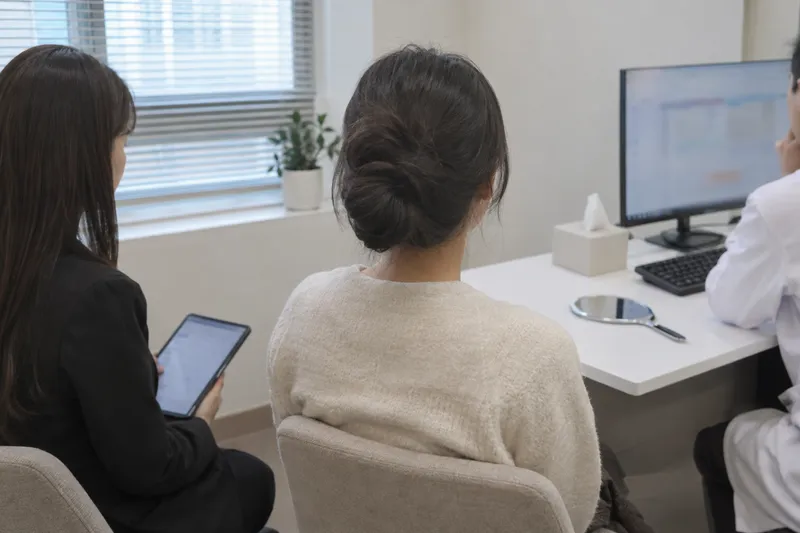
Our interpreters go to these post-operative checks with patients and hear the same question every time: is this normal? Almost always the answer is yes, and the reason it feels alarming is that nobody drew the curve in advance.
So here is the curve. What the operation involves, what each stage looks like, when you can fly, and the five things that actually slow healing down.
What does the blepharoplasty procedure involve?
Upper blepharoplasty removes or repositions excess skin, and sometimes a strip of muscle and fat, from the upper lid. Lower blepharoplasty deals with the fat and skin under the eye. Both are usually done under local anaesthesia with or without sedation, and both take under an hour per side in experienced hands.
In Korea there is an important terminology point. 「Upper blepharoplasty (상안검, upper blepharoplasty)」 usually means skin removal for a hooded, ageing lid. 「Double eyelid surgery (쌍꺼풀, double eyelid surgery)」 means creating or reshaping a crease. Clinics use both words loosely in English, and the recovery is not the same — skin removal leaves a longer incision line.
The other thing to settle before you consent: whether your surgeon is also correcting ptosis. If the lid muscle is weak, skin removal alone leaves the eye looking heavy, and you will not be happy at month three. Our page on ptosis and droopy eyelid surgery explains the difference.
What does blepharoplasty recovery look like day by day?
Swelling peaks at about 48 hours, then falls steadily. The line looks worse than the swelling by the end of week one, and better than it from week three. Photographs are misleading in both directions: day three exaggerates the problem, and week two exaggerates the progress.
| Stage | What it looks like | What you can do |
|---|---|---|
| Day 0 | Tight lids, small dressings, blurred vision from ointment | Rest with the head raised. Cold packs as instructed |
| Day 1–2 | Peak swelling and bruising, hardest to open the eyes | Short walks. No bending or lifting |
| Day 3–5 | Bruising turns yellow-green. Swelling starting down | Dressing check at the clinic. Reading and screens in short bursts |
| Day 5–7 | Stitches out. Line is pink and slightly raised | Glasses and a cap make you presentable outdoors |
| Week 2–3 | Most swelling gone. Line still pink. Eyes may feel dry | Light makeup usually allowed. Most people return to work |
| Month 1–3 | Line fading. Shape settling, often asymmetric before it evens out | Normal life. Sun protection on the scar |
| Month 3–6 | Final shape and a pale line | This is when a surgeon judges the result |
Two normal things that frighten people. Asymmetry during weeks two to six, because the two sides never de-swell at the same rate. And dryness or a gritty feeling, because blinking changes slightly while the lid is swollen. Both usually resolve; both are worth mentioning at a review rather than worrying about alone.
How many days in Korea, and when can I fly?
Seven days minimum, ten if you want the bruising to be under control before you are seen by colleagues. The hard constraint is suture removal at day five to seven, which must happen in Korea; the soft constraint is how you feel about being photographed at the airport.
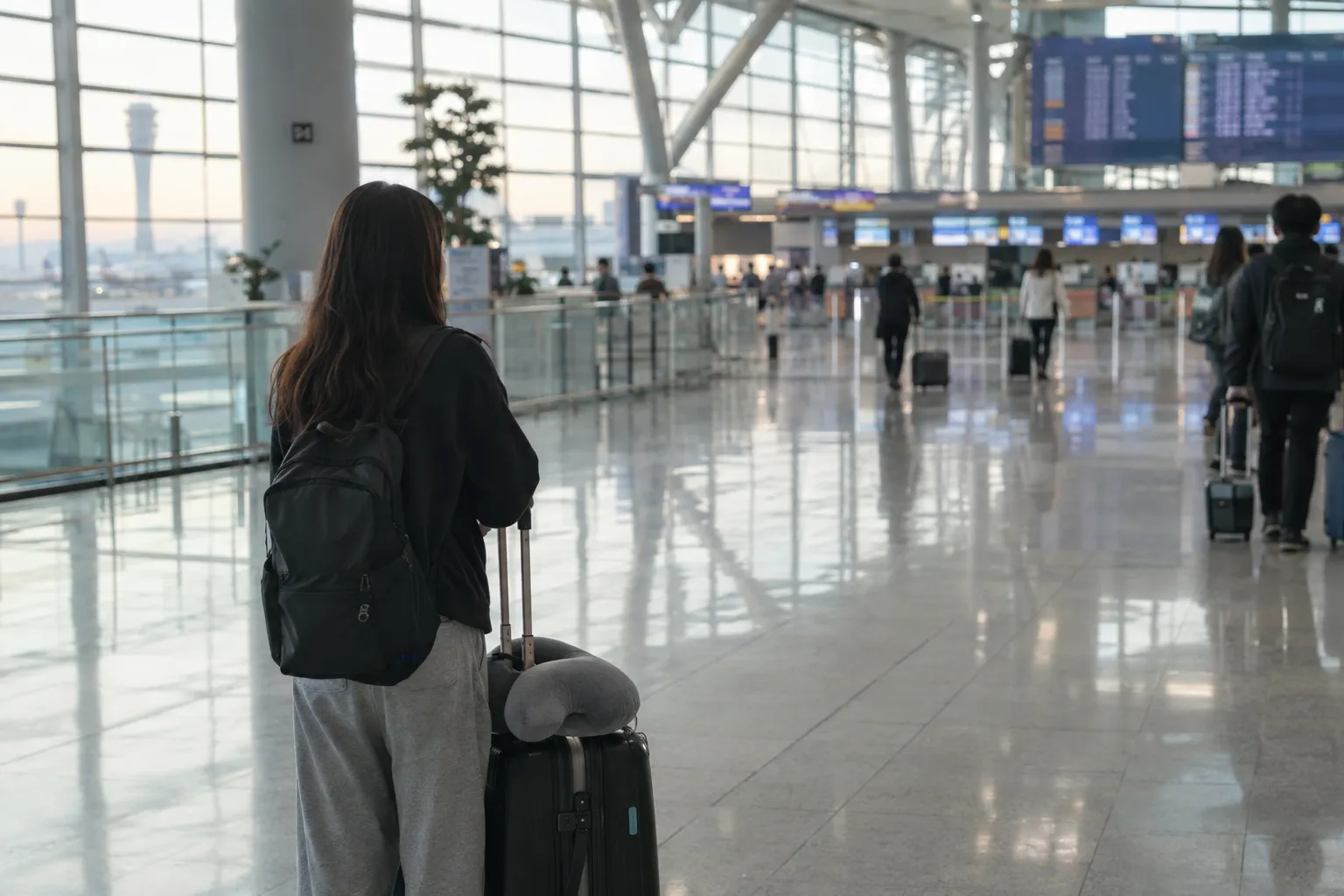
Flying itself is usually fine from around day five to seven with your surgeon's clearance. Cabin air is dry, so bring the lubricating drops the clinic gives you and use them more often than feels necessary. Take the aisle seat; you will want to stand up.
Typical stay length and price range for crease surgery are on the double eyelid surgery page, and our guide to recovery time and stay length compares the eyelid timeline against nose and jaw work if you are combining procedures.
What is the Korean technique for upper eyelid surgery?
There is no single Korean technique, and any clinic selling one as a branded method should be asked what it actually does. What Korean eyelid surgery is genuinely known for is volume of cases and a strong preference for conservative skin removal with attention to the crease height, because most patients want a natural fold rather than a deep Western-style one.
Practically, the choices that affect your result are these: how much skin is removed, whether fat is removed or preserved, whether the crease is fixed to deeper tissue with buried sutures or an incision, and whether ptosis is corrected at the same time. Those four, not a method name, are what you should hear explained.
What slows blepharoplasty healing down?
Five things, and four of them are within your control.
- Salt and alcohol in the first week. Both hold water in the lids. Korean soup is delicious and very salty.
- Sleeping flat. Two pillows for the first week makes a visible difference at day three.
- Sun on a fresh line. Scars darken. Sunglasses and the clinic's sunscreen, for months.
- Rubbing and heavy lifting. Both raise pressure in the lids and risk bleeding under the skin.
- Thick eyelid skin, which you cannot change. It simply takes longer, and one published study found that patient satisfaction after upper eyelid surgery is tied to expectations formed beforehand — which is an argument for realistic week-three photographs.
If your eyes were the reason for the trip and you are still deciding which operation you need, which Korean eye surgery does what sorts the options, and upper blepharoplasty for hooded eyelids covers the ageing-lid version in detail.
KCODI assigns you a medical interpreter free, for the consultation and on surgery day, and she comes to the suture removal too — which is the visit where patients most often have a question they cannot ask. Meet the interpreters or answer four questions in clinic matching.