Korean clinics treat thinning before they transplant, and that order matters
Written by KCODI medical interpreter team · English deskUpdated · 8 min read

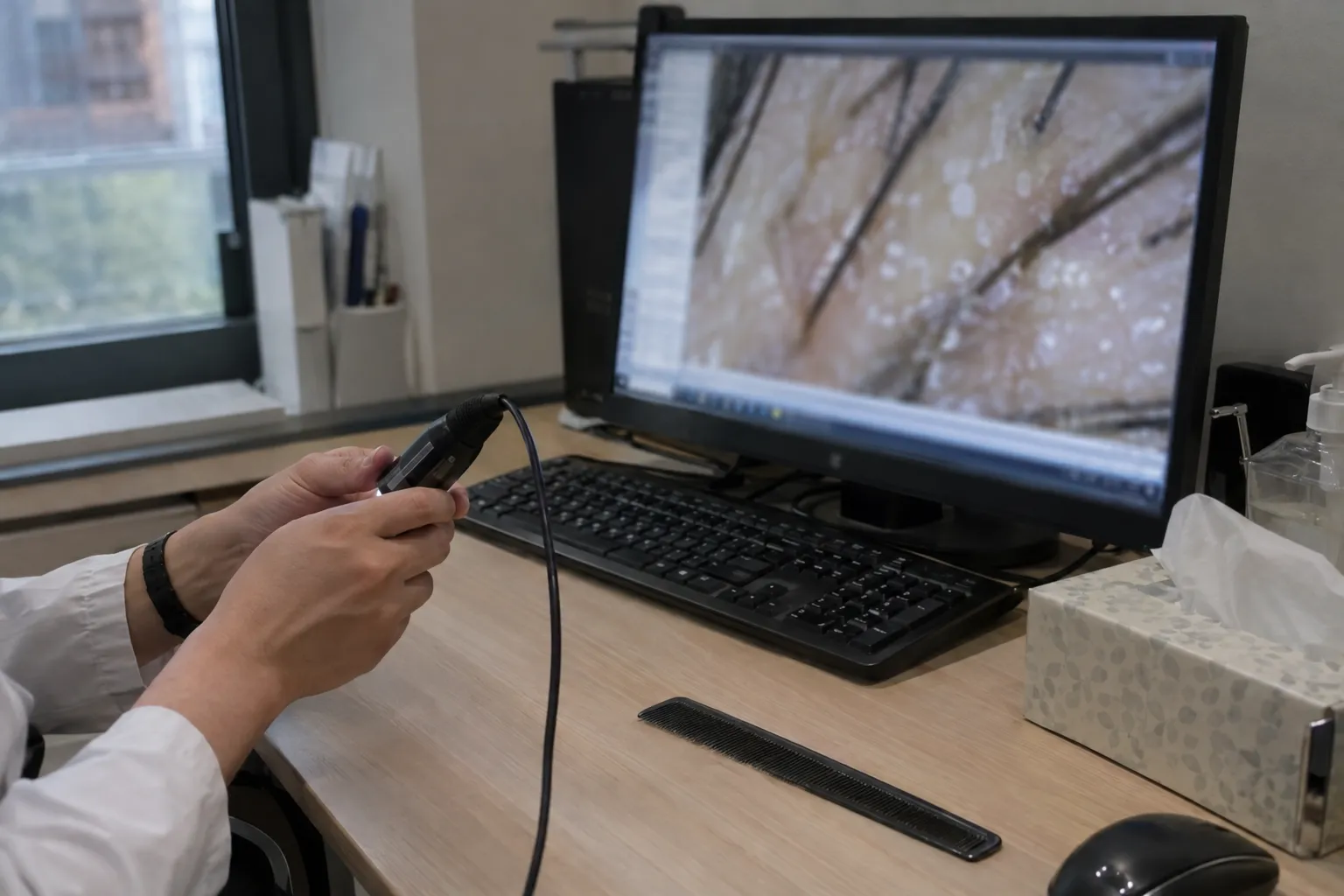
Searching for the best hair loss treatment in korea usually turns up transplant clinics, because that is the expensive end of the market. What a Korean hair clinic actually does at a first appointment is less dramatic: it looks at the scalp under magnification, works out what kind of loss this is, and tries to slow it.
That order is not a sales tactic. Transplanting into an area that is still actively thinning gives you a good result for a year and a patchy one afterwards, and any surgeon worth booking will say so.
Here is what Seoul clinics offer before surgery, what a short trip can realistically start, and which claims to ignore.
What the consultation measures
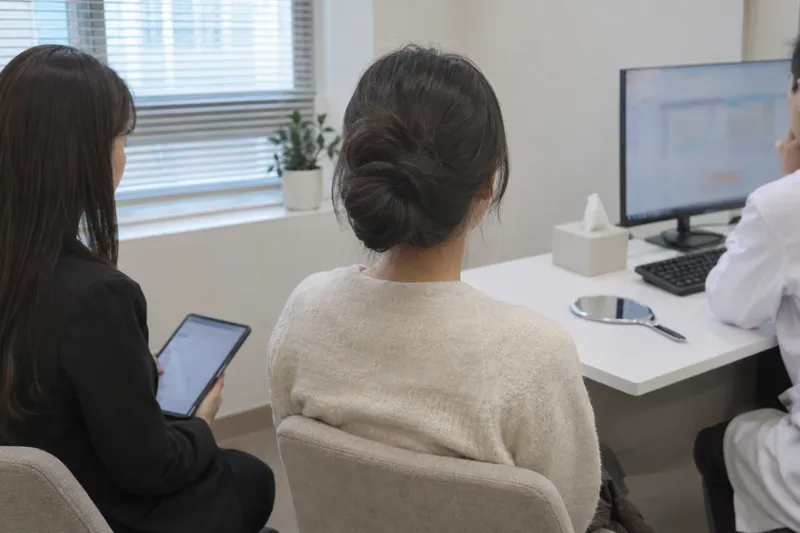
Expect a magnified scalp examination, density counts at the crown and hairline, questions about family pattern and timing, and often blood tests. Korean dermatology and hair clinics separate pattern hair loss from telogen shedding, scalp inflammation and thyroid or iron-related loss, because those are treated differently.
| Route | What it is aimed at | What to expect |
|---|---|---|
| Oral and topical medication | Slowing pattern loss, keeping existing hair | Months before any judgement; prescriptions follow a doctor's assessment |
| Scalp injections | Delivering medication or growth factors into the scalp | A course of sessions, usually weeks apart |
| PRP from your own blood | Stimulating follicles in thinning but living areas | Several sessions; a single trip covers one or two |
| Low-level laser and scalp care | Supporting treatment, scalp condition | Adjunct rather than primary treatment |
| Transplant | Moving hair into areas that no longer grow | Considered once loss is stable, not before |
Ranges for the non-surgical route are on the hair loss treatment page, and the surgical route is priced per graft, explained in hair transplant cost per graft.
What a short trip can and cannot start
Injection courses run over months, so a visitor gets the diagnosis, the plan and the first session. The honest framing from clinics is that you start treatment in Seoul and continue it at home, returning if you decide on surgery.
- Book the consultation early in the trip so blood results come back before you leave.
- Ask which findings would change the plan, and what the plan is if the tests show something systemic.
- Ask what medication is being prescribed, at what dose, and whether you can obtain it at home.
- Photograph the same areas in the same light. Density changes are invisible day to day.
- Agree the review interval, and how the clinic wants photographs sent.
What to ignore
Korean haircare shelves are full of anti-hair-fall shampoos, scalp tonics and ampoules, and some of them are pleasant to use. None of them are a substitute for treating pattern hair loss, and no shampoo regrows hair in a receded hairline.
- Treat before-and-after photographs with the same suspicion you would apply to any lighting-dependent image.
- Be careful with anything described as a cure. Pattern hair loss is managed rather than cured.
- Ask what happens when treatment stops, because the answer is usually that the loss resumes.
- Check who performs scalp injections, a doctor or a therapist, and ask what is in them.
- If a programme is sold as a fixed number of sessions before any diagnosis, walk.
Women's hair loss follows a different pattern and needs different investigation, and Korean clinics are used to it. The surgical option for a receded female hairline is covered on the female hairline transplant page.
When surgery becomes the right conversation
A transplant makes sense when the loss has stabilised, the donor area is good and the area to be covered no longer responds to medication. Many Korean surgeons will keep a younger patient on treatment for a year before agreeing to operate, which is a good sign rather than a delay tactic.
When it is time, the questions change: graft count, extraction method, who places the grafts, and how many days you stay. Those are covered in hair transplant cost per graft and in the comparison with other destinations in Korea versus Turkey.
Either way, the first appointment is the same appointment. Book the examination, get the diagnosis, and decide afterwards. Clinic matching narrows the shortlist before you fly.