A Korean face lift without surgery: what tape, massage and machines really do
Written by KCODI medical interpreter team · English deskUpdated · 7 min read

Korean face lift without surgery covers a genuinely wide range: strips of tape hidden under hair, lymphatic massage in a Gangnam salon, a home device bought at the airport, threads placed by a doctor, and ultrasound or radiofrequency machines that heat tissue deep under the skin.
They are not competing versions of the same thing. They work on different layers, over different timescales, and the honest way to sort them is by what moves and for how long.
Here is that sorting, what a Seoul clinic would actually suggest for a given face, and how to avoid buying a course of something that stops working the day you fly home.
What each one actually moves
| Method | What it moves | How long it lasts | Honest use |
|---|---|---|---|
| Face tape | Skin surface, physically held | Until you take it off | An event, a photograph, a video call |
| Massage and lymphatic drainage | Fluid, temporarily | Hours to a day | Morning puffiness, post-flight face, feeling better |
| Home devices (microcurrent, RF, EMS) | Superficial tissue, mildly, with daily use | Only with continued use | Maintenance between clinic treatments |
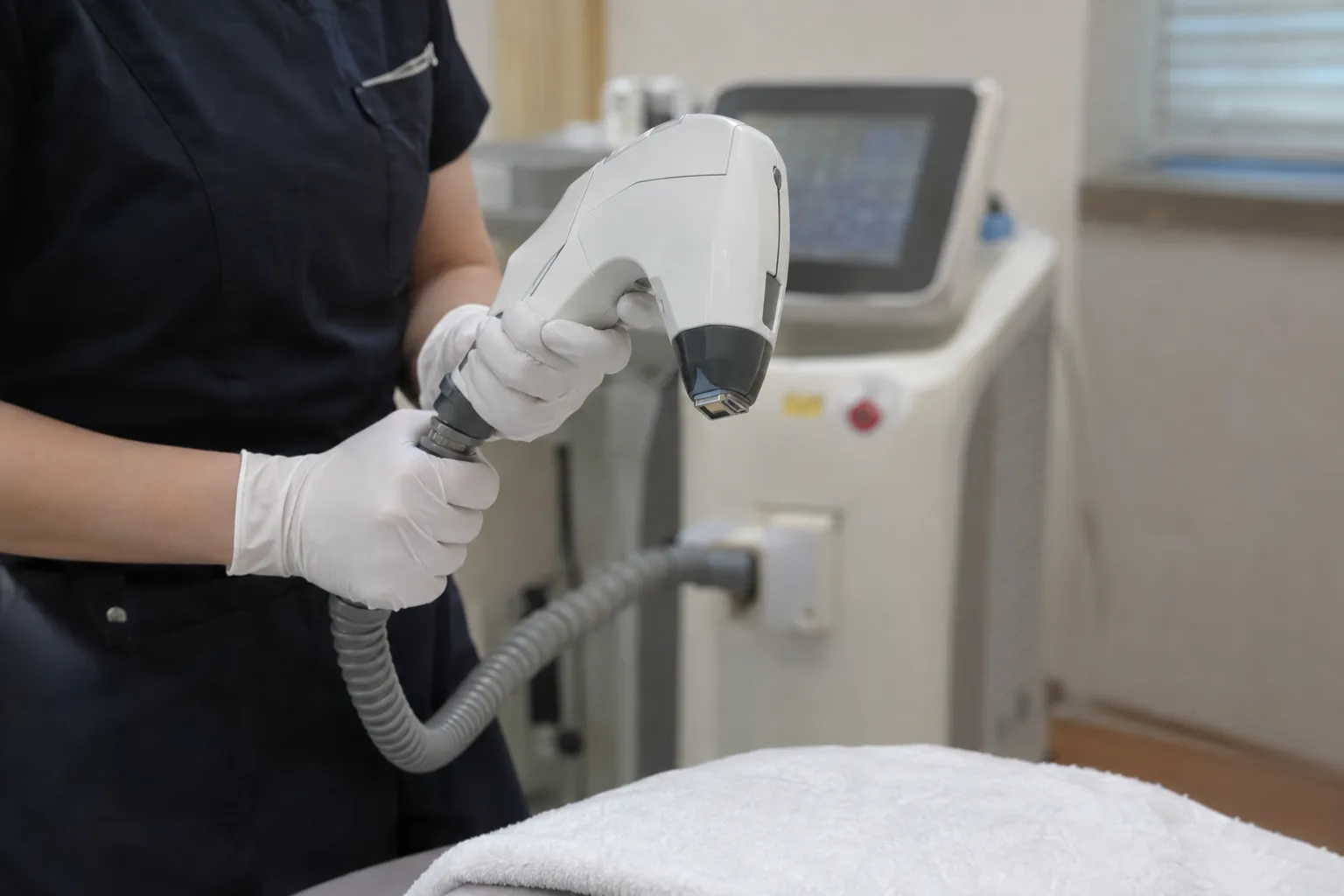
| Clinic HIFU and RF | Deeper tissue, by controlled heating | Months, building over weeks | Mild to moderate laxity |
| Thread lift | Tissue, mechanically repositioned | Around a year, varying by thread and face | Moderate sagging, jawline definition |
| Surgery | The structural layer | Years | Real descent that heat and threads cannot reach |
The table is the whole argument. Anything above the clinic line manages appearance for a day. Anything below it changes tissue. Neither is dishonest, and the mistake is expecting one to do the other's job.
Tape and massage: what they are good at
Korean face lift tape is a real product used by real people, mostly before filming or photographs. It works exactly as advertised for the time it is on. It also irritates skin if worn often, and pulling skin repeatedly is not a treatment.
Korean face lift massage and lymphatic drainage move fluid, and the effect is genuine but short. It is at its most useful after a long flight, after salt, or in the morning when your face has spent eight hours pressed into a pillow. Interpreters recommend it to patients in recovery for that reason, with the surgeon's permission.
- Do not massage a face that has recently had filler, threads or surgery without asking the doctor first.
- Aggressive facial massage on skin with active rosacea or inflammatory acne makes both worse.
- Korean face slimming treatment on a salon menu is usually massage, and on a clinic menu usually means botulinum toxin to the masseter, which is a different thing entirely.
- A salon cannot tell you whether the heaviness in your lower face is fat, muscle or descent. A doctor can.
If the lower face is your concern, Korean jawline botox versus surgery sorts out which of those three it usually is.
Home devices, honestly
Korean beauty devices for facial lifting are sold everywhere in Seoul, and they are not a scam. They are also not clinic equipment. Home devices are legally limited to energy levels safe for unsupervised use, which is far below what a clinic machine delivers in a single pass.
Used daily, they can improve how skin looks and feels. Stopped, that fades. If you enjoy the routine, buy one. If you are buying it instead of a treatment, you are buying a different product than the one you wanted.
What a Seoul clinic would actually suggest
For mild laxity with good skin quality, a korean non invasive face lift usually means one energy-based treatment, once or twice a year, rather than a course. Focused ultrasound for a defined jawline concern, radiofrequency for overall skin quality.
- A doctor examines the face and says which layer the problem is in: skin, fat, muscle or structure.
- Volume loss is addressed first if that is what is casting the shadows.
- Energy-based tightening for mild laxity, with a realistic timeline of two to three months to judge it.
- Threads if there is moderate descent and you want a mechanical change without surgery, understanding it is temporary.
- Surgery discussed openly if that is genuinely what the face needs, rather than selling three rounds of something that will not reach.
Shurink, Ultraformer and Oligio explains the machines, PDO thread lift in Korea covers how long threads actually hold, and the thread lift page carries the current range.
Fitting non-surgical lifting into a trip
This is the part that makes these treatments attractive to visitors: almost none of them require downtime. Energy treatments leave a flush for hours. Threads leave tightness and sometimes dimpling for a week or two, which is the one to plan around.
- Energy treatment: safe on an arrival day or the day before flying home.
- Threads: allow at least a week before anything you want to look normal for, and avoid dental work and wide yawning early on.
- Skip saunas and the hot floor of a jjimjilbang for a couple of days after any heat-based treatment.
- Do not stack threads, energy and filler in the same week unless a doctor planned the sequence.
- A course is the wrong purchase for a one-week trip. One well-chosen treatment is the right one.
For how long treatments really need you here, read how many days to visit Korea for treatment, and sauna and jjimjilbang after treatment for the heat rules. To be matched with clinics, use clinic matching.