Shurink, Ultraformer and Oligio: reading a Seoul lifting menu
Written by KCODI medical interpreter team · English deskUpdated · 8 min read

Shurink hifu korea is usually the first name a visitor meets, because it is the one Korean clinics advertise on the window. Next to it sit Ultraformer, Oligio and a handful of names you will not have heard of. They are not interchangeable and they are not a ranking.
There are really two technologies on that board. Focused ultrasound heats a small point deep under the skin. Radiofrequency heats a broader volume of the dermis. Everything else on the menu is a brand of one of those two, or a laser doing a different job entirely.
Knowing which is which tells you what to expect, how many sessions you actually need, and why two clinics quoting the same treatment can land in completely different places on the receipt.
The two technologies behind every name
Focused ultrasound sends energy to a set depth and creates small points of controlled heating in the tissue, including the fibrous layer beneath. The body responds over the following weeks. Shurink and Ultraformer are both ultrasound platforms, and Ultherapy is the name most visitors already know.
Radiofrequency heats a wider field of the dermis to a lower temperature, usually with contact cooling on the surface. Oligio and Thermage are radiofrequency. So are most of the devices sold as monopolar lifting in Korea.
| Menu name | Technology | Aimed at | Feels like |
|---|---|---|---|
| Shurink, Shurink Universe | Focused ultrasound | Jawline and lower face laxity, deeper layer | Brief deep pinpricks along the track |
| Ultraformer | Focused ultrasound, multiple cartridge depths | Jawline, neck, sometimes body areas | The same, varying with cartridge depth |
| Oligio | Monopolar radiofrequency | Overall dermal tightening, texture, mild laxity | Spreading heat with cooling pulses |
| Thermage FLX | Monopolar radiofrequency | The same, on a longer-established platform | The same |
| XERF and similar RF names | Radiofrequency, varying delivery | Marketed for tightening and texture | Warm passes, device dependent |
If you want the two best-known platforms compared head to head, Ultherapy versus Thermage in Korea does that, and thermage cost and shot count explains the shot arithmetic in detail.
Why the shot count is the real price
Almost nothing on a Korean lifting menu is priced per treatment. It is priced per shot, per line, per cartridge or per area. The headline number on the window is a starting quantity, and a face is not a fixed quantity.
- Shots or lines. Ultrasound platforms count lines or shots; the number needed depends on how much of the face is treated and at which depths.
- Cartridge depth. Different depths need different cartridges, and clinics charge per cartridge used, not per appointment.
- Area. Full face, full face plus neck, and jawline only are three prices under one treatment name.
- Course pricing. Cheaper per session, useless to someone flying home on Friday.
- Add-ons during the session. A booster, a mask or an LED finish, agreed while you are lying down with your eyes closed.
Which one suits a visitor, and which does not
A korean skin tightening procedure is attractive to visitors because there is no real downtime. That is true of both technologies. The difference is the timeline of the result and how many visits it takes to judge it.
- Ultrasound: mild swelling or tenderness for a day or two, the visible change developing over roughly two to three months. Nothing to see on the flight home.
- Radiofrequency: a flush for a few hours, a gradual change over weeks. Also flight-friendly.
- Neither is a facelift. Both work on laxity that is mild to moderate. Skin that has descended structurally will not be lifted by heat, and a clinic that says otherwise is selling.
- Both are usually offered as a single annual or semi-annual treatment rather than a course, which suits a trip better than a ten-session package does.
- If you have filler in the area, say so before the appointment. Heat and filler interact, and the plan may change.
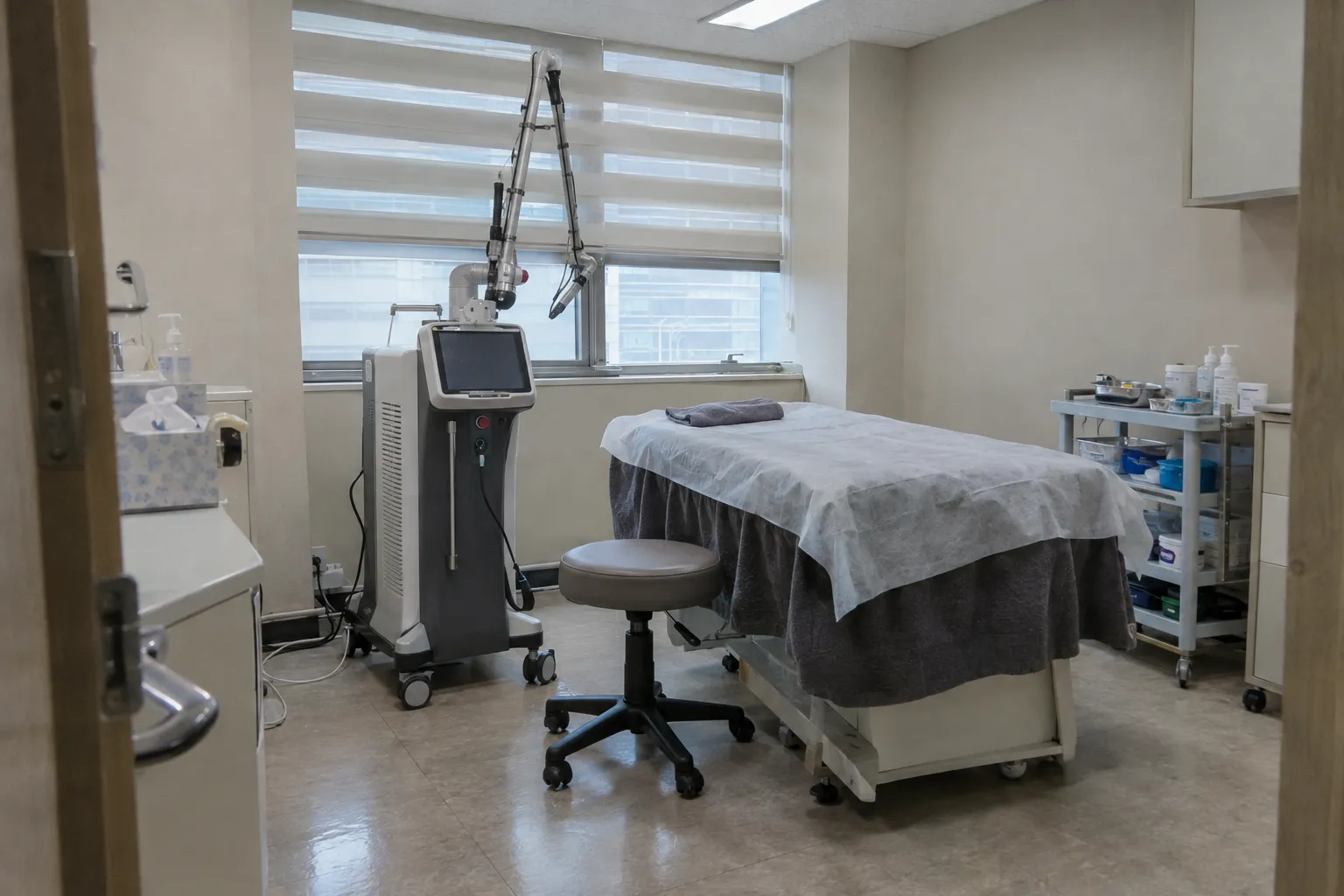
HIFU versus RF, if you have to choose one
A hifu vs rf lifting myeongdong seoul comparison usually ends with a clinic recommending whichever machine it owns. That is not corruption, it is inventory. Ask two clinics and you will hear two answers.
The general pattern doctors describe: ultrasound for a defined jawline concern and deeper laxity, radiofrequency for overall skin quality and a broader, softer tightening. Many Korean patients alternate them across a year rather than picking a winner.
What should decide it for you is a doctor looking at your face, not a comparison table. If the consultation is run by a counsellor rather than a doctor, you have received a sales recommendation, not a clinical one. English speaking clinic in Seoul covers how to tell which you are getting.
The names you will see that are not lifting at all
Korean menus mix categories freely. Beside the lifting devices you will find pigment lasers, resurfacing lasers and injectable skin boosters, all sold as 'tightening' when the treatment room is quiet.
A pigment laser will not tighten anything. A skin booster hydrates and improves texture without lifting. If the problem you came with is laxity, a booster is a pleasant detour. The full menu is sorted in Korean skin treatments compared, and the current price range for lifting is on the treatment page.
To be matched with clinics for what you actually need, use clinic matching, or meet the interpreters first.