Hairline microblading or a transplant: what Seoul clinics actually offer
Written by KCODI medical interpreter team · English deskUpdated · 7 min read


Korean hairline microblading thinning hair searches come mostly from people with a hairline that has crept back or thinned at the temples, who want it filled without an operation. That is a reasonable thing to want, and Seoul does it well.
It is also frequently the wrong first question. Pigment placed into the scalp is cosmetic camouflage. It does not stop hair loss, and if loss continues the pigment stays where it was put while the hair around it retreats.
Here is what each option actually does, who each one suits, and the medical step that should happen before either.
Three different things sold under similar names
| Option | What it is | Lasts | Best for |
|---|---|---|---|
| Hairline microblading | Fine pigment strokes at the hairline edge, like brow microblading | Roughly one to two years, fading gradually | Softening a sparse hairline edge, especially on women |
| Scalp micropigmentation | Tiny pigment dots across an area, imitating stubble or density | Several years, fading and needing touch-ups | Diffuse thinning, or a shaved look on men |
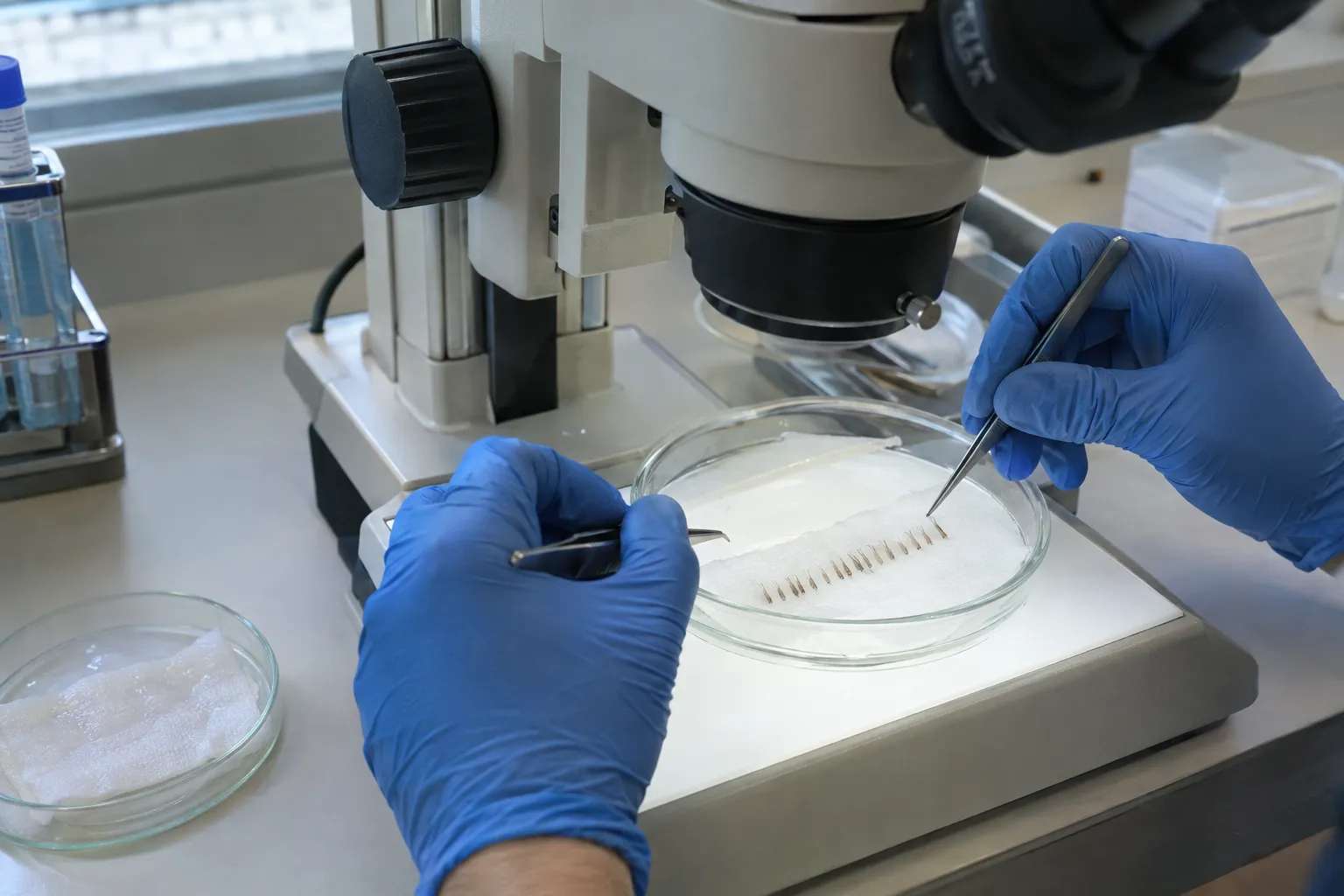
| Hair transplant (FUE) | Your own follicles moved from the back of the head | Permanent, with the transplanted hair keeping its original character | A defined receding hairline with a usable donor area |
| Medical treatment | Prescription medication, sometimes with clinic treatments | While continued | Slowing or partly reversing active loss |
Note that only one row stops the loss itself. The other three manage how it looks. A clinic that offers pigment or grafts without ever discussing whether your loss is still active has skipped the medical part.
What should happen before anything cosmetic
A korean receding hairline is not one condition. Patterned loss, traction from tight hairstyles, telogen shedding after illness or stress, and inflammatory scalp conditions all thin a hairline and are treated very differently.
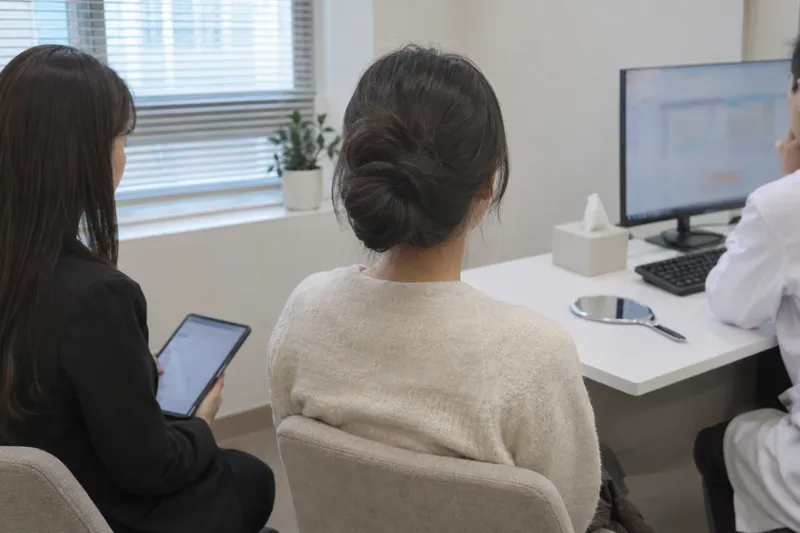
- A dermatologist or hair-specialist doctor looks at the scalp, usually with magnification, and often at the hairs themselves.
- Blood tests if diffuse shedding suggests iron, thyroid or another systemic cause.
- A decision about whether loss is active. Transplanting into a hairline that is still receding produces an island of hair with a gap behind it.
- Medical treatment started, if appropriate, and given time to work before any graft is planned.
- Only then a discussion about pigment or transplantation.
Clinics in Seoul are generally good at this sequence when you are in a hair clinic. They are less good at it when you walk into a semi-permanent makeup studio and ask for a hairline. Those are different businesses. Korean head spa versus a scalp clinic explains where the line falls.
Microblading and micropigmentation in practice
Korean clinic hairline microblading reviews are hard to read usefully, because the result depends almost entirely on the individual technician and on healing, and photographs are taken immediately after when pigment is at its darkest.
- Numbing cream, then pigment, in roughly one to two hours for a hairline.
- Colour looks darker and sharper for the first week, then softens considerably. Judge it at three to four weeks, not on the day.
- A retouch is normally needed after several weeks, which for a visitor usually means a second trip or a local technician at home.
- Pigment fades warmer over time. Ask what the pigment does as it ages on your skin, because a hairline that turns reddish or grey is the common complaint.
- Not suitable on active inflammatory scalp conditions, and best avoided if you are considering a transplant soon, since scarring and pigment complicate surgical planning.
The retouch point matters for a trip. The semi-permanent makeup page sets out the timings and what the range covers.
Hair implants in Korea, and what the word means here
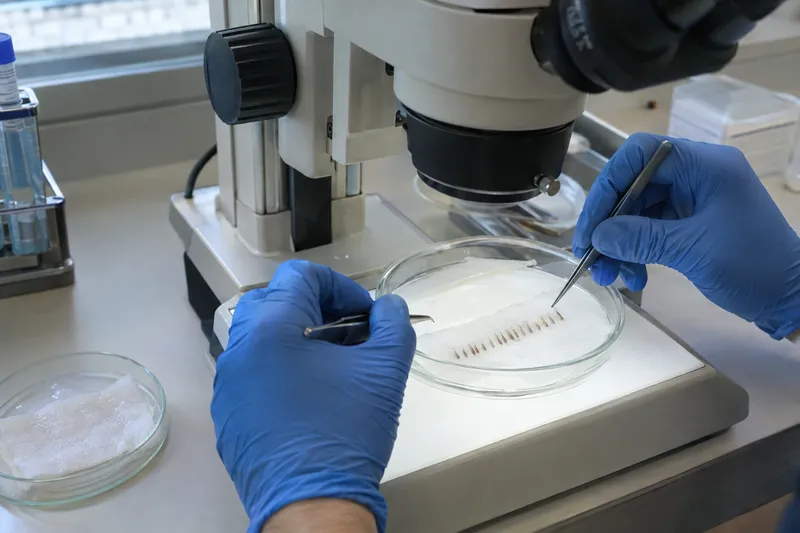
Hair implant korea usually means a follicular unit extraction transplant: individual follicles taken from the back of the scalp and placed in the thinning area. The word implant is misleading. Nothing artificial is implanted, and Korea does not use synthetic hair fibres in mainstream clinics.
Korean clinics are known for dense hairline design and for non-shaven techniques that let women, in particular, have a transplant without cutting their hair. Both cost more and both take longer in the chair.
- Graft count is the number that drives everything. Ask for the count in writing on the quote and ask what happens if fewer or more are used.
- Ask whether the donor area is shaved, partially shaved or unshaven, because it changes what you look like flying home.
- The procedure is a long day under local anaesthesia. Plan nothing else for that day.
- Transplanted hair sheds within weeks and regrows over months. The result is judged at around a year.
- Ask who makes the incisions and who places the grafts, and how many people are in the room.
Hair transplant cost in Korea per graft explains the arithmetic, Korea versus Turkey compares the two destinations honestly, and the FUE hair transplant page carries the current range.
Women's hairlines are a different problem
Most women asking about a hairline in Seoul are not receding in the male pattern. They are dealing with a naturally high or uneven hairline, thinning at the temples, or traction loss from years of tight styles.
Traction loss is reversible early and permanent late, which makes the timing of the assessment genuinely important. A hairline lowered surgically is a different operation again, and it is not suitable for everyone.
The female hairline transplant page covers the surgical option, and hair loss treatment covers the medical route. To be matched with a clinic, use clinic matching, or meet the interpreters first.