Plastic surgery in Thailand vs Korea: which country fits the operation you actually want?
Written by KCODI medical interpreter team · English deskUpdated · 9 min read

In shortPlastic surgery Thailand vs Korea comes down to the procedure: Korea for facial surgery by surgeons who repeat one operation daily, Thailand for a broader hospital menu at a lower headline price. Whole-trip costs land close.
Plastic surgery thailand vs korea is the tab most English-speaking patients have open next to two quotes that do not describe the same thing: one from a Bangkok hospital with a package price, one from a Seoul clinic with a line that says anaesthesia is separate. The countries are not interchangeable, and the cheaper-looking quote is not always the cheaper trip.
The honest split is by procedure and by how you want the trip to run. Korea's clinic system is built around one operation per surgeon, done in volume, with a revision culture to match. Thailand's strength is hospital-based care with a wide menu, English on every floor, and well-established programmes for some operations that Korea does less of.
Below is the comparison our interpreters walk patients through when they are still deciding: specialisation, language, what the price actually includes, revision terms, and how many days each country really takes. The plastic surgery pages carry the Korean price ranges so this page does not have to.
Is Korea or Thailand better for plastic surgery?
Neither is better across the board; each is better for a different kind of operation. Korea is the stronger choice for facial surgery such as rhinoplasty, eyelid surgery and jaw or cheekbone contouring, because Seoul clinics are organised so that one surgeon does that one operation most days of the week. Thailand is the stronger choice when you want a hospital setting for a longer or combined operation, when gender-affirming surgery is the goal, or when a broad body-contouring plan matters more than facial detail.
The two systems also feel different. A Korean clinic is usually a private building with its own operating rooms and a menu of a few procedures; a Thai international hospital is a general hospital with a plastic surgery department, an emergency department downstairs and inpatient wards. Both models are safe when run properly, and both have clinics that are not.
| What you compare | Korea (Seoul) | Thailand (Bangkok, Phuket) |
|---|---|---|
| Where surgeons are strongest | Facial surgery, contouring, revision work, Asian eyelid and nose anatomy | Broad menu in one hospital, gender-affirming surgery, body contouring, combined operations |
| How care is organised | Specialised private clinics, one to a few procedures each | International hospitals with a plastic surgery department and wards |
| Language at the front desk | English at clinics used to visitors; forms and consent mostly in Korean | English widely used in international hospitals, including paperwork |
| How the price is presented | Itemised quote after consultation; anaesthesia and stay often listed separately | Package price common, often bundling hospital stay and follow-up |
| Revision culture | Revision is a recognised sub-specialty; windows and terms in writing | Handled by the same hospital; warranty terms vary by department |
| Flight time from the UK, US, Australia | Long haul to Seoul; direct flights from major hubs | Long haul to Bangkok; Phuket adds a domestic hop |
| Recovery setting | Hotel or serviced apartment near the clinic; clinic visits every two to three days | Inpatient nights common, then a hotel; hospital visits on site |
If your procedure is one that Korea repeats in volume, the choice is usually already made; the rest of this page explains why. If it is not, Thailand's hospital model may fit you better, and the questions below still apply there.
Which country is cheaper once you count the whole trip?
Thailand usually has the lower headline price for the same named operation, and the gap narrows once you compare what each quote includes and how long each trip takes. A Thai package often bundles inpatient nights, follow-up and sometimes transfers; a Korean quote lists the operation, then anaesthesia, then the recovery room, then the follow-up visits as separate lines. Add them up before deciding which is cheaper.
The other half of the total is the trip. Flights, the number of nights, whether you need a companion, and whether a revision would mean flying back all move the figure. The how much plastic surgery in Korea costs guide explains what moves a Seoul quote, and each procedure page shows the estimated range, for example rhinoplasty in Korea.
- Anaesthesia: ask whether it is inside the quote and whether a specialist anaesthesiologist is present, in both countries.
- Nights: inpatient nights in Thailand are often bundled; in Korea most facial surgery is day surgery and you pay for your own hotel.
- Follow-up: count the number of visits included and what a stitch removal or a drain check costs if it is not.
- Revision: ask what a correction costs and whether travel is yours to pay, before the first operation.
- Companion: an accompanying person doubles the flights and the room, which the quote never shows.
- Interpreter: a Korean clinic's in-house translator is free but works for the clinic; an independent medical interpreter through KCODI is also free and works for you.
A fair comparison is two itemised quotes for the same operation, the same anaesthesia and the same number of follow-ups, each with the flights and nights added. Most patients who do that find the two countries closer than the first search result suggested.
Where are the surgeons more specialised?
Korea's surgeons are more narrowly specialised for facial procedures; Thailand's plastic surgeons more often cover a wide range inside one hospital department. In a Seoul clinic it is common for a surgeon to do the same nose or eyelid operation several times a day, which is why revision cases from abroad are so often sent there. In a Bangkok hospital a plastic surgeon may do a rhinoplasty in the morning and a body procedure in the afternoon, which is normal hospital practice and not a warning sign.
In both countries the licence to operate is broader than the board certificate. A Korean doctor of any specialty may legally perform cosmetic surgery, so the question to ask is whether the surgeon is a board-certified plastic surgeon and whether the surgeon you met is the one who operates. Thailand has its own plastic surgery board, and the same two questions apply. Our guide on how to check a Korean clinic's licence shows where the answer is written.
Will language be a problem in Seoul or Bangkok?
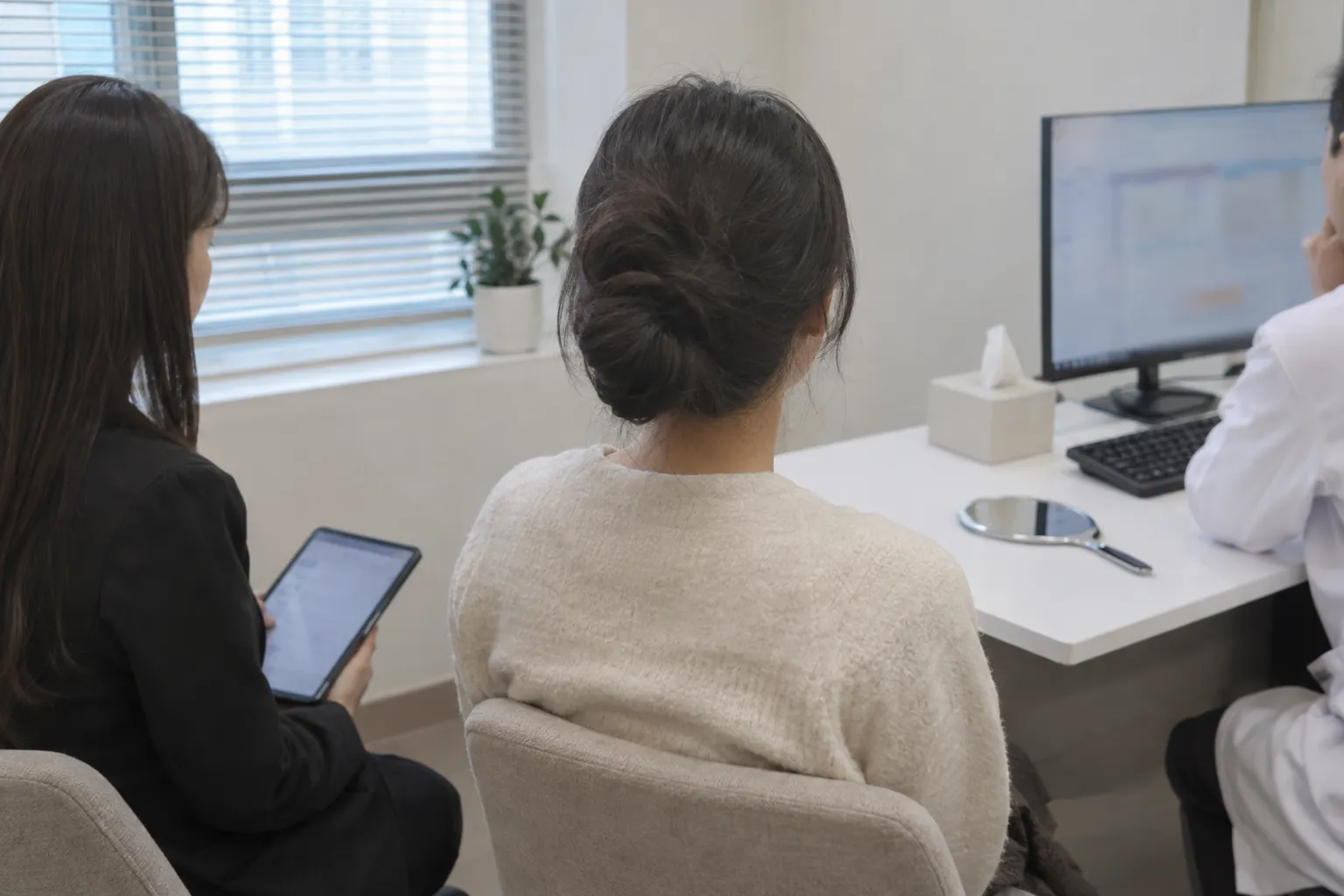
Language is less of a barrier in Thailand and more of a barrier in Korea, and the difference sits in the paperwork rather than at the front desk. Thai international hospitals run their patient services in English, including consent and discharge documents. In Seoul the reception may speak English well, but the consent form, the aftercare sheet and the prescription are usually in Korean, and those are the pages that matter when something needs to be understood exactly.
That gap is closable. A medical interpreter assigned by KCODI sits with you at the consultation and on surgery day, reads the consent form line by line, and asks the surgeon the questions you would ask in your own language. It costs you nothing, and it means you can choose Korea on the surgeon rather than on the receptionist's English. You can meet the interpreters before you decide.
One more difference that catches people: in Korea the surgeon usually speaks Korean in the room and the clinic's coordinator relays, which is fast and can be thin. An independent interpreter slows that down when you need it, which is the point.
What happens if you need a revision?
Korea treats revision as a sub-specialty with its own clinics and its own written terms; Thailand handles revision inside the hospital that operated, on terms that vary by department. In Seoul, revision rhinoplasty and revision eyelid surgery are large enough fields that some surgeons do little else, which is useful if your first operation went wrong somewhere else. It also means Korean clinics are used to stating a revision window and what it covers on the quote.
In either country a revision means a second trip, and no quote includes your flights for it. Ask for the window, the list of corrections covered, and who pays anaesthesia and travel, and get it in writing before the first surgery. A clinic that answers in conversation only has not answered. Our first-timer timeline shows where in the sequence that conversation belongs.
How many days do you need in each country, and where do you recover?
Plan a similar number of days in either country for the same operation, because the biology sets the schedule, not the destination. For most facial surgery the sequence is the operation, a dressing check within a few days, stitch removal around a week, and a final check before the surgeon clears you to fly, which commonly lands in the second week. Thailand's inpatient nights change where you sleep for the first days, not how long the whole thing takes.
The recovery setting is the practical difference. In Bangkok you are often on a ward for the first nights, then in a hotel with the hospital on the same site. In Seoul you leave the clinic the same day or the next morning and recover in a hotel or serviced apartment a few minutes away, going back every two to three days. Our guide on recovery time and stay in Korea lists what those days look like and what to eat while the swelling goes down.
- Name the operation precisely, including whether it is a first or a revision case; that decides which country's surgeons see it most.
- Get one itemised quote from each country for the same anaesthesia and the same number of follow-ups.
- Add flights, nights and a companion to each, and note who pays travel for a revision.
- Ask both for the surgeon's board certificate and written confirmation that the consulting surgeon operates.
- Decide how you want the consent form read to you: in English on the page, or through an interpreter beside you.
- Book the flight home only after the clinic gives you the earliest clearance date in writing.
If Korea is where the operation you want is done in volume, treatment matching takes about two minutes and tells you which partner clinics do it and how many nights to plan. If Thailand fits better, the same checklist will serve you there, and the how to choose a surgeon in Korea guide explains why the surgeon, not the country, is the decision.
When you press the button below, the message opens with this topic already filled in. A coordinator on the English desk replies within about 10 minutes in working hours, asks for the two quotes and your dates, and comes back with the comparison in writing. Nothing is booked and nothing is paid until you have read it.