Menu
September surgery-day interpreter slots are filling. Hold yours, free

Eye Clinic

SMILE LASIK in Korea: SMILE Pro in a two to three day trip

SMILE LASIK in Korea is what many visitors type when they mean SMILE Pro. It is not LASIK. There is no flap. The laser shapes a small disc inside the cornea, and the surgeon removes it through an incision a few millimetres wide. The laser part takes seconds per eye, and the whole procedure ten to fifteen minutes. Most visitors need only two to three days in Seoul: tests, surgery, next-day check. As with every laser procedure, the tests decide whether you qualify.

Typical price in Seoul

$1,600 – $2,500

₩2,200,000 – ₩3,500,000 · both eyes

Stay in Korea
2–3 days
Procedure time
10–15 min
Anesthesia
Numbing cream or drops
Clinic visits
3 visits

Market estimate, not a quote. Your written quote comes after a free consultation.

  • No flap and a small incision. Many patients report less dryness than after LASIK, though experiences vary.
  • Treats short-sightedness and astigmatism. It is generally not used for long-sightedness.
  • Shortest stay of the three vision procedures: 2–3 days and three visits.
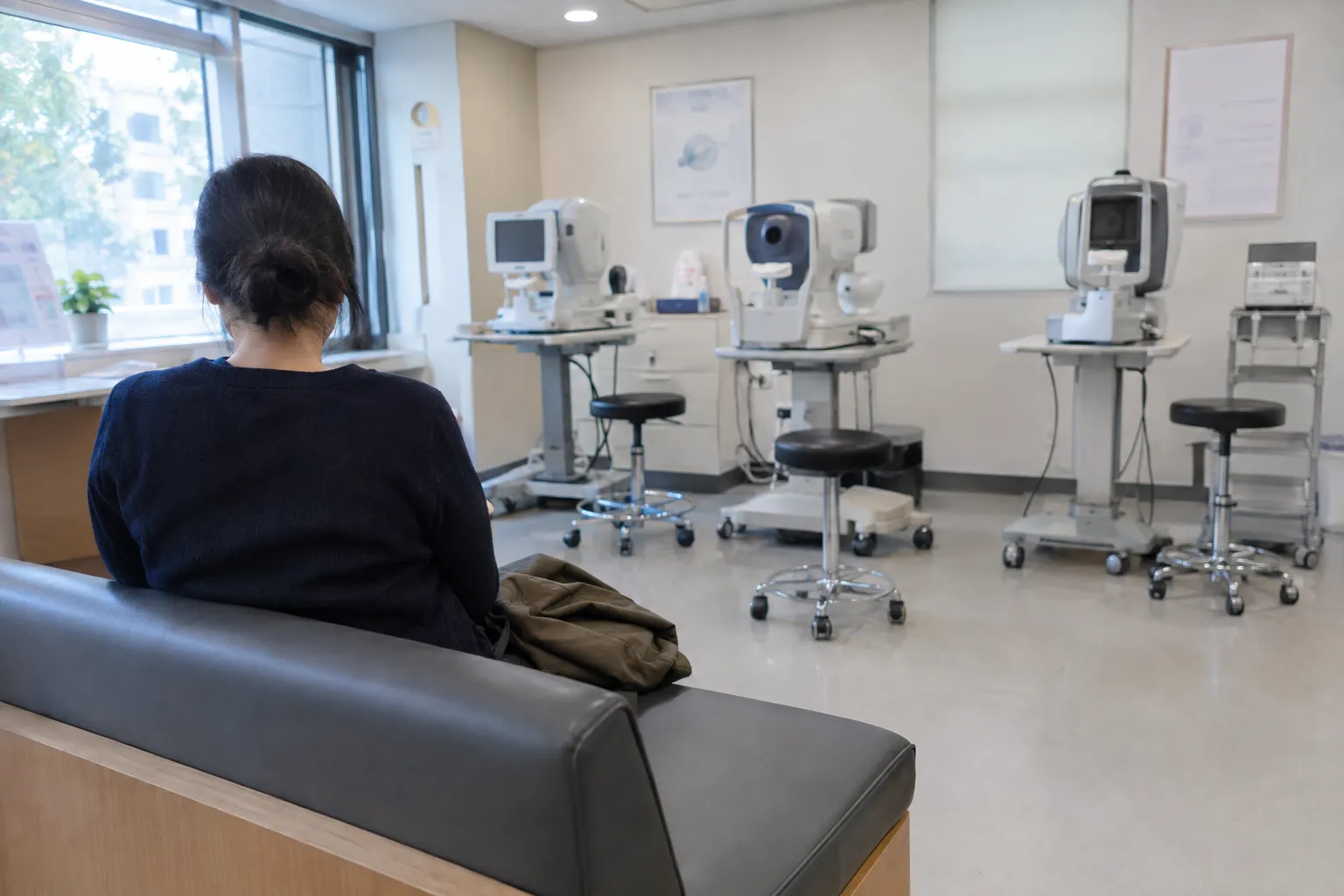
A woman seated on a waiting bench with her back to the camera, facing a row of ophthalmic exam machines across the room (illustrative image)

What she does on your clinic day

  1. Tests and the verdict

    She stays with you through the full test battery and translates the surgeon's reading: corneal thickness, topography, and whether SMILE Pro, LASEK or a lens implant fits your eyes.

  2. In the laser room

    During the laser you must hold still and look at a green light. She rehearses this with you beforehand and waits right outside.

  3. Before you fly

    She comes to the next-day check, writes out your eye-drop schedule, and asks the surgeon what your optometrist at home should check and when.


Meet the interpreters

Stay in Korea

  1. Day 1 morning

    Tests and consultation

    About two hours of measurements with dilating drops. The surgeon confirms candidacy and the correction plan.

  2. Day 1 or 2

    Surgery

    Ten to fifteen minutes for both eyes under numbing drops. Vision is foggy for a few hours. Rest with your eyes closed that evening.

  3. Next day

    Check-up

    Most patients read several lines on the chart already. Sharpness keeps improving over days to weeks.

  4. Day 2–3

    Fly home

    With drops, sunglasses and no eye rubbing. Swimming and eye make-up wait a few weeks, as your surgeon advises.

Typical price in Seoul

The figure on this page covers both eyes. SMILE Pro costs more than LASIK or LASEK because of the laser platform and the per-eye licence fee clinics pay. Astigmatism correction and the surgeon's experience can move the quote. If price matters more than the incision size, compare LASIK and LASEK.

  • You are short-sighted, with or without astigmatism, and your prescription has been stable
  • You play contact sports or have a job where a corneal flap worries you
  • You are prone to dry eyes and want to discuss the option that disturbs fewer corneal nerves
  • You have limited leave and need the shortest reasonable stay

Questions patients ask us

Is SMILE Pro the same as SMILE LASIK?
SMILE is the procedure. SMILE Pro is the newer, faster laser platform that performs it. SMILE LASIK is a popular search phrase, but technically SMILE is not LASIK, because no flap is made.
How long do I need to stay in Korea for SMILE Pro?
Two to three days works for most people: tests and surgery on day one or two, a check the next day, then the flight. If you wear contact lenses, stop them beforehand as the clinic instructs, or the tests must be repeated.
Is SMILE Pro safer than LASIK?
Both have strong safety records in suitable eyes. SMILE avoids flap-related problems. LASIK has a longer track record and easier enhancement options. The safer choice is the one your test results support, and that is your surgeon's judgement.
What if I need an enhancement later?
A small share of patients need a touch-up when vision regresses. After SMILE this is usually done with a surface procedure such as LASEK. Ask the clinic about its enhancement policy and whether it applies to overseas patients.
My prescription is very high. Can I still have it?
There are limits, and they depend on corneal thickness as much as on the prescription. If laser would remove too much tissue, the surgeon will likely discuss ICL, which adds a lens instead of removing cornea.

Booking direct vs booking with KCODI

Same clinic, same surgeon. What changes is who is on your side of the desk.

InterpreterBooking direct:The clinic's coordinator, if one speaks your languageKCODI:Your own medical interpreter, assigned free
Surgery dayBooking direct:You check in aloneKCODI:She stays from check-in to discharge
QuoteBooking direct:Often verbal, in a chat windowKCODI:Written and itemised before any deposit
Price listBooking direct:Overseas-patient price list at many clinicsKCODI:Partner rate agreed in advance, no foreigner markup
Recovery daysBooking direct:You search hotels and food yourselfKCODI:Hotel, soft food and pharmacy list for your clinic's area
After you fly homeBooking direct:Email the clinic in English and waitKCODI:Message your interpreter, she relays it in Korean

What clinics offer differs. Ask us about the clinic you have in mind and we tell you what applies there.

What you can hold us to

  • Quote first, deposit later

    You never pay a deposit before you hold a written, itemised quote.

  • A name and a face before you fly

    You know who your interpreter is, and which language she speaks, before you board.

  • You pay us nothing

    No booking fee, no interpreter fee, no fee for asking. The clinic pays our coordination fee.

Doing more than one thing on this trip?

Skin treatments usually fit around a surgery consultation, and a checkup takes half a day. Tell us everything on your list and we put it in one schedule, with one interpreter.

Plan my whole trip

Ask first. Decide later.

Replies in about 10 minutes, 09:00–22:00 KST